By Survival Boys Editorial Team
Choosing a campsite may seem simple at first. Many beginners look for a flat patch of ground, set up a tent, and call it good. But experienced outdoorsmen know that campsite selection is one of the most important survival and comfort decisions made in the wilderness.
A good campsite can provide shelter, warmth, safety, and peace of mind.
A bad campsite can lead to flooding, exposure, insect problems, falling branches, wildlife encounters, sleepless nights, or even serious danger during storms and emergencies.

The wilderness rewards people who pay attention to their surroundings. Campsite selection is less about convenience and more about observation. Every slope, tree line, wind pattern, and water source tells a story about the environment. Learning how to read those signs is one of the most valuable outdoor skills a person can develop.
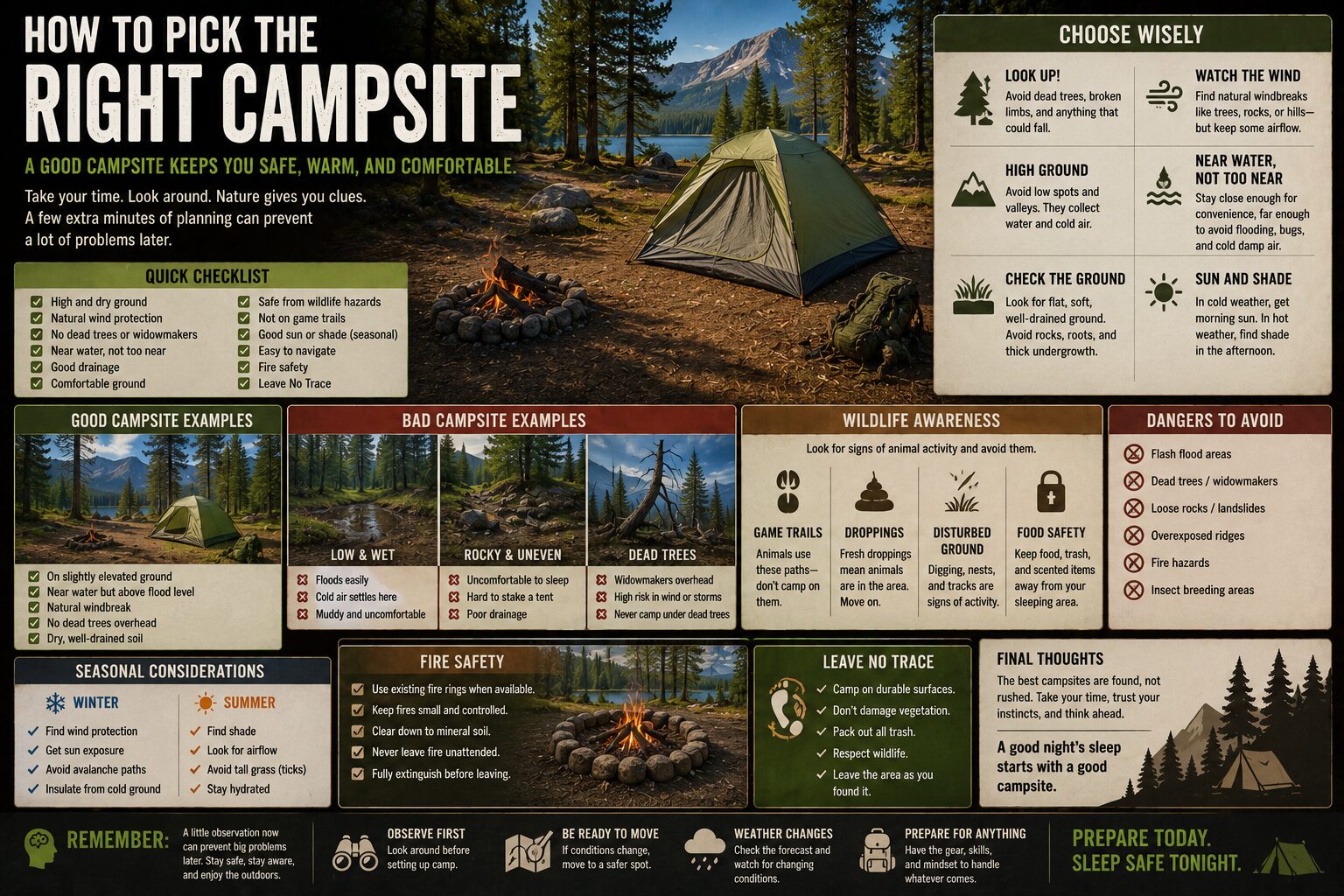
One of the first things experienced campers look for is high ground. Low areas may appear flat and comfortable during dry weather, but they often collect water after rainstorms. Even a light overnight rain can turn a low campsite into a muddy mess. During severe weather, low ground may flood quickly and create dangerous conditions.
Cold air also tends to settle into valleys and depressions during the night. A slightly elevated campsite often stays warmer and drier than areas below it. However, the highest exposed ridges should also be avoided because they face stronger winds and greater lightning risk during storms.
Finding balance is important.
A good campsite usually sits on moderately elevated ground with some natural protection from the elements.
Wind direction matters far more than many beginners realize. Strong winds strip away body heat rapidly, increase fire difficulty, and can damage shelters or tents during the night. Natural windbreaks such as hillsides, rock formations, thick tree lines, or dense brush provide valuable protection.
At the same time, completely enclosed areas with no airflow may trap moisture and insects. Gentle airflow helps reduce condensation and improve comfort, especially during warmer weather.
Tree cover can provide excellent shelter, but it also creates risks if chosen carelessly. One of the most dangerous campsite hazards is the widowmaker. This term refers to dead branches, leaning trees, or unstable limbs hanging overhead that may fall unexpectedly. Wind, rain, or decay can bring down heavy branches with little warning.
Before setting up camp, experienced outdoorsmen always look upward.
Dead trees, cracked limbs, and unstable trunks should never be ignored, even if the rest of the area appears ideal.
Water access is another major factor in campsite selection. Camping near rivers, lakes, or streams makes cooking, cleaning, and hydration far easier. However, camping too close to water often creates new problems. Insects become more active near standing water, temperatures may feel colder overnight, and flash flooding becomes a serious danger during storms.
A safe campsite usually stays close enough to water for convenience while remaining far enough away to avoid flood zones and excessive moisture. Many experienced campers follow the principle of staying at least a short walking distance from shorelines or stream edges whenever possible.
Ground conditions also affect comfort and safety significantly. Rocky surfaces make sleeping difficult, while uneven ground may cause constant discomfort throughout the night. Sharp roots beneath sleeping areas can quickly turn a simple camping trip miserable.
Soft, dry ground covered with pine needles, leaves, or grass often provides the most comfortable natural bedding. However, thick vegetation may also hide insects, snakes, or unstable holes beneath the surface. Careful inspection before setting up camp helps prevent unpleasant surprises after dark.
In rainy conditions, drainage becomes critical. Even slightly sloped ground helps water run away from shelters instead of pooling underneath them. Flat depressions may appear comfortable initially, but can become water traps during storms.
Sunlight exposure also influences campsite quality. In cold environments, morning sunlight helps warm shelters and dry condensation quickly. In hot climates, shade becomes far more valuable because direct afternoon sun dramatically increases heat inside tents and shelters.
The season often changes what makes a campsite ideal. Winter campsites prioritize wind protection, insulation, and sun exposure, while summer campsites focus more on shade, airflow, and insect reduction.
Wildlife awareness is another important part of campsite selection. Animal trails, droppings, claw marks, nests, and disturbed vegetation all indicate active wildlife areas. Camping directly beside game trails increases the chances of nighttime animal encounters because animals often continue using familiar routes regardless of human presence.
Food storage also plays a major role in campsite safety. Cooking and storing food too close to sleeping areas may attract raccoons, bears, rodents, or other scavengers. Experienced campers often separate cooking areas from sleeping spaces whenever possible.
Bear country requires additional precautions. Food, trash, and scented items should be secured properly using bear canisters, hanging systems, or designated storage methods. Clean campsites reduce wildlife attraction significantly.
Another factor many people overlook is noise.
Flowing water may sound peaceful initially, but extremely loud rivers or waterfalls can interfere with sleep and communication. Strong wind through exposed trees may also create constant nighttime noise that becomes mentally exhausting over time.
Good campsites support both physical safety and mental comfort.
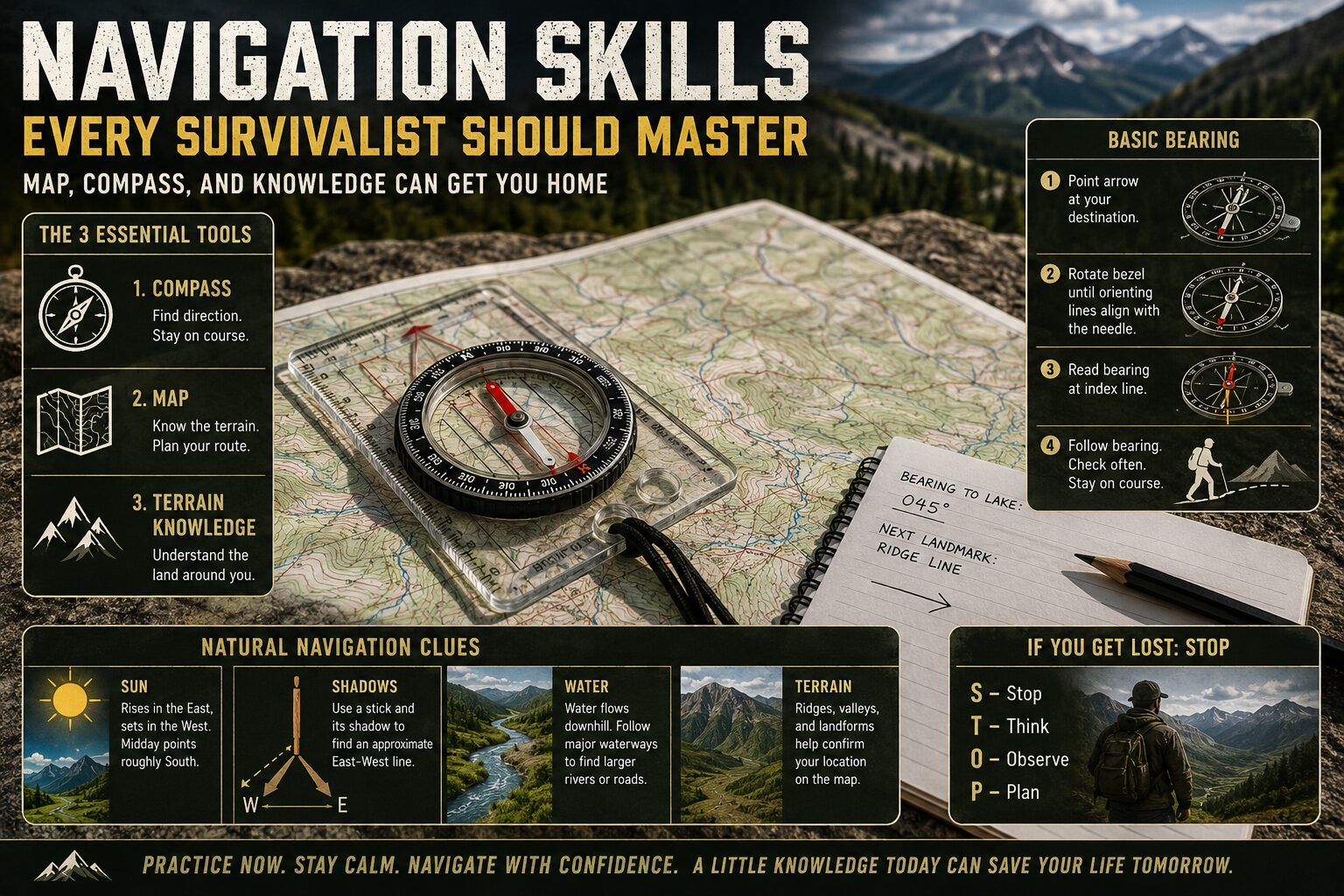
Navigation and orientation matter as well. In survival situations or unfamiliar wilderness areas, campsites should remain easy to relocate. Distinct landmarks such as ridges, large rock formations, or visible terrain features help prevent disorientation.
Dense forests sometimes make every direction appear identical, especially after dark. Experienced outdoorsmen maintain awareness of the surrounding terrain instead of focusing only on the immediate campsite itself.
Emergency considerations should always remain part of campsite planning. Ask simple questions before settling into an area. What happens if heavy rain arrives overnight? Is there an escape route if flooding occurs? Could falling rocks or landslides threaten the area? How exposed is the site during lightning storms?
Nature changes quickly, and campsites that feel safe in calm weather may become dangerous under severe conditions.
Fire safety also affects campsite choice. Dry grass, overhanging branches, and heavy brush increase wildfire risks significantly. Campfires should only be built where conditions allow safe containment and proper extinguishing afterward. In many areas, fire restrictions may apply during drought conditions.
Leave No Trace principles are another important part of responsible campsite selection. Durable surfaces such as established campsites, gravel, or dry ground reduce environmental damage. Avoiding fragile vegetation and minimizing impact helps preserve wilderness areas for future travelers.
One of the best signs of outdoor experience is thoughtful campsite selection. Skilled outdoorsmen rarely rush to set up camp immediately. They study the terrain carefully, observe weather conditions, and think several steps ahead before choosing where to spend the night.
Patience during campsite selection often prevents major problems later.
Perhaps most importantly, a good campsite creates peace of mind. Knowing you are protected from flooding, falling branches, harsh wind, and wildlife allows proper rest and recovery. In survival situations, rest becomes just as important as food or equipment because exhaustion leads to poor decisions and reduced awareness.
The wilderness can be unpredictable, but careful campsite selection gives people greater control over their environment. A few extra minutes spent choosing wisely can dramatically improve both comfort and safety.
Because in the outdoors, where you sleep matters just as much as what you carry.