Stepping into the outdoors with nothing but a few essentials changes the way I look at simple tools, and rope quickly becomes one of the most valuable. The right knot can mean the difference between a shelter that holds through the night and one that collapses under wind and rain. Over time, I have come to rely on a handful of knots that consistently perform in real bushcraft situations. These are not just practical skills but confidence builders, allowing me to adapt, improvise, and stay secure no matter where I set up camp.
The Importance Of Reliable Knots In The Wild
A solid knot is more than just a way to tie things together. It serves as a foundation for safety, efficiency, and adaptability in unpredictable environments. I have learned that even the strongest rope is useless without the knowledge to secure it properly, especially when dealing with tension, weight, or shifting conditions.
In bushcraft, every movement should be intentional, and that includes how I tie and use knots. Whether I am setting up a tarp, hanging food away from animals, or securing gear, each knot has a purpose. Mastering a few reliable ones allows me to move faster and with more confidence, rather than second-guessing every tie.
Square Knot For Basic Binding
The square knot is one of the first knots I became comfortable using because of its simplicity and versatility. It works best when I need to bind two ropes of equal thickness together, especially for tasks that do not require heavy load-bearing strength. I often use it for bundling sticks or securing light items around camp.

Despite its simplicity, I have learned not to rely on the square knot in situations involving heavy tension. It can slip if not properly tightened or if the load shifts unexpectedly. Still, it remains a dependable option for quick and temporary bindings when used appropriately.
Bowline For A Fixed Loop
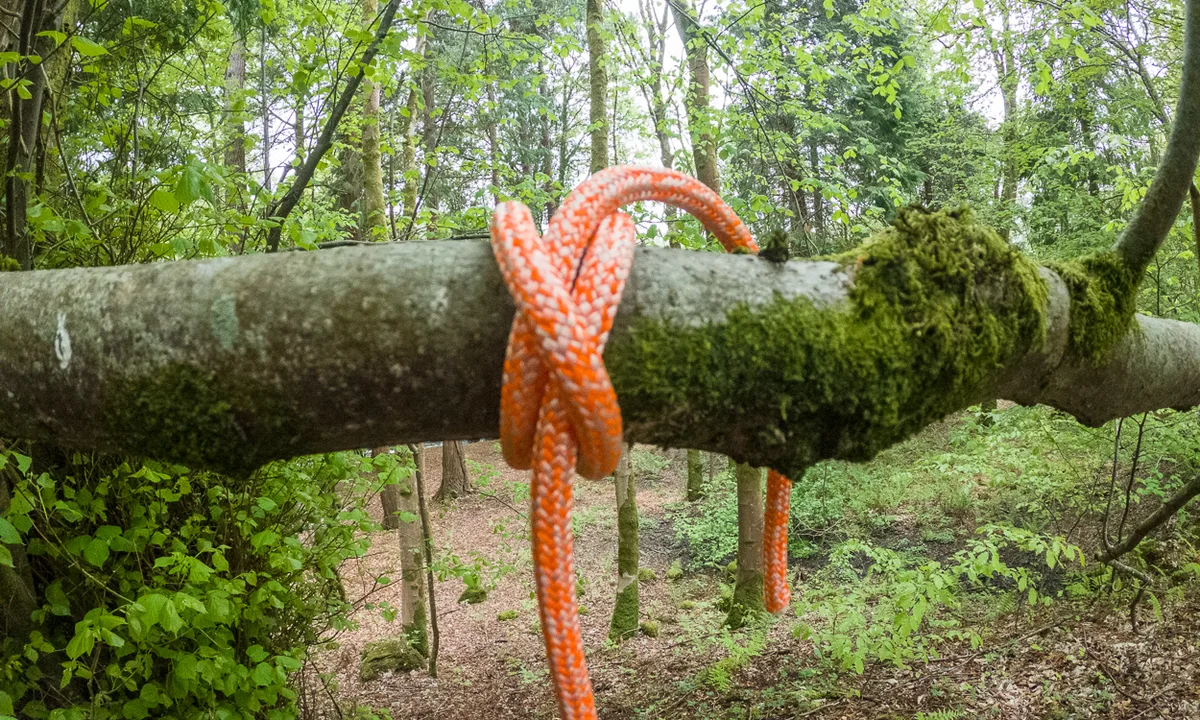
The bowline has earned a permanent place in my skill set because it creates a strong, fixed loop that does not slip under tension. I often use it when I need a secure loop around a tree or anchor point, especially when setting up shelters or securing loads.
What I appreciate most about the bowline is how easy it is to untie, even after being under significant strain. In the field, that matters more than it might seem, especially when cold hands or limited daylight are factors. Once I committed this knot to memory, it became one of the most reliable tools I carry with me.
Taut Line Hitch For Adjustable Tension
Adjustability is crucial when working with tarps or shelters, and the taut line hitch provides exactly that. This knot allows me to tighten or loosen a line without having to untie it completely, which saves both time and effort.
I rely on this knot when weather conditions change and I need to adjust the tension of my shelter lines. It grips firmly under load but slides when I need to reposition it. That balance makes it incredibly useful in maintaining stability without constant retying.
Clove Hitch For Quick Anchoring
The clove hitch is one of the fastest knots I can tie, and that speed makes it invaluable in many situations. I use it when I need to quickly secure a rope to a post, tree, or branch without much fuss.
However, I remain aware that the clove hitch can loosen if the load shifts or if it is not backed up with another knot. For that reason, I often combine it with additional knots when I need extra security. Even so, its simplicity and speed make it a staple in my bushcraft routine.
Sheet Bend For Unequal Ropes
Joining two ropes of different thicknesses can be tricky, but the sheet bend handles that challenge well. I turn to this knot when I need to extend a rope using another piece that does not match in size or material.
What stands out about the sheet bend is how it maintains its hold without slipping, even when the ropes differ significantly. In situations where I have limited gear, this knot allows me to improvise effectively and make the most of what I have available.
Timber Hitch For Dragging Logs
Moving heavy wood is part of bushcraft, and the timber hitch is designed specifically for that task. I use it when dragging logs or branches, as it tightens under tension and loosens easily once the load is released.
This knot saves time and effort because it grips the wood securely without needing complex tying. It also unties quickly, which is important when I am working through multiple pieces of timber. Its efficiency makes it a practical choice for handling natural materials.
Prusik Knot For Climbing And Grip
The prusik knot introduces a different kind of functionality, especially when I need a knot that grips a rope tightly under load. It is often used in climbing scenarios, but I have found it useful in bushcraft for tensioning lines or creating adjustable loops.
What makes the prusik knot unique is its ability to slide when not under tension and lock firmly when weight is applied. This dual function provides both flexibility and security, which is rare in most knots. It has proven especially useful in situations where precision matters.
Figure Eight Knot For Strength And Safety
The figure eight knot is one of the strongest and most secure knots I rely on. It is commonly used in climbing, but its strength makes it just as valuable in bushcraft applications where safety is a priority.
I use this knot when I need a reliable stopper or a secure loop that will not easily come undone. It is also easy to inspect visually, which helps me ensure it is tied correctly. That clarity adds an extra layer of confidence when working in critical situations.
Half Hitch For Quick Support
The half hitch is often used in combination with other knots, and I find it especially useful for adding extra security. On its own, it is simple and quick, but its true value comes from reinforcing other knots.
I use half hitches to stabilize loads or prevent slipping, especially when dealing with uneven tension. They are easy to tie and untie, making them a convenient addition to my knot-tying toolkit. Even small details like this can make a big difference in the field.
Practice And Muscle Memory
Knots become truly useful only when I can tie them without hesitation. Practicing regularly has helped me develop muscle memory, allowing me to tie knots quickly even in low light or stressful conditions. That level of familiarity removes uncertainty and speeds up my workflow.
I often practice with different types of rope and in various conditions to make sure I am prepared for anything. This kind of repetition builds confidence and ensures that I can rely on my skills when it matters most. Over time, tying knots becomes second nature rather than a conscious effort.
Common Mistakes And How To Avoid Them
Mistakes with knots usually come from rushing or not paying attention to detail. I have learned that even a small error in how a knot is formed can lead to failure under load. Taking a few extra seconds to check each knot has saved me from potential problems more than once.
Another common issue is using the wrong knot for the situation. Not all knots are designed for heavy loads, and some are better suited for temporary use. Knowing the strengths and limitations of each knot helps me choose the right one every time.
Building Confidence Through Experience
Confidence in bushcraft does not come from memorizing knots alone. It grows through repeated use and real-world application. Each time I set up camp or solve a problem using a knot, I gain a better sense of what works and what does not.
Over time, these experiences build a deeper connection to the skills I rely on. I no longer think of knots as isolated techniques but as part of a larger system that supports my time outdoors. That perspective makes each trip more enjoyable and less stressful.
Final Thoughts On Essential Bushcraft Knots
Mastering bushcraft knots has changed the way I approach outdoor challenges. What once felt complicated now feels intuitive, and that shift has made a noticeable difference in how I handle different situations. With just a few well-practiced knots, I can secure shelter, manage gear, and adapt to changing conditions with ease.
These knots are not just technical skills but practical tools that support self-reliance in the wild. The more I use them, the more I appreciate their value and versatility. With time and practice, they become second nature, turning simple rope into one of the most powerful tools I carry.