Emergency Preparedness | Vehicle Survival
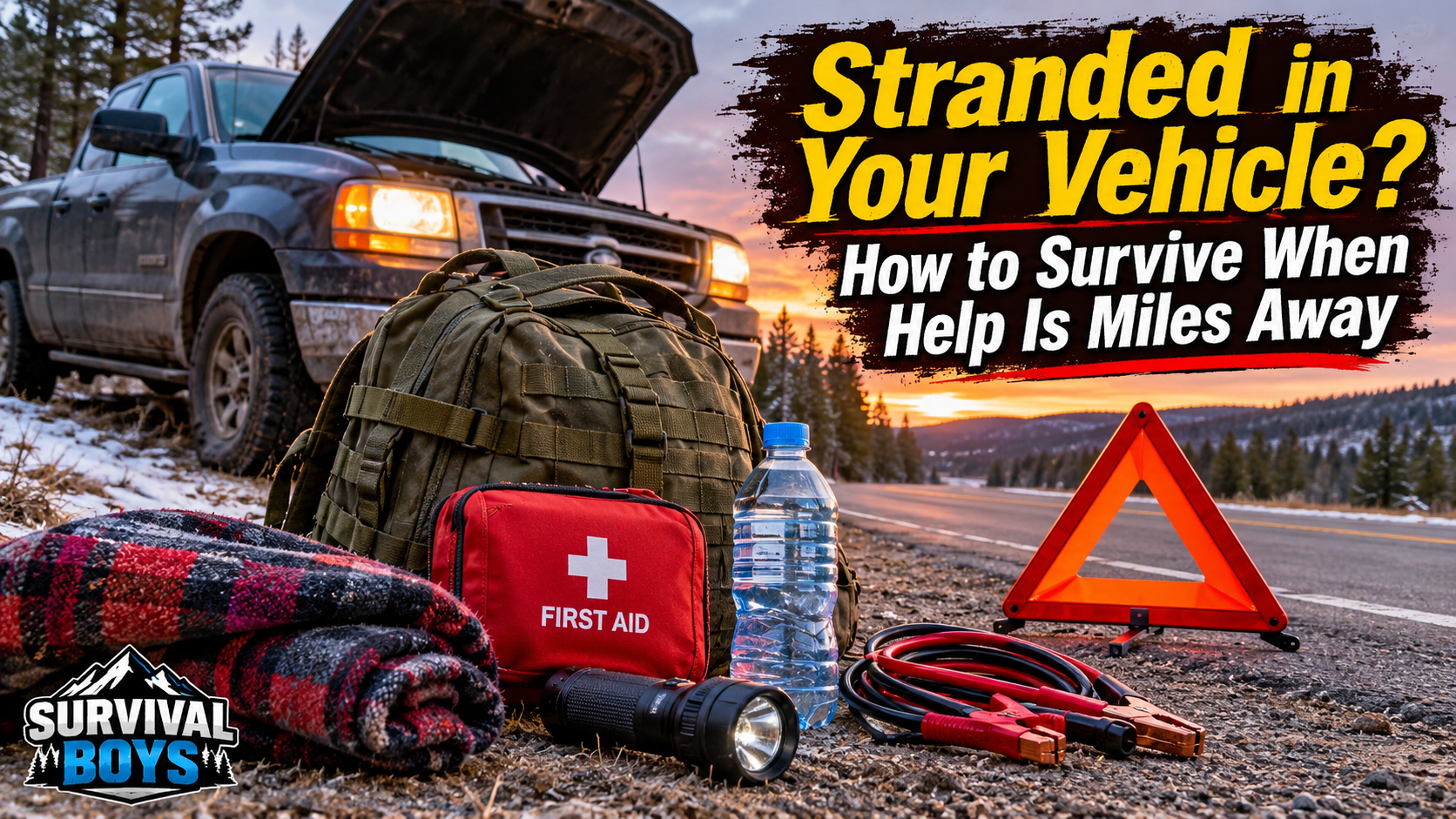
The situation: You’re driving down a remote highway when your vehicle suddenly breaks down. Your phone has little battery, there is no cell service, temperatures are dropping, and the nearest town is miles away.
What do you do?
Most people spend more time preparing their homes for emergencies than preparing their vehicles. But a breakdown, severe storm, wildfire, or unexpected road closure can leave you stranded far from help.

The difference between a manageable inconvenience and a dangerous survival situation often comes down to preparation.
At Survival Boys, we believe survival starts with practical knowledge, having the right equipment, and making smart decisions when things go wrong.
Here’s how to prepare for the unexpected and survive when your vehicle becomes your emergency shelter.
1. Stay With Your Vehicle Unless It’s Unsafe
Your first instinct might be to start walking toward the nearest town or highway intersection. That can be a serious mistake.
Your vehicle provides shelter, visibility, protection from weather, and a recognizable location for rescuers.
If you are stranded:
- Move your vehicle as far off the roadway as safely possible.
- Turn on your hazard lights.
- Set up warning triangles if you have them and can do so safely.
- Keep your doors locked if you’re in an unfamiliar or potentially unsafe area.
- Call emergency services or roadside assistance when possible.
- Share your location with someone you trust.
If your vehicle is in danger from rising floodwater, wildfire, or another immediate threat, leave and move to safety.
2. Make Communication Your First Priority
A working phone can be your most valuable survival tool.
Unfortunately, phones lose battery quickly when searching for a weak signal.
Preserve your battery by:
- Switching to low-power mode.
- Reducing screen brightness.
- Closing unnecessary applications.
- Limiting video and social media use.
- Sending text messages when calls won’t connect.
- Keeping your phone warm in cold weather.
A portable power bank can provide additional charging capacity. An emergency radio can also help you receive weather warnings and emergency information.
Don’t depend entirely on electronics. Keep a written emergency contact list and a paper road map in your vehicle.
3. Prepare for Extreme Temperatures
Temperature can become one of the biggest threats when stranded.
During winter, a vehicle can become dangerously cold. During summer, the interior can become dangerously hot.
Cold-weather survival
- Keep blankets, insulated clothing, gloves, and warm socks in your vehicle.
- Layer clothing rather than relying on one heavy jacket.
- Keep yourself dry.
- Insulate yourself from cold seats and floors.
- Avoid excessive sweating.
Hot-weather survival
- Park in shade when possible.
- Stay hydrated.
- Wear lightweight clothing.
- Limit physical activity.
- Avoid sitting in a dangerously hot vehicle without ventilation.
Never run a vehicle in an enclosed space. If you run the engine for heat, make sure the exhaust pipe is completely clear of snow, mud, or debris. Carbon monoxide is odorless and potentially deadly.
4. Keep an Emergency Supply Kit in Your Vehicle
A roadside emergency kit should be more than a small bag containing a few tools.
Your goal is to have enough equipment to handle common vehicle problems and remain safe until assistance arrives.
Your vehicle emergency supplies should include:
- First-aid kit.
- Flashlight and spare batteries.
- Emergency blankets.
- Drinking water.
- Nonperishable snacks.
- Jumper cables or an appropriate jump starter.
- Tire inflator and pressure gauge.
- Basic hand tools.
- Work gloves.
- Reflective safety vest.
- Warning triangles.
- Phone charging equipment.
- Rain poncho.
- Paper maps.
- Whistle.
For longer trips through remote areas, consider adding extra food, water, seasonal clothing, and additional medical supplies.
Don’t forget to inspect your supplies every few months. Replace expired items, recharge batteries, and check that equipment still works.
5. Know How to Handle Basic Vehicle Problems
You don’t need to be a professional mechanic to solve some common roadside problems.
Learn how to:
- Change a flat tire safely.
- Check tire pressure.
- Jump-start a vehicle using approved procedures.
- Identify an overheating engine.
- Check basic fluid levels.
- Recognize warning lights on your dashboard.
Keep a vehicle-specific tool kit with the equipment needed for your vehicle.
A portable tire inflator is particularly useful. A slow leak might allow you to reach a repair facility instead of leaving you stranded.
Never attempt a tire change beside fast-moving traffic or in an unstable location. Call for professional assistance if conditions are unsafe.
6. Water and Food Can Make the Difference
If you’re stranded for several hours or overnight, water and food become increasingly important.
Keep these supplies in your vehicle:
- Drinking water.
- Protein bars.
- Trail mix.
- Shelf-stable snacks.
- Electrolyte supplies.
- Emergency food rations.
For longer trips, carry additional supplies based on the number of passengers and expected travel conditions.
Water deserves special attention. In hot climates, dehydration can develop quickly, especially when you’re exposed to heat or physically exerting yourself.
A portable water filtration system is another useful addition for outdoor emergencies, although it should not replace carrying drinking water.
7. Know When You Should Leave
Staying with your vehicle is generally the better option when it is safe. However, there are situations when leaving becomes necessary.
Examples include:
- Rising floodwaters.
- Approaching wildfire.
- Vehicle fire.
- Dangerous hazardous-material exposure.
- An unstable vehicle location.
- Immediate threats to personal safety.
If you must leave, take your phone, water, first-aid supplies, flashlight, and appropriate clothing.
Before walking, evaluate your surroundings.
Know your direction, identify recognizable landmarks, and avoid wandering aimlessly.
If you are in a remote area, moving away from your vehicle without a plan can make locating you much more difficult.
When possible, communicate your intended route to emergency responders or someone you trust.
Build Your Own Vehicle Survival Kit
You don’t have to spend hundreds of dollars to become better prepared. Start with the essentials and build your kit over time.
Here are some places to find equipment through our other websites.
My Survival Outlet
Emergency and survival equipment, first-aid supplies, and preparedness products.Shop My Survival Outlet
Outlast Camp
Look for emergency lighting, water filtration, survival tools, camping equipment, and emergency supplies.
Product availability and prices may change. Check product specifications before purchasing.
Final Thoughts: Your Vehicle Is Part of Your Survival Plan
Most people don’t think about vehicle survival until something goes wrong.
A breakdown in the middle of nowhere, an unexpected storm, or a road closure can quickly turn an ordinary trip into an emergency.
You don’t need an expensive overlanding vehicle or a truck full of military equipment to prepare.
You need knowledge, practical supplies, and a plan.
Keep emergency equipment in your vehicle. Learn basic roadside repairs. Carry food and water. Understand when to stay and when to leave.
Most importantly, don’t wait until you’re stranded to start thinking about survival.
At Survival Boys, we believe preparation isn’t about expecting the worst. It’s about being ready when the unexpected happens.
Prepare before you leave. Stay alert. Make smart decisions.
No fluff. Just survival.