By Survival Boys Editorial Team
Imagine waking up one morning to find the power gone everywhere.
No internet.
No cell service.
No ATMs.
No GPS.
No running fuel pumps.
No refrigeration.
At first, most people would assume it was a temporary outage. But hours turn into days. Days turn into weeks.

The modern world begins to shut down.
This isn’t science fiction. It’s a scenario based on a real historical event known as the Carrington Event — the most powerful solar storm ever recorded.
If a similar geomagnetic storm hit Earth today, experts warn it could cripple electrical grids, damage satellites, disrupt communications, and trigger global chaos on an unprecedented scale.
Here’s what happened in 1859, why it matters today, and how you can prepare for a modern-day solar superstorm.
What Was the Carrington Event?
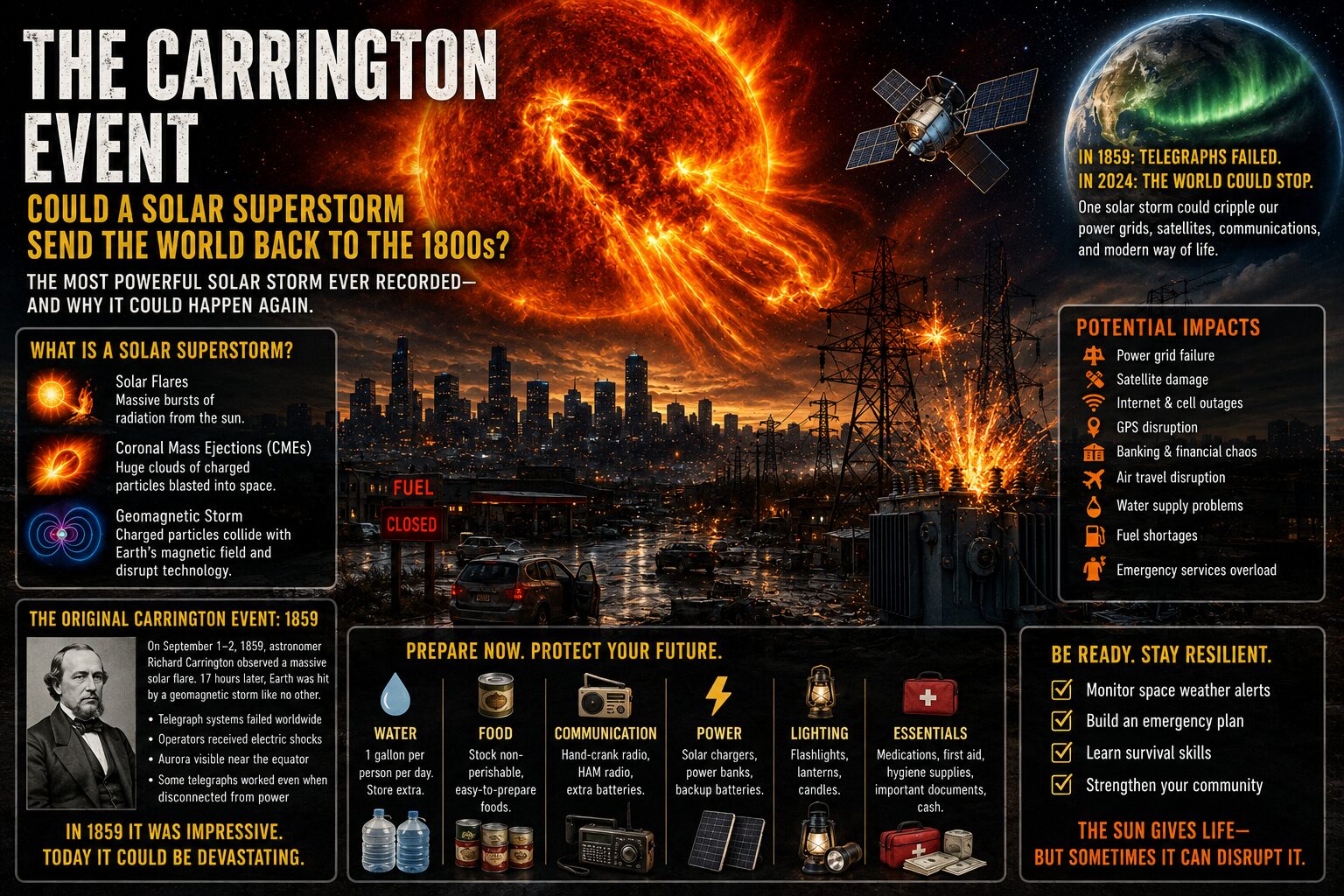
The Carrington Event occurred on September 1–2, 1859.
British astronomer Richard Carrington observed an enormous solar flare erupting from the sun. About 17 hours later, Earth was struck by a massive geomagnetic storm.
The effects were extraordinary.
Telegraph systems around the world failed. Operators received electric shocks. The Telegraph paper caught fire. Some systems continued working even after being disconnected from their power supplies because the atmosphere itself had become electrically charged.
Auroras appeared across the globe, even near the equator. In some places, people could read newspapers outdoors at night because the sky glowed so brightly.
In 1859, society depended only lightly on electricity.
Today, civilization depends on it for almost everything.
What Causes a Solar Superstorm?
The sun constantly releases energy into space, but sometimes it erupts violently.
A major solar storm usually involves:
Solar Flares
Massive bursts of radiation from the sun’s surface.
Coronal Mass Ejections (CMEs)
Huge clouds of charged particles blasted into space.
If Earth lies in the path of a CME, those particles collide with our magnetic field, creating a geomagnetic storm.
Most solar storms are relatively harmless.
But a Carrington-level event could overwhelm modern infrastructure.
Why a Modern Carrington Event Would Be Worse
In 1859:
- No internet existed
- Power grids were minimal
- Cars did not depend on electronics
- Satellites didn’t exist
Today, nearly every critical system relies on electricity and interconnected technology.
A severe geomagnetic storm could impact:
- Power grids
- Satellites
- Banking systems
- GPS navigation
- Internet infrastructure
- Cell towers
- Air travel
- Water treatment systems
- Fuel distribution
- Emergency services
Modern society is efficient — but efficiency often means fragility.
How Power Grids Could Fail
Large geomagnetic storms induce electrical currents in long conductors like power lines.
These currents can overload transformers and damage critical infrastructure.
The biggest danger is the destruction of high-voltage transformers.
These transformers:
- Are extremely expensive
- Require specialized manufacturing
- Can take months or years to replace
If enough transformers failed simultaneously, parts of the grid could remain down for extended periods.
That means:
- No refrigeration
- No heating or cooling
- No electronic payments
- Limited medical capability
- Fuel shortages
- Supply chain collapse
Even regions not directly affected could suffer shortages from cascading failures.
Could Electronics Be Destroyed?
Possibly — especially systems connected to the grid.
Small battery-powered electronics might survive, but:
- Satellites could fail
- GPS signals may disappear
- Radio communications may be disrupted
- Vehicles with sensitive electronics could malfunction
The exact impact would depend on storm intensity and infrastructure protections already in place.
Warning Signs Before a Solar Storm
Unlike earthquakes, scientists can often detect solar storms before they arrive.
Organizations such as NOAA Space Weather Prediction Center monitor solar activity constantly.
Potential warnings may include:
- Government emergency alerts
- News reports about solar storms
- Satellite disruption notices
- Radio communication failures
- GPS instability
Depending on the speed of the CME, warnings could range from minutes to a couple of days.
That short window could become critical.
Immediate Effects You Might Notice
If a major solar storm struck Earth, early signs could include:
- Flickering power
- Transformer explosions
- Widespread blackouts
- GPS outages
- Cell network failures
- Internet disruption
- Unusual auroras in the sky
- Radio interference
In severe cases, blackouts could spread across entire regions within hours.
The First 72 Hours After Grid Failure
The first three days would likely be chaotic.
Most people rely heavily on:
- Electronic banking
- Refrigeration
- Fuel stations
- Cell phones
- Internet access
Without power, panic buying and shortages would happen fast.
Your survival priorities should be:
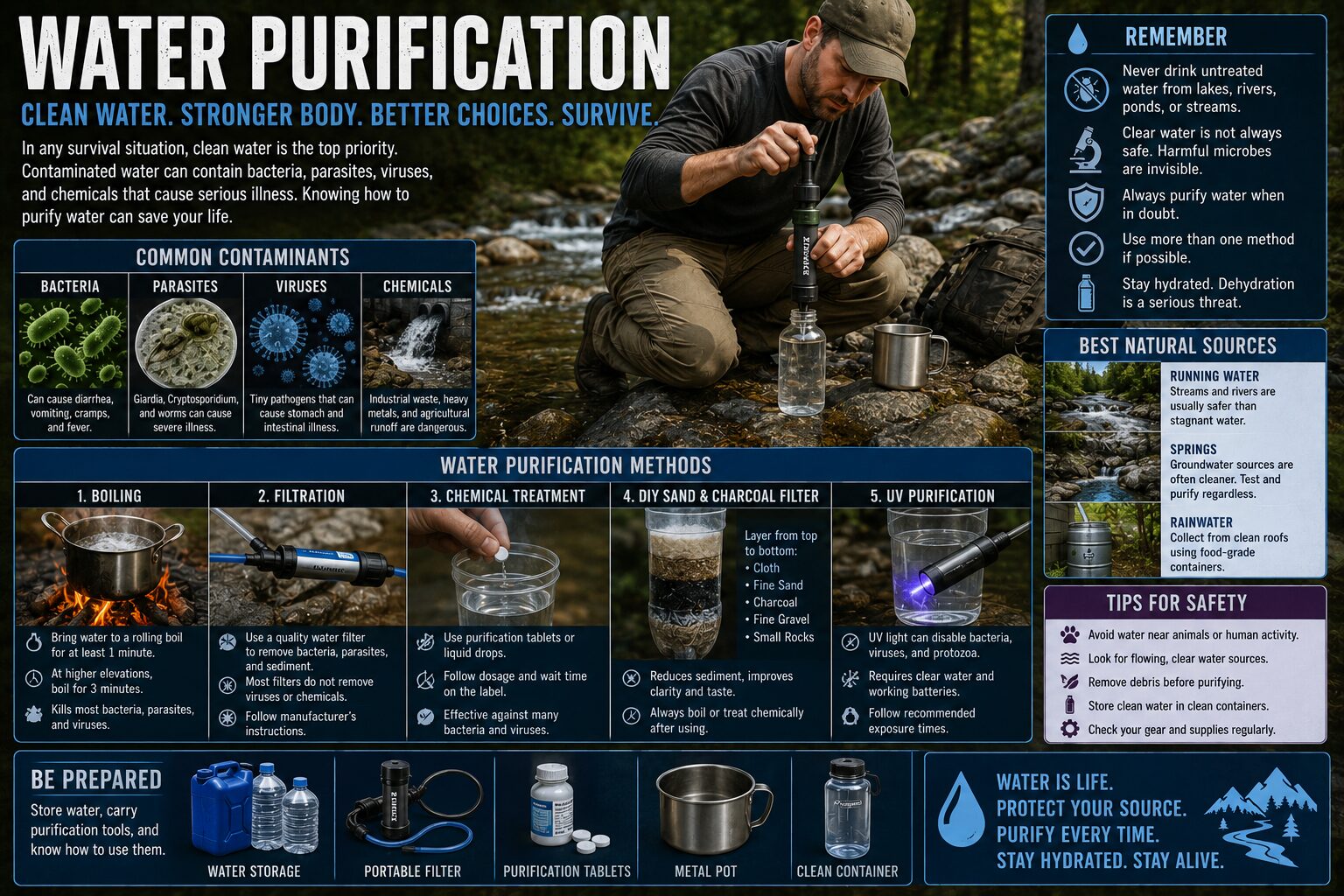
1. Water
Municipal water systems rely on electricity.
Store:
- At least 1 gallon per person per day
- Water filters
- Purification tablets
Bathtubs and sinks can become emergency storage if warning time exists.
2. Food
Focus on shelf-stable foods:
- Canned goods
- Rice
- Beans
- Freeze-dried meals
- Energy bars
Avoid depending entirely on refrigerated foods.
A freezer stays cold only temporarily during outages.
3. Communication
Without internet and cell service, information becomes difficult to obtain.
Keep:
- Hand-crank radios
- Battery-powered radios
- Backup batteries
- Solar chargers
HAM radio operators may become extremely valuable during widespread communication failures.
4. Lighting
Modern homes become dangerous in total darkness.
Have:
- Flashlights
- Lanterns
- Headlamps
- Candles (used carefully)
Avoid wasting batteries unnecessarily.
5. Medical Preparedness
Hospitals depend heavily on backup generators and supply chains.
Essential supplies include:
- Prescription medications
- First-aid kits
- Burn treatment
- Antibiotics if legally obtained
- Sanitation supplies
Medical systems could become overwhelmed quickly.
Transportation Problems
Fuel stations require electricity to pump gas.
Even if fuel exists underground, it may become inaccessible.
Traffic systems may fail:
- Stoplights
- GPS navigation
- Electronic toll systems
Air travel could also face major disruption due to navigation and communication issues.
Keeping vehicles fueled above half a tank becomes a smart preparedness habit.
Financial Chaos
A prolonged blackout could freeze electronic transactions.
Potential issues include:
- ATM failures
- Credit card outages
- Banking interruptions
- Online payment shutdowns
Cash may temporarily become king.
Small denominations are especially useful.
Barter could also emerge in heavily affected regions.
Could Society Collapse?
Probably not permanently — but severe disruption is possible.
The biggest risk comes from:
- Panic
- Resource shortages
- Infrastructure dependency
- Long-term grid damage
Communities with strong preparedness, local food production, and resilient infrastructure would likely recover faster.
Urban areas may struggle more due to population density and dependence on supply chains.
How to Prepare for a Carrington-Level Event
Most preparations overlap with general emergency preparedness.
That’s good news.
Build an Emergency Supply Kit
Include:
- Food
- Water
- Medical supplies
- Flashlights
- Radios
- Batteries
- Power banks
- Backup cooking methods
Aim for at least two weeks of self-sufficiency.
Protect Important Electronics
Some preppers use Faraday containers designed to block electromagnetic interference.
Simple options may include:
- Metal ammo cans
- Specialized Faraday bags
- Metal containers with insulated interiors
Small backup electronics such as radios or solar chargers may benefit from protection.
Learn Low-Tech Skills
A Carrington Event would remind people how dependent modern life is on technology.
Skills matter.
Learn:
- Fire starting
- Water purification
- Basic first aid
- Gardening
- Food preservation
- Navigation without GPS
Preparedness is ultimately about adaptability.
The 2012 Near Miss
In July 2012, Earth narrowly avoided a massive solar storm comparable to the Carrington Event.
According to scientists, if the CME had erupted about a week earlier, Earth would likely have been directly in its path.
That close call reminded researchers that major solar storms are not ancient history — they remain a real possibility.
Government and Infrastructure Protection
Governments and utility companies are increasingly aware of solar storm threats.
Efforts include:
- Hardening power grids
- Improving transformer protections
- Enhancing satellite shielding
- Developing emergency response plans
But large-scale infrastructure upgrades take time and enormous investment.
Personal preparedness still matters.
Final Thoughts
The Carrington Event remains one of the clearest reminders that nature can disrupt even the most advanced civilizations.
Modern life depends on invisible systems:
- Electricity
- Satellites
- Communications
- Digital infrastructure
Most people never think about those systems until they disappear.
A solar superstorm may not destroy humanity, but it could temporarily change daily life in dramatic ways.
Prepared families would have enormous advantages:
- Stored supplies
- Backup power
- Communication tools
- Practical survival skills
- Calm decision-making
The goal isn’t fear.
The goal is resilience.
Because when the lights go out for everyone else, preparation becomes one of the most valuable resources you can own.