By Survival Boys Editorial Team
Modern travelers depend heavily on GPS.
Phones provide turn-by-turn directions instantly, vehicles include navigation systems, and digital maps have replaced many traditional navigation skills. But technology is not perfect.
Phones lose signal.
Batteries die.
GPS systems fail.
Storms disrupt communications.

In survival situations, getting lost can quickly become dangerous.
That is why learning how to travel without digital maps remains one of the most valuable outdoor and preparedness skills you can develop.
Whether you are hiking in the wilderness, dealing with a power outage, traveling through remote areas, or facing a real emergency, understanding basic navigation can help you stay calm, conserve energy, and reach safety.
Why Navigation Skills Still Matter
Most people assume GPS will always work.
But in real emergencies, navigation systems can fail surprisingly fast.
Situations that may disrupt digital navigation include:
- Dead phone batteries
- No cell service
- Severe weather
- Solar storms
- Damaged infrastructure
- Power outages
- Equipment failure
Even experienced hikers become disoriented when visibility changes or trails disappear.
Basic navigation skills provide independence when technology becomes unreliable.
Start With Situational Awareness
Good navigation begins before you even start moving.
Pay attention to your surroundings.
Many people get lost because they travel without observing:
- Landmarks
- Road directions
- Rivers
- Mountain ranges
- Sun position
- Weather patterns
The more aware you are of your environment, the easier it becomes to retrace your path.
Experienced outdoorsmen constantly scan their surroundings instead of relying entirely on devices.
Using the Sun for Direction
The sun remains one of the oldest navigation tools in human history.
In general:
- The sun rises in the east
- The sun sets in the west
Around midday in the Northern Hemisphere, the sun is usually positioned toward the south.
This simple knowledge can help establish basic direction when no compass is available.
The Shadow Stick Method
One classic survival technique uses a stick and sunlight.
- Place a stick upright in the ground.
- Mark the tip of the shadow.
- Wait 15–20 minutes.
- Mark the new shadow position.
The line between the two marks generally runs west to east.
This method is simple but surprisingly effective in open areas.
Reading Natural Landmarks
Nature often provides clues about direction and location.
Useful navigation references include:
- Rivers
- Valleys
- Mountain ridges
- Coastlines
- Tree lines
Rivers frequently lead toward towns, roads, or populated areas.
High ground can also provide better visibility and help identify landmarks.
However, avoid wasting energy climbing difficult terrain unless necessary.
Traveling by Memory and Observation
Before GPS existed, travelers relied heavily on memory.
Simple habits improve natural navigation skills:
- Look behind you occasionally
- Notice unusual trees or rock formations
- Track intersections mentally
- Observe trail patterns
- Remember terrain changes
Many people only recognize locations from one direction and become confused when returning.
Turning around periodically while traveling helps you remember what the route looks like on the return trip.
Basic Compass Skills
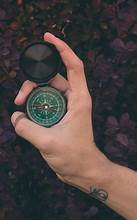
Even though this article focuses on traveling without maps, carrying a compass remains extremely valuable.
A compass:
- Requires no batteries
- Works in remote areas
- Helps maintain direction
- Prevents walking in circles
One common survival mistake is drifting off course without realizing it.
Humans naturally veer slightly while walking long distances without reference points.
A compass helps correct that problem.
Night Navigation
Traveling at night increases difficulty and risk.
If possible, avoid unnecessary movement after dark.
However, if you must navigate at night:
- Move slowly
- Use flashlights sparingly
- Stay aware of hazards
- Follow terrain features carefully
The North Star can also help travelers in the Northern Hemisphere.
Polaris remains relatively fixed in the northern sky and has guided travelers for centuries.
Staying Calm When Lost
Panic is one of the biggest survival dangers.
When people realize they are lost, they often:
- Move too quickly
- Ignore surroundings
- Waste energy
- Make poor decisions
A common survival principle is:
STOP
- Stop
- Think
- Observe
- Plan
Before continuing:
- Assess your supplies
- Check your direction
- Identify landmarks
- Consider staying put if rescuers may be searching
Sometimes remaining in one location is safer than wandering farther off course.
Important Survival Navigation Tips
Avoid Random Movement
Walking aimlessly usually makes situations worse.
Choose deliberate directions based on observation and logic.
Conserve Energy
Exhaustion increases mistakes.
Travel steadily instead of rushing.
Follow Water Carefully
Waterways can lead toward civilization, but they can also create hazards such as cliffs, flooding, or dense terrain.
Use caution.
Mark Your Route
If possible, leave subtle markers:
- Stacked rocks
- Broken twigs
- Small ground markings
This helps prevent accidental circles.
Navigation Gear Worth Carrying
Even minimal preparedness gear can greatly improve navigation.
Useful items include:
- Compass
- Waterproof notebook
- Flashlight
- Whistle
- Signal mirror
- Backup batteries
- Printed local maps
Technology is useful, but backup systems matter.
Final Thoughts
Modern GPS systems are incredible tools, but they should never replace basic navigation knowledge.
Learning how to travel without maps builds:
- Confidence
- Awareness
- Independence
- Survival capability
The outdoors can become dangerous quickly when people depend entirely on technology.
Prepared travelers understand how to observe terrain, track direction, and remain calm even when digital systems fail.
Because in survival situations, knowing where you are may be just as important as knowing where you are going.