By Survival Boys Editorial Team
When people think about emergency preparedness, they often imagine evacuations, bug-out bags, and escaping disaster zones. But in many real-world emergencies, the safest decision is actually the opposite.
Sometimes the best survival strategy is staying exactly where you are.
This is called sheltering in place.

Whether it is a hurricane, chemical spill, civil unrest, blizzard, power grid failure, or severe storm, sheltering in place can protect you from unnecessary danger and help your family survive safely until conditions improve.
The problem is that many people are completely unprepared to remain inside their homes for extended periods of time.
Modern life depends heavily on electricity, running water, internet access, supply chains, and constant convenience. When those systems fail, even short-term emergencies can quickly become stressful.
This guide explains what sheltering in place actually means, when to do it, how to prepare your home, and the essential supplies every family should have before disaster strikes.
What Does Sheltering in Place Mean?
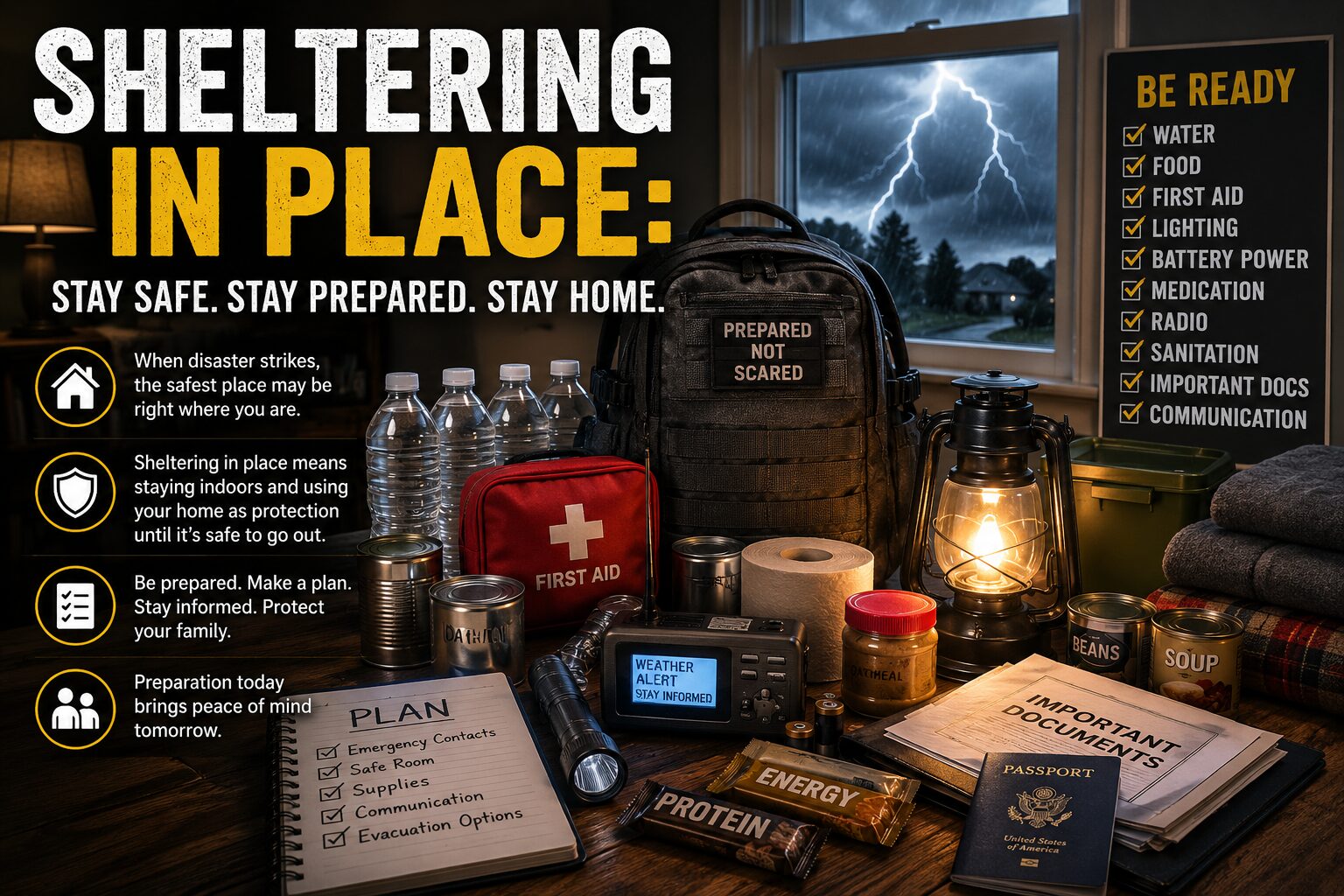
Sheltering in place means staying indoors and using your current location as protection during an emergency.
Instead of evacuating, you remain inside a home, office, school, or other structure until authorities declare conditions safe.
Sheltering in place is commonly recommended during:
- Severe storms
- Tornadoes
- Hurricanes
- Wildfires
- Chemical accidents
- Hazardous air events
- Civil unrest
- Extreme winter weather
- Power outages
- Public safety emergencies
The goal is simple:
- Stay protected
- Reduce exposure to danger
- Preserve resources
- Avoid unnecessary travel
In many emergencies, roads become dangerous or completely blocked. Gas stations may close. Traffic jams can trap people in hazardous conditions.
Leaving too late is often more dangerous than staying put.
Why Sheltering in Place Matters
Many families underestimate how quickly normal life can collapse during emergencies.
Within hours of a disaster:
- Grocery stores empty
- Fuel becomes scarce
- Cell towers overload
- ATMs stop working
- Roads become congested
- Emergency responders become overwhelmed
People who shelter successfully usually share one thing in common:
They prepared before the emergency happened.
Preparedness reduces panic.
When you already have food, water, lighting, medical supplies, and emergency plans in place, stressful situations become far more manageable.
When Should You Shelter in Place?
Not every emergency requires evacuation.
In fact, evacuation can sometimes increase danger.
Situations Where Sheltering in Place May Be Safer
Severe Storms and Tornadoes
Travel during violent weather is extremely dangerous.
Strong winds, flooding, debris, and poor visibility create life-threatening conditions.
Interior rooms, basements, and storm shelters provide far better protection.
Chemical Spills or Airborne Hazards
During hazardous material incidents, authorities often instruct residents to stay indoors and seal windows and doors.
This reduces exposure to contaminated air.
In these situations:
- Turn off ventilation systems
- Close windows
- Seal gaps with towels or tape
- Stay informed through emergency alerts
Civil Unrest
Large-scale unrest can make travel unpredictable and dangerous.
Remaining inside a secure location with supplies may be safer than attempting to leave crowded urban areas.
Winter Storms
Snowstorms and ice storms regularly strand drivers and shut down roads.
Sheltering at home with food, heat, and supplies is usually safer than attempting unnecessary travel.
Power Grid Failures
Extended blackouts can create widespread confusion and shortages.
Prepared households often handle outages far better than those rushing into crowded stores after the fact.
Building a Shelter-in-Place Plan
Preparedness works best when there is a clear plan.
Every family should discuss:
- Emergency contacts
- Safe rooms
- Supply locations
- Communication plans
- Evacuation alternatives
- Medical needs
- Pet care
Planning ahead prevents confusion during stressful situations.
Essential Shelter-in-Place Supplies
1. Water
Water is the most important emergency resource.
Experts commonly recommend storing at least:
- One gallon per person per day
A minimum three-day supply is recommended, but two weeks is far better.
Water should be stored in:
- Food-grade containers
- Cool environments
- Dark locations
Additional water preparation tools include:
- Water filters
- Purification tablets
- Stainless steel containers
2. Food
Emergency food should focus on:
- Long shelf life
- Easy preparation
- High calories
- Familiar foods
Good options include:
- Canned foods
- Rice
- Beans
- Pasta
- Oatmeal
- Peanut butter
- Freeze-dried meals
- Protein bars
Do not rely entirely on foods requiring refrigeration.
Power outages can spoil refrigerated supplies quickly.
3. Lighting
Blackouts are extremely common during disasters.
Reliable lighting improves:
- Safety
- Mobility
- Morale
Important lighting supplies include:
- LED flashlights
- Headlamps
- Lanterns
- Solar lights
- Extra batteries
Headlamps are especially useful because they allow hands-free movement.
4. Backup Power
Phones and communication devices become extremely important during emergencies.
Useful backup power options include:
- Power banks
- Solar chargers
- Portable power stations
- Vehicle inverters
Even small battery systems can keep critical devices running.
5. Medical Supplies
Medical issues become more serious when hospitals are overwhelmed or travel becomes difficult.
Every home should maintain:
- First aid kits
- Prescription medications
- Pain relievers
- Bandages
- Gauze
- Gloves
- Disinfectants
Families with medical conditions should prepare extra medication whenever legally possible.
6. Sanitation and Hygiene
People often forget hygiene planning during emergencies.
Important supplies include:
- Toilet paper
- Trash bags
- Soap
- Baby wipes
- Hand sanitizer
- Feminine hygiene products
- Cleaning supplies
Sanitation problems can quickly create secondary health risks.
7. Communication Equipment
Information saves lives during disasters.
Important communication tools include:
- NOAA weather radios
- Battery-powered radios
- Backup chargers
- Printed emergency contacts
Do not rely entirely on smartphones.
Choosing a Safe Room
Every home should have a designated safe area.
The best shelter location depends on the emergency.
Tornadoes
- Basements
- Interior rooms
- Lowest floors
- Rooms without windows
Chemical Hazards
- Interior rooms
- Upper floors if recommended
- Sealed environments
Hurricanes
- Interior reinforced rooms
- Areas away from windows
Prepare safe rooms with:
- Flashlights
- Water
- Medical supplies
- Radios
- Blankets
The Importance of Mental Preparedness
One of the biggest survival advantages is remaining calm.
Panic causes poor decisions.
Sheltering in place can become mentally difficult during:
- Long blackouts
- Communication outages
- Severe storms
- Supply shortages
Maintaining routines helps reduce stress.
Simple actions matter:
- Eat regularly
- Stay hydrated
- Conserve energy
- Monitor updates
- Keep children occupied
- Stay organized
Morale is an overlooked survival tool.
Common Shelter-in-Place Mistakes
Waiting Too Long to Prepare
One of the biggest mistakes is shopping after the emergency begins.
Stores empty quickly.
Prepared households avoid last-minute panic buying.
Ignoring Water Storage
Many people store food but forget water.
Water shortages become serious much faster than food shortages.
Overlooking Power Needs
Dead phones and empty batteries create communication problems quickly.
Backup power matters.
Failing to Practice Plans
Preparedness plans only work if everyone understands them.
Review emergency plans regularly.
How Long Should You Prepare For?
Most experts recommend preparing for at least:
- 72 hours minimum
However, many experienced preppers aim for:
- Two weeks
- Thirty days
- Longer depending on risk factors
Weather events, infrastructure failures, and supply shortages can last longer than expected.
Sheltering in Place vs. Bugging Out
Many survival discussions focus heavily on bug-out scenarios.
But realistically, sheltering in place is often:
- Safer
- More comfortable
- More sustainable
- Easier for families
Your home already contains:
- Shelter
- Clothing
- Food
- Water
- Medical supplies
- Tools
Leaving should usually be a last resort unless conditions become unsafe.
Final Thoughts
Sheltering in place is one of the most practical and realistic survival strategies available.
Most emergencies do not require wilderness survival skills or dramatic evacuations.
They require preparation, planning, and the ability to remain safe at home while normal systems recover.
Prepared families handle emergencies differently.
They avoid panic buying.
They avoid unnecessary risks.
They stay informed.
They stay organized.
Most importantly, they already have what they need before disaster strikes.
Preparedness is not about fear.
It is about confidence.
Because when emergencies happen, the safest place is often the one you already call home.