Survival, Preparedness & Self-Reliance
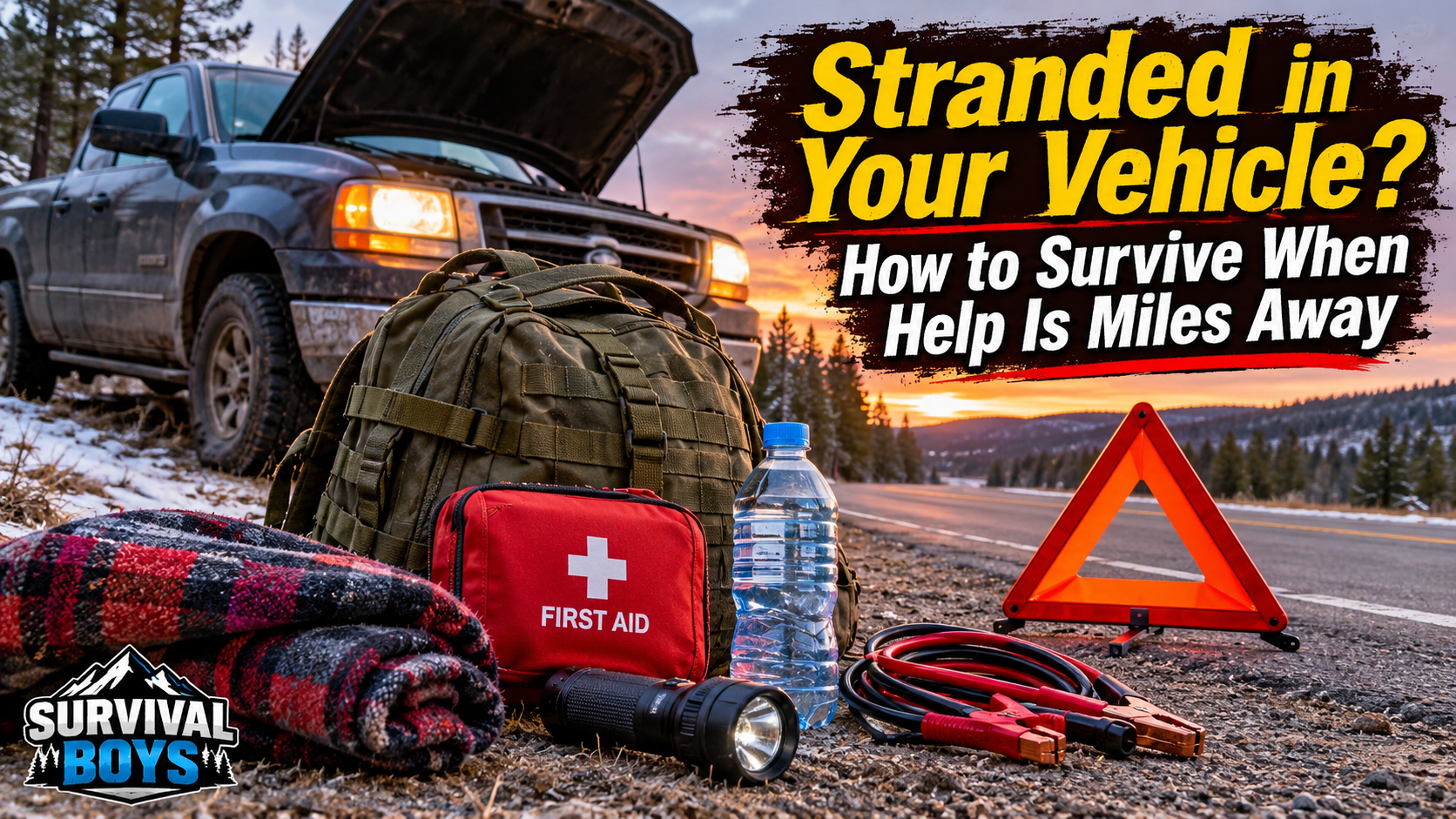
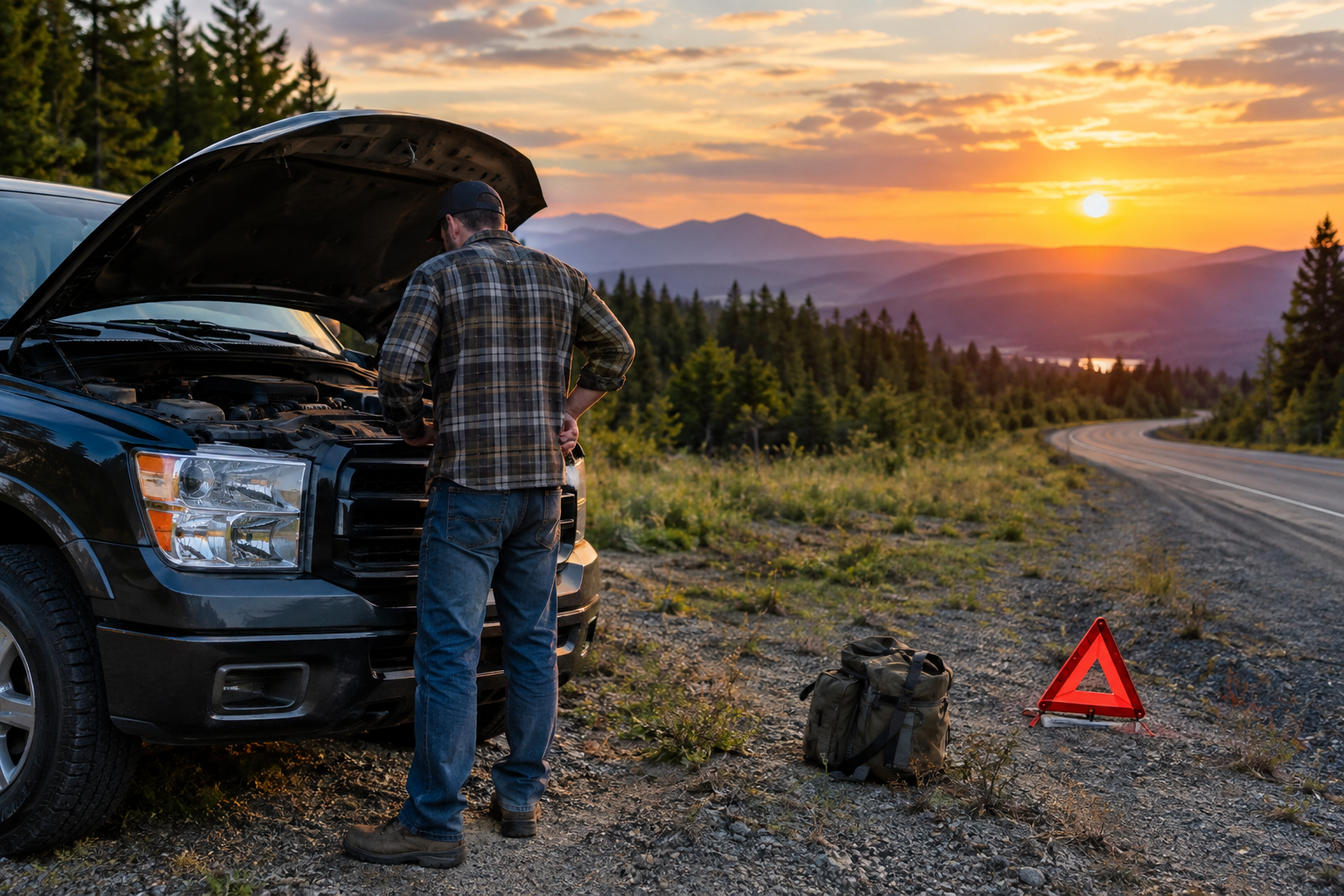
Imagine driving down a lonely country road when your engine suddenly sputters, your dashboard lights up, and your vehicle rolls to a stop. There are no nearby buildings, no passing traffic, and your phone shows little or no service.
You are miles from the nearest town, the sun is beginning to set, and you have no idea when help will arrive.
Would you know what to do?

A vehicle breakdown in a remote area can quickly turn from an inconvenience into a dangerous survival situation. Extreme temperatures, limited communication, dehydration, and poor decisions can make matters worse.
The good news is that a few practical skills and the right decisions can dramatically improve your chances of getting through the situation safely.
Here is how to handle a remote vehicle breakdown when help may be hours away.
1. Stay Calm and Assess the Situation
Your first priority is to avoid turning a mechanical problem into a personal emergency.
When your vehicle begins experiencing problems, reduce your speed gradually and look for a safe place to pull over. Avoid stopping in a blind curve, on a narrow shoulder, or anywhere another driver might have difficulty seeing you.
Once stopped, activate your hazard lights.
If you are on a busy road, remain aware of passing traffic before exiting the vehicle. Never stand behind your vehicle or between it and moving traffic.
Take a moment to assess your surroundings.
Ask yourself three questions:
- Is the vehicle in a safe location?
- Is anyone injured or experiencing a medical emergency?
- What hazards are present, including weather, terrain, traffic, or nearby fire?
If you see smoke, smell fuel, notice an electrical fire, or suspect another immediate danger, move away from the vehicle when it is safe to do so.
Remember: Your vehicle can be replaced. Your life cannot.
Do not attempt roadside repairs that put you in danger, particularly near moving traffic or beneath a vehicle supported only by a jack.
2. Decide Whether to Stay With Your Vehicle
One of the most important decisions in a remote breakdown is whether to remain with your vehicle or attempt to reach help on foot.
In many situations, staying with the vehicle is the better option.
Your vehicle provides shelter from wind and rain, shade from the sun, a visible landmark for rescuers, and a place to store your supplies.
A vehicle is also generally easier for rescuers to locate than a person walking through miles of unfamiliar terrain.
Leaving without a plan can create additional problems. You could become lost, run out of water, suffer heat exhaustion, or find yourself stranded after dark.
However, staying is not always the safest choice.
If your vehicle is exposed to an approaching wildfire, rising floodwater, dangerous traffic, or another immediate threat, move to a safer location. Never attempt to drive through floodwater simply because the road appears passable.
If you decide to leave the vehicle, consider the terrain, weather, daylight, available water, and distance to safety. Whenever possible, notify someone of your decision and intended destination.
The rule is simple: Stay with a safely positioned vehicle unless remaining there creates a greater danger.
3. Get a Message Out for Help
Communication can be the difference between a manageable delay and a serious survival emergency.
If you have cellular service, contact roadside assistance or emergency services as appropriate. Give them your location, vehicle description, direction of travel, and a clear explanation of your situation.
Do not rely solely on an address.
Useful location information includes:
- The highway or road name.
- The nearest mile marker or recognizable intersection.
- Your direction of travel.
- Nearby landmarks or GPS coordinates.
- The number of people with you and any medical concerns.
If your phone has no ordinary cellular signal, do not assume every communication option is unavailable. Depending on your device, carrier, and location, emergency satellite messaging or satellite SOS may be supported.
Check these capabilities before traveling rather than waiting until an emergency.
If you cannot contact anyone, conserve your phone’s battery. Reduce screen brightness, close unnecessary applications, and limit repeated attempts to search for a signal.
If you have a vehicle charger or power bank, use it carefully.
You can also make your vehicle easier to notice by keeping hazard lights on when appropriate, especially when visibility is poor or the vehicle is near traffic. Use reflective triangles or other warning devices only when you can place them without exposing yourself to moving vehicles.
4. Protect Yourself From Heat and Cold
Weather can become your biggest enemy when you are stranded.
In hot conditions, a parked vehicle can heat up rapidly, particularly in direct sunlight. Opening the windows slightly does not guarantee a safe temperature.
If the interior becomes dangerously hot, move to a safer shaded location when available. Drink water regularly and watch for warning signs of heat illness, including headache, dizziness, nausea, and unusual weakness.
Confusion, collapse, or very high body temperature can indicate a life-threatening heat emergency. Call emergency services and begin appropriate cooling immediately.
In cold conditions, protect yourself from wind and moisture. Put on extra clothing, use blankets, and keep dry layers available.
Hypothermia can develop even when temperatures are above freezing, particularly when someone is wet, exhausted, or exposed to wind.
If you need to run the vehicle’s engine for heat or air conditioning, make sure the exhaust outlet is clear of snow, mud, or debris. Never run an engine in an enclosed garage or other enclosed space.
Carbon monoxide is an invisible, odorless gas that can be fatal. A damaged exhaust system or blocked exhaust outlet can allow it to enter the passenger compartment, even in a vehicle parked outdoors.
If anyone develops a headache, dizziness, nausea, or confusion while the engine is running, move into fresh air and seek emergency assistance.
Never assume that sitting inside a running vehicle is automatically safe.
5. Manage Your Water, Food, and Energy
A breakdown that lasts several hours can become more difficult when you have no supplies.
Water should be your first consideration. Physical activity, heat, and sweating increase fluid needs, so there is no single amount that is appropriate for every situation.
If you have drinking water available, use it sensibly and monitor your condition. Do not wait until you are severely thirsty before drinking.
Avoid unnecessary physical exertion, particularly in hot weather.
Food is important during a prolonged delay, but water, temperature control, and medical needs generally deserve greater immediate attention.
Keep a small supply of shelf-stable snacks in your vehicle. Choose foods that tolerate the temperatures your vehicle may experience, and inspect them regularly for damage or expiration.
Your emergency supplies should also include:
- A first-aid kit.
- A flashlight or headlamp.
- Extra clothing appropriate for the season.
- A blanket or emergency bivy.
- A power bank and charging cable.
- Reflective warning equipment.
- Basic repair supplies and a spare tire, where appropriate.
Keep essential items accessible rather than buried beneath luggage.
A well-organized vehicle can give you more options when something goes wrong.
6. Know When Walking for Help Is a Bad Idea
Walking to find help might seem like the obvious solution, but it can be a serious mistake.
Distances are easy to underestimate when you are unfamiliar with the area. A road that looks short on a map might involve steep terrain, dangerous traffic, extreme temperatures, or miles without drinking water.
Walking at night adds additional hazards.
Before considering it, evaluate your physical condition, available supplies, daylight, weather, terrain, and the reliability of your location information.
If you are on a remote road, have already communicated your location, and your vehicle is safely positioned, remaining in place may give rescuers the best chance of finding you.
If you must walk, avoid unnecessary risks and tell someone where you are going whenever communication is possible.
Do not separate from your group without a clear reason and plan.
If someone is injured, severely dehydrated, confused, or showing signs of heat illness or hypothermia, do not make them walk unnecessarily. Seek emergency assistance.
7. Prepare Before Your Next Trip
The best time to prepare for a remote breakdown is before you leave home.
Start by checking your tires, engine oil, coolant, battery, brakes, and other maintenance items appropriate for your vehicle. Make sure your spare tire, jack, and lug wrench are present and usable.
Check the weather and road conditions before traveling. Tell someone your planned route and expected arrival time, especially when traveling through isolated areas.
Build a vehicle emergency kit suited to your climate and travel habits.
Consider keeping a paper map in addition to your phone’s navigation system. Electronic devices can lose power, malfunction, or become unusable in areas without reliable service.
Most importantly, practice basic skills before you need them. Learn how to change a tire safely, use a jump starter according to its instructions, identify your vehicle’s emergency equipment, and communicate your location.
Preparation does not eliminate every risk, but it gives you more choices when something unexpected happens.
FINAL THOUGHTS: SURVIVAL STARTS BEFORE THE EMERGENCY
A remote vehicle breakdown tests more than your mechanical knowledge. It tests your judgment, patience, and ability to adapt when your plans suddenly change.
Stay calm. Get to a safe location. Communicate your position. Protect yourself from the weather. Manage your supplies and avoid unnecessary risks.
You do not need an expensive collection of equipment to make better decisions. You need practical knowledge, a little preparation, and the discipline to think before acting.
The next time you head down a remote road, ask yourself one question:
If my vehicle stopped running right now, would I be prepared to handle the next 24 hours?
If the answer is no, start preparing today.
For more practical survival skills, emergency preparedness advice, and outdoor knowledge, visit SurvivalBoys.com.
Stay prepared. Stay alert. Stay alive.
Survival Boys — No Fluff. Just Survival.