How to Maintain Sanitation During an Emergency
Imagine waking up after a major storm to discover that your neighborhood has lost power, the water supply is unreliable, and your toilets no longer flush. You have food stored away, flashlights ready, and emergency supplies in place. But there is one problem you might not have considered: what happens when you can no longer use your plumbing?
It might not sound like the most exciting survival subject, but sanitation is one of the most important parts of emergency preparedness. Without a plan, waste can quickly create unpleasant living conditions, attract insects, contaminate surfaces, and increase the risk of illness.
Whether you’re preparing for a hurricane, an extended utility outage, or a remote camping trip, knowing how to manage sanitation can make a difficult situation much more manageable.
Here’s how to prepare before the problem begins.

1. Understand Why Plumbing Can Fail
Modern homes depend on several systems working together. Water must reach your house, and wastewater must have somewhere to go.
During an emergency, either system can become unreliable.
A power outage may disable a private well pump. Flooding can damage septic systems. Municipal water pressure can disappear, and sewer systems can become overwhelmed during heavy rainfall.
Even if your home appears undamaged, you may be unable to flush a toilet safely.
The lesson is simple: Never assume your plumbing will remain operational throughout an emergency.
Include sanitation supplies in your preparedness plan alongside food, lighting, first aid, and other essentials.
2. Assemble an Emergency Sanitation Kit
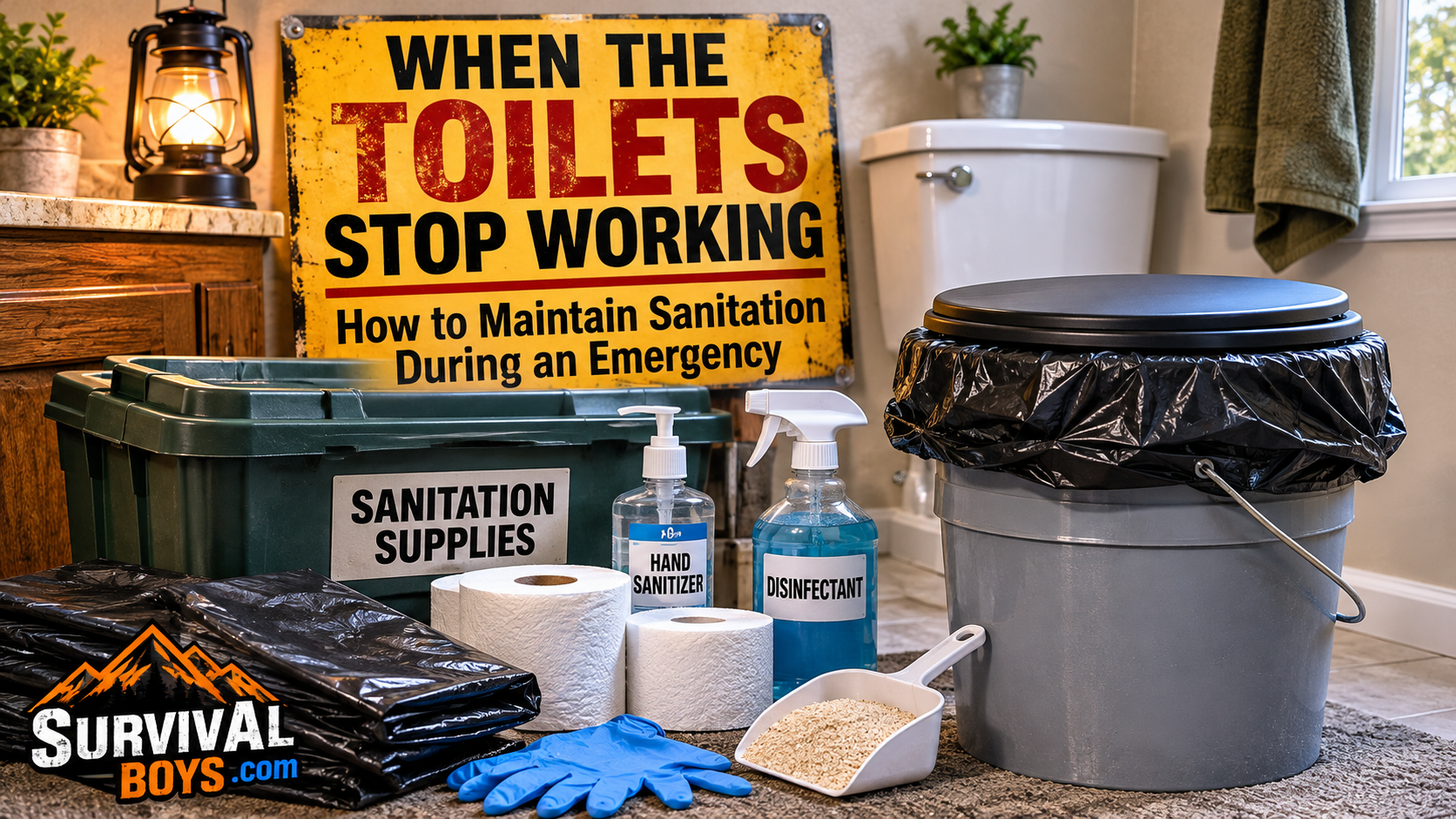
You don’t need an expensive survival system to get started. A few basic supplies can help your household manage a temporary plumbing failure.
Consider storing the following items:
- One or two sturdy, dedicated emergency waste containers with secure lids.
- Heavy-duty waste bags suitable for your intended sanitation system.
- Absorbent material, such as commercially available toilet waste absorbent.
- Disposable gloves.
- Hand soap and hand sanitizer.
- Disinfectant suitable for the surfaces you need to clean.
- Toilet paper and paper towels.
- Dedicated cleaning supplies and a small scoop for handling absorbent material.
- Tightly sealing storage containers for unused sanitation supplies.
Store these items together in a clearly labeled location where everyone in the household can find them.
Keep sanitation equipment separate from food, drinking water, cooking supplies, and food-preparation surfaces.
If you have a large family, calculate supplies based on the number of people and the expected length of the emergency. A kit designed for two people over a weekend may be inadequate for a household of six facing a week without functioning plumbing.
3. Establish a Backup Toilet System
If your toilet stops working, don’t immediately assume you can restore normal operation by pouring water into the bowl.
Whether flushing is possible depends on the condition of your plumbing and sewer or septic system. Flooding, sewer backups, and damaged wastewater infrastructure can make flushing unsafe or ineffective.
A dedicated emergency toilet or a properly designed bucket-style sanitation system may provide an alternative.
Follow the manufacturer’s instructions for any portable toilet or waste-containment product. Use the appropriate bags and absorbent materials, and make sure the container is stable and has a secure lid.
Place the system in a private, well-ventilated location away from food storage and preparation areas.
Never use a container that could be confused with one intended for drinking water or food.
Important: A waste bag is not automatically safe for ordinary household trash collection. Disposal requirements depend on the type of waste, local regulations, and the collection service’s instructions.
Do not dump human waste into storm drains, waterways, ditches, or the surrounding environment.
4. Make Handwashing a Priority
One of the biggest mistakes people can make during an emergency is treating hand hygiene as optional.
Handling waste can transfer harmful microorganisms to hands, clothing, door handles, and other frequently touched surfaces.
Wash your hands thoroughly with soap and safe water after using the toilet, handling waste, or cleaning contaminated surfaces.
If soap and water are unavailable, an alcohol-based hand sanitizer containing at least 60% alcohol can be useful when hands are not visibly dirty. However, sanitizer is not a substitute for washing visibly soiled hands.
Keep handwashing supplies near the sanitation area, but protect them from contamination.
Children should understand the rules before an emergency occurs. Make sure everyone knows where supplies are located and how to use the backup system.
A simple routine followed consistently is more effective than an elaborate plan nobody remembers.
5. Protect Your Property From Wastewater Contamination
A sewer backup or failing septic system can create a serious sanitation hazard.
If wastewater begins backing up into your home, stop using affected plumbing fixtures and keep people and pets away from the contaminated area.
Avoid direct contact with sewage. Do not attempt to clean extensive contamination without appropriate protective equipment and knowledge.
If flooding has affected a septic system, avoid using it until it has been assessed and is safe to operate. Floodwater can interfere with normal drainage and expose people to contaminated water.
Never assume a flooded yard is safe simply because the water has disappeared.
If sewage enters your home, contact the appropriate utility, public health authority, septic professional, or qualified cleanup service for guidance.
Protecting your household sometimes means recognizing when a problem requires professional assistance.
6. Plan for Waste Disposal Before an Emergency
Collecting waste is only half the challenge. You also need a safe and lawful way to dispose of it.
Before an emergency, identify the local authority responsible for sanitation guidance and find out how waste should be handled if normal collection services are interrupted.
Follow instructions from local officials and waste-management providers. Keep collected waste securely contained, away from children and animals, and separate from food and water supplies.
Never burn human waste or sanitation materials in an improvised fire. Doing so can expose people to hazardous smoke and does not guarantee safe disposal.
If an emergency lasts longer than expected, reassess your storage capacity and disposal options rather than allowing waste to accumulate indefinitely.
7. Create a Household Sanitation Plan
A sanitation plan should be simple enough for everyone in your household to follow.
Decide where the emergency toilet will be located, where clean supplies will be stored, how handwashing will work, and who will be responsible for maintaining the system.
Consider the needs of children, older adults, and anyone with limited mobility.
If you live in a rural area, determine whether your well, septic system, or alternative wastewater arrangement could be affected by flooding or prolonged power loss.
If you live in an apartment, learn what your building management recommends when water service or plumbing becomes unavailable.
Write down the plan and keep a copy with your other emergency information.
Most importantly, review it periodically and replace expired, damaged, or depleted supplies.
Final Thoughts: Prepare for the Problems Nobody Talks About
Survival is not just about finding food, building a fire, or keeping warm. It is also about maintaining the basic conditions that allow people to remain healthy when normal services disappear.
A household can have weeks of food stored away and still face a serious problem if sanitation fails.
The solution is not complicated. Gather the right supplies, establish a safe backup system, practice proper hygiene, and understand how to handle waste responsibly.
You don’t have to wait for a disaster to begin thinking about these things.
At Survival Boys, we believe practical preparedness means looking beyond the obvious threats and preparing for the everyday problems that can become serious during an emergency.
Prepare before you need it. Stay self-reliant. Stay ready.
Visit SurvivalBoys.com for more practical guides on emergency preparedness, wilderness skills, and self-reliance.