In a world filled with technology, instant convenience, and constant distractions, many parents focus on providing their children with the latest gadgets, sports opportunities, and academic advantages. While those things certainly have value, there is another gift that may prove far more important throughout their lives: practical survival skills.
Teaching children how to take care of themselves, solve problems, and adapt to difficult situations builds confidence that lasts a lifetime. Survival skills are not just for wilderness emergencies. They are life skills that help children become capable, responsible, and resilient adults.
The truth is that most children today spend very little time learning how the world actually works. They may know how to operate a smartphone, but do they know how to start a fire? Can they navigate with a map? Do they understand how to grow food or purify water?
As parents, grandparents, and mentors, we have an opportunity to pass down knowledge that previous generations considered common sense. These skills can strengthen family bonds, create unforgettable memories, and prepare children for challenges both big and small.

Why Survival Skills Matter
Survival skills teach far more than emergency preparedness.
When children learn outdoor and self-reliance skills, they develop critical thinking abilities. They learn to assess situations, identify problems, and find solutions. They discover that challenges can be overcome through patience, effort, and creativity.
These lessons carry over into every area of life.
A child who learns how to build a shelter from natural materials also learns persistence. A child who practices navigating through the woods learns decision-making. A child who grows vegetables in a garden learns responsibility and delayed gratification.
Most importantly, survival skills help children develop confidence. Confidence is not built through comfort. It is built through overcoming obstacles and accomplishing difficult tasks.
Start With Age-Appropriate Skills
One of the biggest mistakes parents make is trying to teach advanced survival skills too early. Children learn best when lessons match their age and maturity level.
Young children can begin learning basic outdoor awareness. Teach them to recognize landmarks, identify common plants, and understand basic safety rules. Encourage curiosity about nature.
As children grow older, introduce more responsibility. They can help set up camp, collect firewood, assist with cooking, and learn basic navigation.
Teenagers can take on more advanced skills such as fire starting, first aid, shelter building, fishing, and emergency planning.
The goal is to gradually increase responsibility while maintaining a safe learning environment.
Turn Learning Into Adventure
Children rarely enjoy lectures, but they love adventures.
Instead of sitting them down for a lesson on preparedness, turn learning into a family activity.
Go camping and allow them to help set up camp. Create scavenger hunts that teach navigation skills. Challenge them to build simple shelters from sticks and leaves. Let them help prepare meals outdoors.
The more enjoyable the experience, the more likely they are to remember the lessons.
Many children who would never willingly read a survival manual become enthusiastic learners when skills are presented as exciting challenges.
Remember that fun creates lasting memories. Those memories often become the foundation for lifelong learning.
Teach Fire Safety and Fire Building
Fire is one of humanity’s oldest survival tools, and it remains one of the most important skills a child can learn.
Of course, safety must always come first.
Teach children to respect fire rather than fear it. Explain how quickly fire can become dangerous and establish clear rules for handling matches, lighters, and campfires.
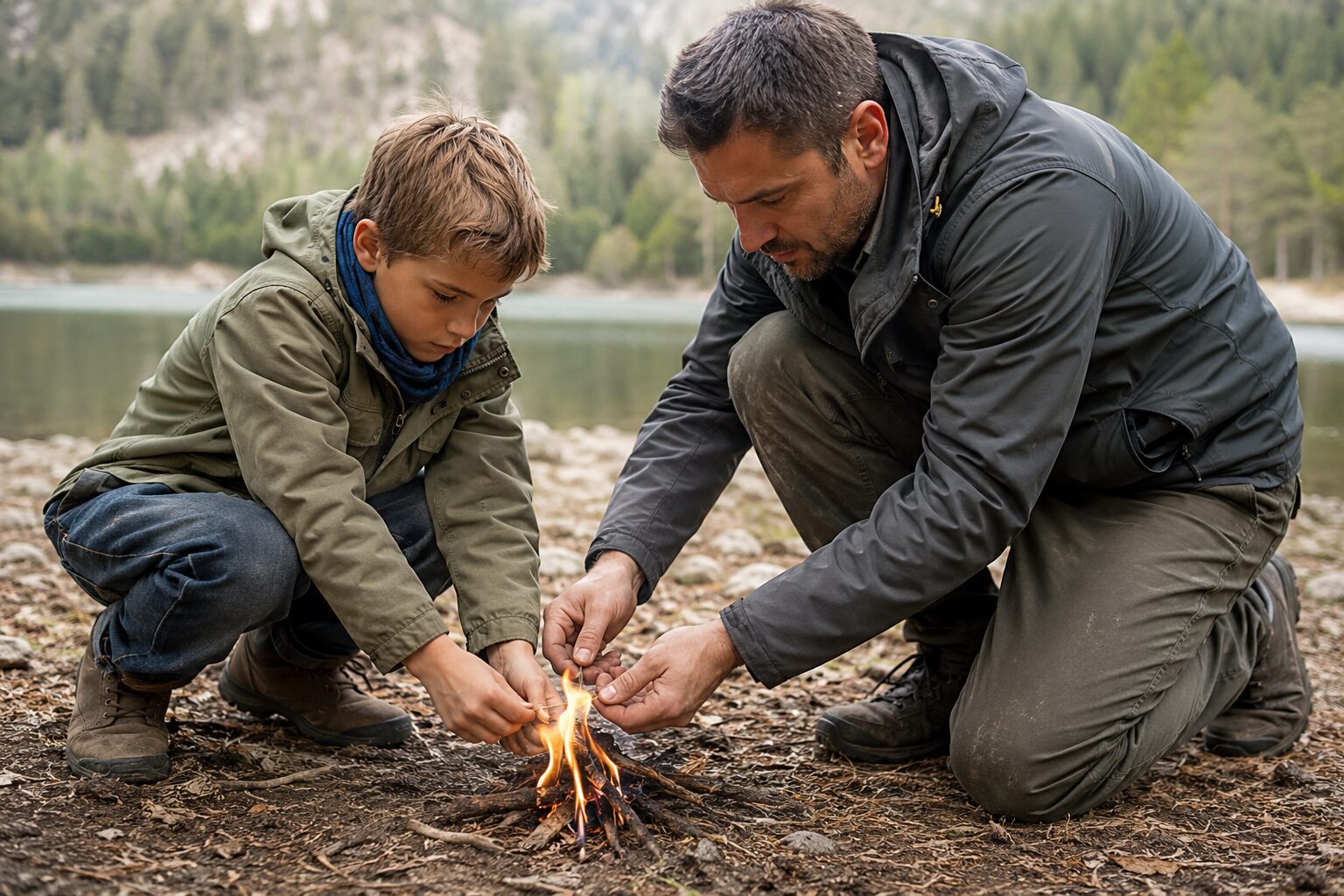
As they mature, show them how to safely build and maintain a fire under adult supervision. Teach the importance of selecting a safe fire location, gathering appropriate tinder and kindling, and completely extinguishing a fire before leaving the area.
Learning to create warmth, cook food, and signal for help are valuable skills that can one day make a difference in an emergency.
Navigation Without Electronics
Modern technology is useful, but batteries die and devices fail.
Children should understand how to navigate without relying entirely on GPS.
Begin by teaching them how to observe their surroundings. Encourage them to identify landmarks and pay attention to directions while hiking or traveling.
Introduce maps and compasses. Explain how maps represent real-world locations and demonstrate basic compass use.
Practice simple navigation exercises together. Challenge them to locate specific points using a map or follow a route through a familiar area.
Navigation skills build confidence and help children develop situational awareness that will benefit them throughout life.
First Aid and Emergency Response
Every child should learn basic first aid.
Even young children can understand how to call emergency services, describe their location, and recognize serious injuries.
Older children can learn how to clean wounds, apply bandages, stop minor bleeding, and recognize signs of heat exhaustion or dehydration.
Teaching first aid provides two important benefits. First, it equips children to help themselves and others during emergencies. Second, it reduces panic because they know what actions to take when something goes wrong.
Knowledge often replaces fear with confidence.
Food, Water, and Self-Reliance
Many children grow up believing food comes from grocery stores, and water comes from faucets.
Teaching them where these necessities actually come from can be eye-opening.
Start a small garden. Allow children to plant seeds, water crops, and harvest vegetables. Even a few containers on a patio can provide valuable lessons.
Teach them the importance of clean drinking water. Discuss water sources, filtration methods, and why untreated water can be dangerous.
Introduce simple outdoor cooking methods. Let them help prepare meals while camping or grilling.
When children participate in providing food and water, they gain appreciation for resources that many people take for granted.
Problem Solving and Adaptability
Perhaps the most valuable survival skill is adaptability.
Survival situations rarely unfold according to plan. Success often depends on staying calm and finding creative solutions.
Create opportunities for children to solve problems independently.
If a tent pole breaks, ask how they would fix it. If a trail marker is missing, discuss alternative ways to determine direction. If the weather changes unexpectedly, brainstorm how to stay dry and warm.
Resist the urge to provide immediate answers.
Allow children to think through challenges and develop their own solutions. Even when they make mistakes, valuable learning takes place.
The goal is not perfection. The goal is to develop confidence in their ability to handle uncertainty.
Lead By Example
Children learn more from what we do than what we say.
If you want your children to value preparedness, demonstrate it yourself.
Show them how you organize emergency supplies. Include them when creating family emergency plans. Take them on outdoor adventures. Let them see you learning new skills and practicing old ones.
When children observe preparedness as a normal part of life, they are more likely to embrace it themselves.
Your actions become their example.
Building Strong Families Through Shared Skills
Teaching survival skills is about much more than preparing for disasters.
It is about spending meaningful time together. It is about building confidence, responsibility, and character. It is about passing down knowledge that may one day help your children protect themselves and others.
Every campfire conversation, every hike through the woods, every lesson learned outdoors becomes part of a larger investment in your child’s future.
Long after the details of school assignments are forgotten, they will remember the skills you taught them, the adventures you shared, and the confidence they gained along the way.
The greatest survival tool your child will ever possess is not a knife, a compass, or a backpack.
It is the knowledge and self-reliance that come from learning how to overcome challenges.
And that is a gift that lasts a lifetime.
At SurvivalBoys.com, we believe preparedness begins at home. The skills you teach your children today can help them become capable, confident, and resilient adults tomorrow.