Most survival situations don’t begin with dramatic music or Hollywood-style disasters.
They start with something simple.
A flat tire on a remote road.
A power outage that lasts longer than expected.

A wrong turn during a hike.
A severe storm that cuts off access to supplies.
The people who handle these situations best usually aren’t the strongest or the ones carrying the most expensive gear. They’re the ones who have built good habits before an emergency ever happens.
Preparedness isn’t about living in fear—it’s about developing practical skills that make everyday life easier and emergencies less stressful.
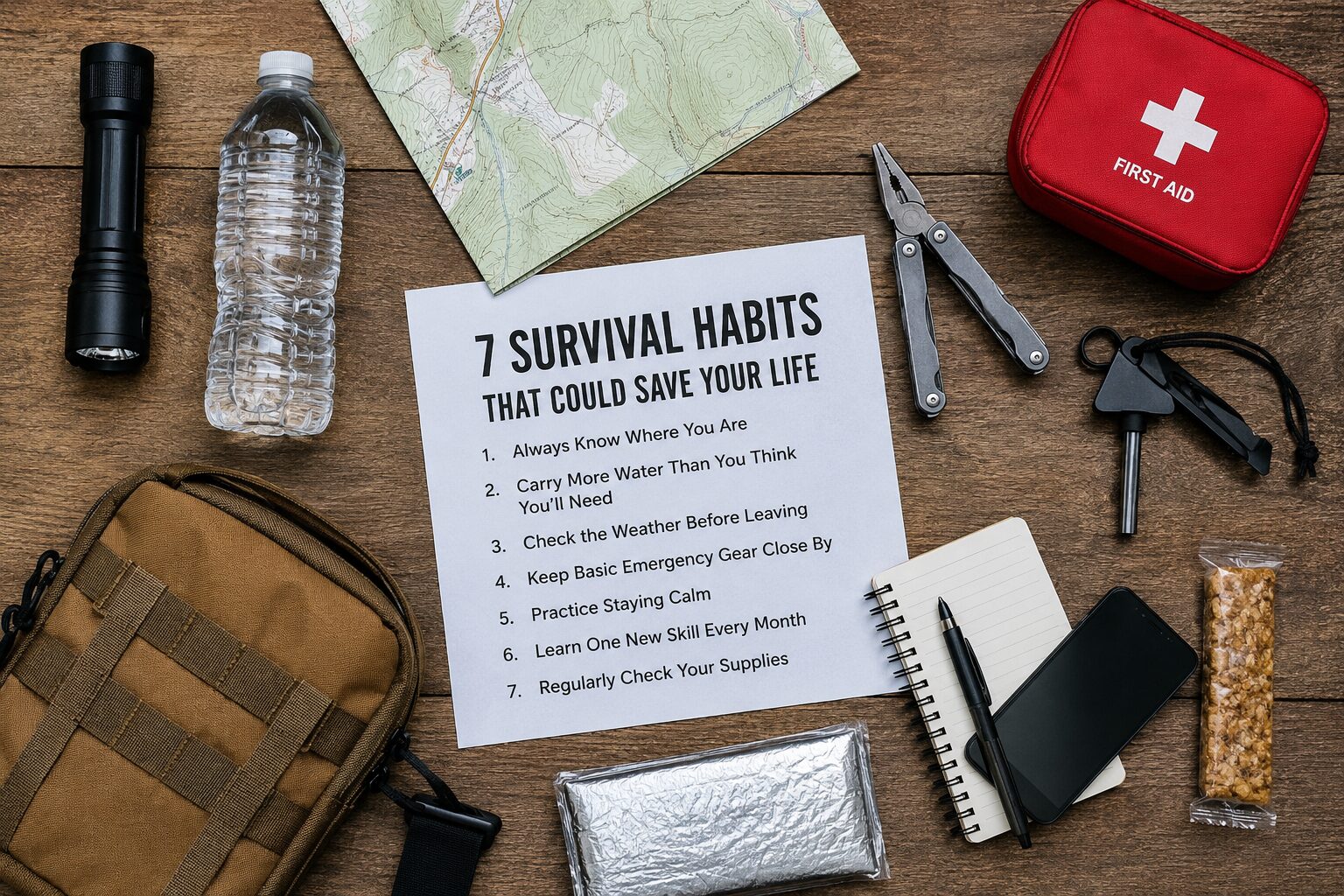
Here are seven survival habits worth practicing today.
1. Always Know Where You Are
Modern GPS technology is incredible, but batteries die, phones break, and cell service disappears.
Whether you’re hiking, camping, or driving through unfamiliar areas, make it a habit to know your general location.
Look for:
- Major roads
- Rivers and streams
- High points
- Landmarks
- Nearby towns
If you become lost, these details can make the difference between wandering aimlessly and finding your way back.
Even when using GPS, glance at road signs and study a map before leaving home. Building mental awareness is one of the simplest survival skills you can develop.
2. Carry More Water Than You Think You’ll Need
Dehydration affects judgment long before you actually feel thirsty.
A short afternoon outing can quickly become an overnight situation because of vehicle trouble, injury, or bad weather.
Keep water in:
- Your vehicle
- Your backpack
- Your work bag
- Emergency kits at home
A reusable bottle is a great start, but carrying an extra bottle or small water filter provides valuable backup.
Water is almost always a higher priority than food in a survival situation.
3. Check the Weather Before Leaving
Weather changes everything.
Heavy rain can flood roads.
Cold temperatures increase the risk of hypothermia.
Extreme heat speeds dehydration.
Strong winds increase wildfire danger.
Checking the forecast only takes a minute but helps you choose proper clothing, pack extra gear, and avoid unnecessary risks.
Many emergencies become dangerous simply because someone was dressed for the wrong conditions.
4. Keep Basic Emergency Gear Close By
You don’t need a massive survival backpack to be prepared.
Start with a small emergency kit containing:
- Flashlight
- Extra batteries
- First aid supplies
- Multi-tool
- Fire starter
- Emergency blanket
- Power bank
- Snacks
- Water
- Whistle
Store one in your vehicle and another at home.
These simple items solve far more real-world problems than most people realize.
5. Practice Staying Calm
Panic causes poor decisions.
When something unexpected happens, stop before reacting.
A simple method is:
STOP
- S – Stop moving.
- T – Think about the situation.
- O – Observe your surroundings.
- P – Plan your next action.
This habit slows your mind just enough to avoid making mistakes that could worsen the situation.
The calmest person often becomes the leader during emergencies.
6. Learn One New Skill Every Month
Preparedness isn’t built overnight.
Instead of trying to learn everything at once, focus on one skill each month.
Examples include:
- Building a safe campfire
- Reading a topographic map
- Purifying water
- Basic first aid
- Knot tying
- Compass navigation
- Food preservation
- Shelter building
After a year, you’ll have developed a solid foundation of practical knowledge.
Skills weigh nothing and can never be left behind.
7. Regularly Check Your Supplies
Preparedness isn’t something you do once.
Every few months, inspect your emergency equipment.
Replace expired food and medications.
Rotate stored water.
Recharge batteries and power banks.
Test flashlights.
Replace damaged gear.
Many emergency kits fail simply because they’ve been forgotten for years.
A quick inspection twice a year keeps everything ready when you need it.
Preparedness Is a Lifestyle
The best survival habit isn’t buying more equipment.
It’s developing a mindset of awareness, planning, and continual learning.
Every small improvement adds another layer of confidence.
You don’t have to become an expert overnight.
Start by carrying extra water.
Learn one new skill this month.
Organize your emergency kit this weekend.
Small habits practiced consistently become lifesaving skills when circumstances change unexpectedly.
At Survival Boys, we believe preparedness is about protecting your family, helping your community, and building confidence through knowledge. Every skill you learn today is an investment in tomorrow’s safety.
Stay prepared, stay calm, and keep learning—because the best time to prepare is before you ever need to.