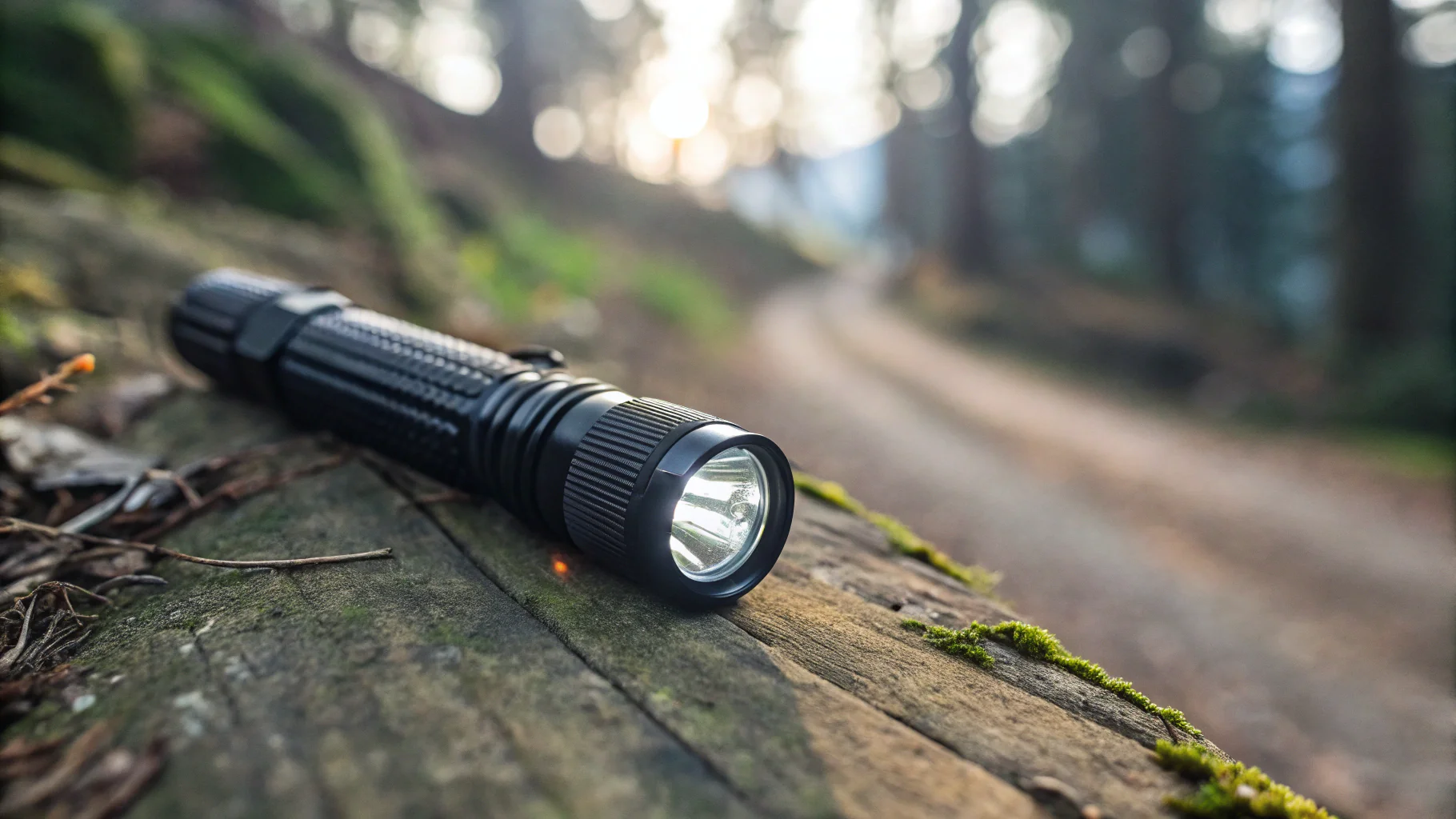
A reliable flashlight can make the difference between feeling prepared and feeling completely vulnerable in low-light situations. I’ve carried different types over the years, from cheap plastic ones that failed at the worst time to durable tactical models that held up in rain, dust, and accidental drops. That experience shaped how I evaluate what actually matters in a tactical flashlight, and not all the flashy marketing claims hold up in real use. The features that truly count are the ones that perform consistently when conditions are far from ideal.
Brightness And Real-World Performance
Brightness is often the first thing people look at, and for good reason. Measured in lumens, it gives a rough idea of how powerful a flashlight is, but I’ve learned that raw numbers don’t always translate to better performance. A flashlight with extremely high lumens can be impressive on paper, yet it may drain the battery quickly or overheat within minutes. What matters more is how usable that brightness is in real situations, especially when navigating dark areas or scanning surroundings.
Beam quality plays a major role alongside brightness. A well-balanced beam with both a focused hotspot and enough spill light allows me to see both distant objects and my immediate surroundings. Some flashlights are too narrow, making them feel like a laser pointer, while others are too wide and lack reach. The best ones strike a balance that feels natural and effective without constantly adjusting how I hold them.
Consistency is another factor that often gets overlooked. A flashlight that starts bright but quickly dims can be frustrating in critical moments. I pay close attention to models that maintain stable output over time rather than those that spike high and drop off rapidly. Reliable brightness is far more valuable than short bursts of extreme power.

Battery Life And Power Options
Battery performance has a direct impact on how dependable a flashlight feels. I’ve had situations where a light died faster than expected, which taught me to prioritize runtime over peak brightness. A tactical flashlight should last long enough to handle extended use without constant recharging or battery swaps.
Rechargeable batteries have become more common, and I find them convenient for regular use. USB charging eliminates the need to carry spare batteries, especially during travel or outdoor activities. However, I still appreciate models that allow for backup disposable batteries, as they provide flexibility in emergencies where charging isn’t an option.
Power efficiency also matters more than I initially realized. Some flashlights are designed to optimize energy use across different modes, allowing me to switch to lower settings when full brightness isn’t needed. That kind of adaptability extends battery life significantly and makes the flashlight more practical in everyday scenarios.
Durability And Build Quality
Durability is one of the defining characteristics of a true tactical flashlight. I’ve dropped lights on concrete, exposed them to rain, and carried them through rough conditions, so I know how quickly a poorly built one can fail. Materials like aircraft-grade aluminum tend to hold up better than plastic, offering both strength and resistance to wear.
Water resistance is another feature I no longer ignore. A flashlight that works perfectly in dry conditions but fails in rain is not something I can rely on. Ratings like IPX7 or IPX8 indicate that the flashlight can handle water exposure, which is essential for outdoor use or unpredictable weather.
Impact resistance also matters, especially if the flashlight is part of a daily carry setup. Accidental drops happen more often than expected, and a sturdy design ensures the light keeps working afterward. I look for models that feel solid in hand without being overly heavy, striking a balance between toughness and comfort.
Size, Weight, And Portability
Portability influences how often I actually carry a flashlight. A bulky or heavy model may offer impressive features, but if it’s inconvenient to bring along, it ends up being left behind. Compact designs are easier to carry in a pocket, bag, or attached to gear without adding unnecessary weight.
That said, extremely small flashlights can sometimes sacrifice performance or battery life. I’ve found that mid-sized options often provide the best balance between portability and capability. They’re large enough to deliver solid performance but still small enough to carry comfortably.
Grip and ergonomics also play a role in how usable a flashlight feels. Textured surfaces or knurled designs improve handling, especially in wet or slippery conditions. A secure grip can make a significant difference when quick adjustments are needed.
Beam Distance And Focus
Beam distance determines how far the light can effectively reach, and it’s more important than it might initially seem. In open areas or during nighttime navigation, a longer beam helps identify objects at a distance. I’ve noticed that flashlights with a strong central beam provide better visibility in these situations.
Adjustable focus is another feature that can be useful depending on the situation. Some flashlights allow switching between a wide flood beam and a narrow spotlight, offering versatility. While not always necessary, it can be helpful when transitioning between close-up tasks and scanning larger areas.
Clarity of the beam matters just as much as distance. A clean, even beam without dark spots or distortions makes it easier to see details. High-quality optics contribute to this, and it’s something I pay attention to when comparing different models.
Modes And Controls
Multiple lighting modes add flexibility, but too many options can become confusing. I prefer flashlights with a simple interface that allows quick access to essential modes like high, medium, low, and strobe. Complicated controls can slow down response time, which defeats the purpose of having a tactical tool.
The placement of the switch also affects usability. Tail switches are common in tactical flashlights and allow for quick activation, even with one hand. Side switches can be convenient for adjusting modes but may not be as intuitive in urgent situations.
Momentary-on functionality is a feature I’ve come to appreciate. It allows the light to be activated only while the button is pressed, which can be useful for brief illumination without fully turning the flashlight on. This adds an extra level of control that can be beneficial in various scenarios.
Strobe And Special Features
Strobe mode is often marketed as a key tactical feature. While I don’t use it frequently, it can be effective in certain situations, such as disorienting a potential threat or signaling for help. The effectiveness of strobe depends on how easily it can be activated and how intense the light is.
Other features like SOS modes or beacon signals can be useful in emergencies. These are not everyday functions, but having them available adds an extra layer of versatility. I see them as backup tools rather than primary reasons to choose a flashlight.
Some models include additional elements like glass breakers or aggressive bezels. While these can enhance functionality, they also add weight and may not be necessary for everyone. It’s important to consider whether these features align with actual needs rather than just appealing to the idea of tactical use.
Heat Management And Efficiency
High-powered flashlights generate heat, and managing that heat is crucial for both performance and safety. I’ve used lights that became too hot to hold after a short period, which made them impractical. Good thermal regulation ensures the flashlight can maintain performance without overheating.
Some flashlights automatically reduce brightness to prevent excessive heat buildup. While this might seem like a drawback, it actually helps preserve the longevity of the device. A flashlight that balances power and temperature is far more reliable in the long run.
Efficiency ties closely to heat management. Better-designed lights use energy more effectively, producing strong output without excessive heat. This contributes to longer battery life and overall durability.
Reliability In Different Environments
A tactical flashlight should perform well across a range of environments. I’ve used flashlights in urban settings, outdoors, and during travel, and each scenario presents different challenges. Dust, moisture, and temperature changes can all affect performance.
Cold weather can reduce battery efficiency, while heat can impact electronics. A reliable flashlight maintains functionality despite these conditions. This kind of consistency is what separates a dependable tool from one that only works under ideal circumstances.
Sealing and construction quality contribute significantly to environmental resistance. Tight seals prevent dust and water from entering, while solid construction protects internal components. These details may not be immediately visible, but they make a noticeable difference over time.
Value Versus Marketing Claims
Marketing can make almost any flashlight sound impressive, but real value comes from practical performance. I’ve learned to look beyond exaggerated claims and focus on features that genuinely improve usability. Not every high-priced model delivers better results, and not every budget option is unreliable.
Comparing specifications is useful, but hands-on experience often reveals more. Factors like beam quality, ease of use, and durability become clearer during actual use. Reviews and user feedback can also provide insight into how a flashlight performs over time.
Price should reflect quality and reliability rather than just branding. A well-built flashlight that meets practical needs is a better investment than one loaded with unnecessary features. Prioritizing function over hype leads to better decisions.
What Actually Matters In The End
After trying different flashlights and paying attention to what works and what doesn’t, a clear pattern emerges. Brightness, durability, battery life, and ease of use consistently stand out as the most important factors. These core features determine whether a flashlight is genuinely useful or just another gadget.
Extra features can enhance functionality, but they should never come at the expense of reliability. A flashlight that performs well in essential areas will always be more valuable than one packed with gimmicks. Practical performance is what truly defines a good tactical flashlight.
The best choice ultimately depends on how the flashlight will be used. Personal preferences and specific needs play a role, but focusing on the fundamentals ensures a solid decision. A dependable flashlight is not about having the most features, but about having the right ones that work when it matters most.