By Survival Boys Editorial Team
Most people can handle a short power outage.
A few candles, a flashlight, maybe a portable charger, and life becomes inconvenient for a day or two. But a long-term blackout is something entirely different.
When a power outage stretches beyond two weeks, modern life changes fast.

Fuel supplies shrink.
Grocery shelves empty.
Communication systems fail.
Water systems may stop functioning.
Medical services become overwhelmed.
Security concerns increase.
What begins as a temporary inconvenience can slowly evolve into a full survival situation.
While extended blackouts are rare, they are not impossible. Severe storms, cyberattacks, infrastructure failures, wildfires, winter storms, and grid problems have already caused major outages lasting days or even weeks in some areas.
The people who handle these situations best are usually not the ones with the most expensive gear.
They are the ones who prepared early, stayed calm, and adapted quickly.
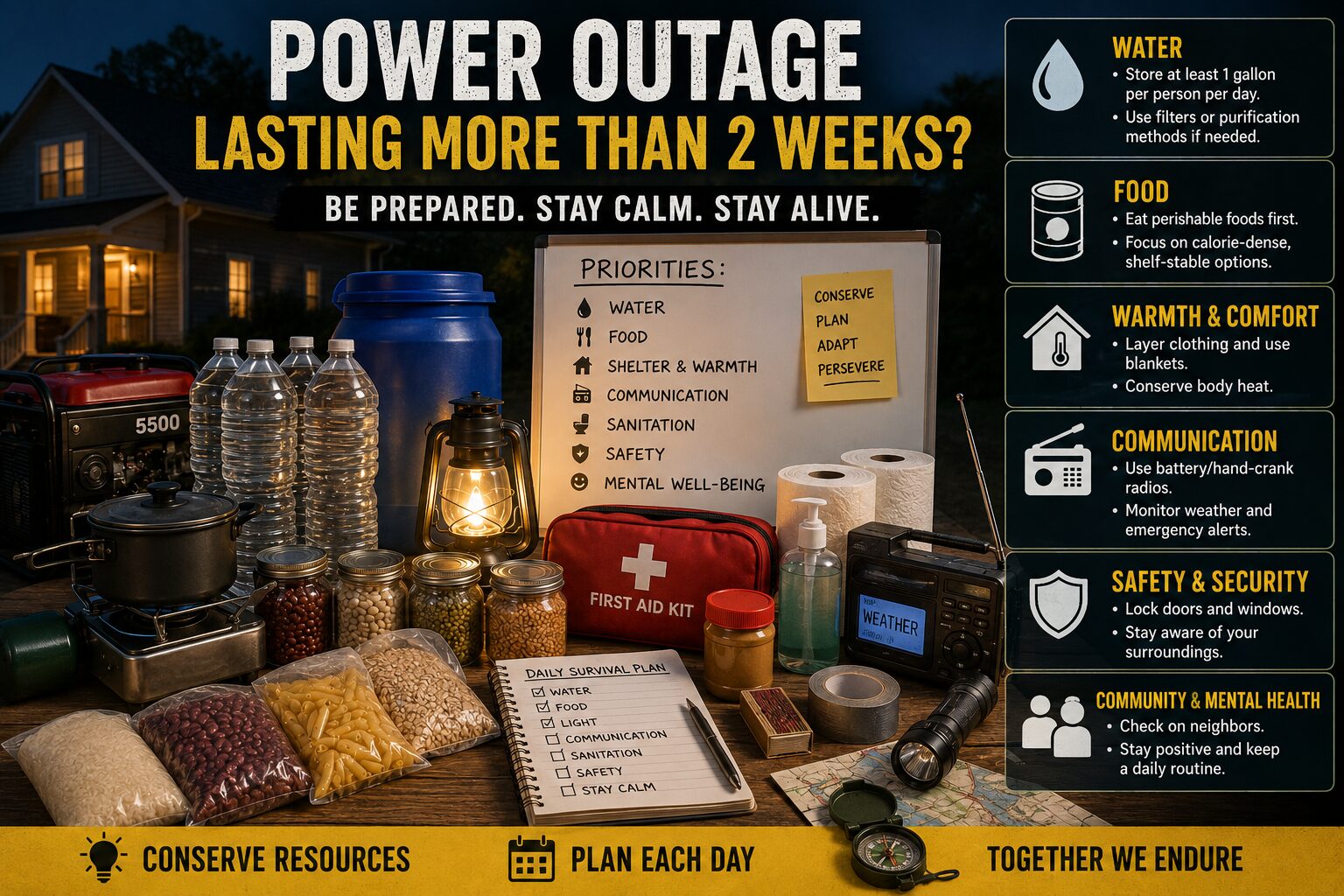
This guide explains how to survive and function during a power outage lasting longer than two weeks, including food, water, security, communication, sanitation, and mental resilience.
The First 72 Hours Matter Most
The first few days of a blackout are critical.
This is when:
- Stores become crowded
- Fuel stations run dry
- Panic buying begins
- Cell networks overload
- Traffic increases
- Supplies disappear
People who have already prepared can avoid much of the chaos.
Your immediate priorities should be:
- Water
- Food preservation
- Lighting
- Communication
- Security
Do not waste resources early.
Long outages require conservation.
Water Becomes Your Biggest Priority
Most people underestimate how quickly water problems become serious.
If municipal systems fail or lose pressure, clean water may become unavailable.
Without water:
- Cooking becomes difficult
- Hygiene declines
- Medical risks increase
- Dehydration becomes dangerous quickly
How Much Water Do You Need?
Experts commonly recommend:
- One gallon per person per day minimum
But during hot weather or physically demanding situations, you may need more.
For two weeks, a family of four could require:
- Over 50 gallons minimum
That is why long-term preparedness matters.
Emergency Water Sources
Potential emergency water sources include:
- Bathtubs
- Water heaters
- Stored containers
- Rainwater collection
- Nearby lakes or rivers
Never assume untreated water is safe.
Use:
- Water filters
- Purification tablets
- Boiling methods
Waterborne illness becomes a serious threat during infrastructure failures.
Managing Food During Long Blackouts
Food storage becomes increasingly important after the first several days.
Refrigerated food spoils quickly without power.
What to Eat First
Consume food in this order:
- Refrigerated foods
- Frozen foods
- Shelf-stable foods
Avoid opening refrigerators unnecessarily.
A closed refrigerator may keep food cold for several hours, while a full freezer can stay frozen longer if unopened.
Best Foods for Extended Power Outages
Long-term blackout foods should be:
- Shelf stable
- Calorie dense
- Easy to prepare
- Familiar
Good options include:
- Rice
- Beans
- Pasta
- Oats
- Peanut butter
- Canned meats
- Canned vegetables
- Protein bars
- Freeze-dried meals
Comfort foods matter too.
Morale becomes increasingly important during long emergencies.
Cooking Without Electricity
Electric stoves and microwaves become useless during grid failures.
Alternative cooking methods include:
- Camp stoves
- Propane burners
- Rocket stoves
- Charcoal grills
- Fire pits
Always use fuel-burning equipment safely.
Carbon monoxide poisoning becomes a major risk when people attempt indoor cooking without ventilation.
Lighting and Power Conservation
The longer the outage lasts, the more valuable batteries become.
Best Emergency Lighting Options
Reliable choices include:
- LED flashlights
- Headlamps
- Solar lanterns
- Rechargeable lights
LED lighting dramatically reduces battery consumption compared to older bulbs.
Headlamps are especially useful because they keep your hands free.
Preserving Battery Power
Battery management becomes extremely important.
Conserve power by:
- Turning devices off completely
- Lowering screen brightness
- Limiting unnecessary use
- Using airplane mode
Power banks and portable solar panels become extremely valuable during extended outages.
Communication During Long-Term Outages
Information helps people make safer decisions.
Cell service may become unreliable or disappear entirely during major infrastructure failures.
Useful communication tools include:
- NOAA weather radios
- Battery-powered radios
- Handheld radios
- Backup chargers
Emergency broadcasts may provide:
- Evacuation orders
- Weather updates
- Supply information
- Public safety alerts
Staying informed reduces uncertainty and panic.
Sanitation Becomes a Serious Issue
Modern sanitation depends heavily on running water and infrastructure.
If water systems fail, hygiene problems can escalate quickly.
Important Sanitation Supplies
Every long-term blackout kit should include:
- Toilet paper
- Trash bags
- Soap
- Hand sanitizer
- Cleaning wipes
- Bleach
- Buckets
- Gloves
Waste disposal becomes extremely important.
Poor sanitation creates disease risks fast.
Staying Warm or Cool Without Power
Temperature control becomes one of the hardest challenges during long outages.
Cold Weather Risks
Hypothermia becomes dangerous quickly in freezing temperatures.
Important cold-weather supplies include:
- Wool blankets
- Sleeping bags
- Layered clothing
- Hand warmers
- Insulated shelters
Concentrate activity into smaller rooms to preserve heat.
Hot Weather Risks
Heat exhaustion and dehydration become serious threats during summer outages.
Stay cool by:
- Staying hydrated
- Limiting daytime activity
- Opening windows strategically
- Using shade effectively
Portable battery fans can help significantly.
Fuel Shortages and Transportation Problems
Gas stations often fail during major outages because pumps require electricity.
Fuel shortages can appear within days.
Smart Fuel Habits
Prepared families often:
- Keep vehicles fueled
- Store approved fuel safely
- Limit unnecessary driving
Travel may become increasingly difficult during extended emergencies.
Security During Long-Term Blackouts
Most people remain cooperative during emergencies, but desperation can increase over time.
Security should focus on awareness, not paranoia.
Practical Security Measures
Helpful precautions include:
- Exterior lighting
- Locking doors and windows
- Maintaining communication
- Building relationships with neighbors
- Avoiding unnecessary attention
Communities often recover better when neighbors cooperate instead of isolating completely.
The Psychological Side of Long Emergencies
Extended outages are mentally exhausting.
Stress increases when:
- Information becomes limited
- Sleep routines break down
- Comfort disappears
- Uncertainty continues
Mental resilience becomes a survival skill.
How to Maintain Morale
Simple routines matter:
- Eat regular meals
- Stay organized
- Create schedules
- Keep children occupied
- Exercise lightly
- Stay socially connected
Boredom and fear can become just as damaging as physical discomfort.
The Importance of Community
One of the biggest survival myths is the “lone wolf” mentality.
Communities almost always recover better than isolated individuals.
Neighbors can share:
- Information
- Tools
- Security awareness
- Skills
- Labor
Strong local relationships are among the most valuable preparedness assets possible.
Common Mistakes During Long Power Outages
Using Resources Too Quickly
People often burn through:
- Batteries
- Fuel
- Food
- Water
within the first few days.
Conservation matters.
Failing to Prepare Water
Water shortages become severe much faster than food shortages.
Unsafe Generator Use
Generators should NEVER run indoors or near open windows.
Carbon monoxide kills people every year during outages.
Ignoring Mental Fatigue
Exhaustion leads to poor decisions.
Rest matters.
Long-Term Blackout Preparedness Checklist
Water
- Stored water
- Water filters
- Purification tablets
Food
- Shelf-stable meals
- Manual can opener
- Cooking supplies
Lighting
- Flashlights
- Lanterns
- Batteries
Power
- Power banks
- Solar chargers
- Portable power stations
Medical
- First aid kits
- Prescription medications
Sanitation
- Trash bags
- Soap
- Toilet paper
Communication
- NOAA radio
- Backup batteries
Shelter
- Blankets
- Warm clothing
- Fans
Final Thoughts
A power outage lasting more than two weeks changes daily life completely.
Preparedness becomes less about convenience and more about resilience.
The people who manage long-term blackouts best are usually the ones who:
- Planned early
- Stored supplies
- Conserved resources
- Stayed calm
- Adapted gradually
Preparedness is not about fear.
It is about reducing chaos when modern systems stop working.
Because when the lights stay off longer than expected, preparation becomes peace of mind.