Moving through unfamiliar terrain without modern tools forces me to rely on instinct, observation, and a deeper connection with the environment. I have found that navigation becomes less about gadgets and more about reading subtle clues that most people overlook. The land, the sky, and even the behavior of animals quietly offer direction if I pay close enough attention. Confidence grows not from certainty but from practice, and the more I trust these natural signals, the easier it becomes to find my way even in the most disorienting places.
Reading The Sun’s Path
The sun is one of the most reliable guides available, and I often start with it when figuring out direction. It rises in the east and sets in the west, but what matters more is how it moves across the sky throughout the day. In the morning, I know that facing the sun means I am looking roughly east, while in the afternoon, it guides me toward the west. Around midday, the sun sits higher, and shadows become shorter, which requires a bit more interpretation.
Shadows have helped me more times than I can count. By placing a stick in the ground and marking the tip of its shadow, I can track the sun’s movement over time. After waiting a while, marking the new position of the shadow gives me a rough east-to-west line. This method takes patience, but it is incredibly useful when I need to confirm direction rather than guess.
Cloud cover can make this trick more difficult, but even then, the brightness in the sky often hints at where the sun is located. I have learned not to panic when visibility drops, because the sun still influences the environment even when it is hidden.

Navigating With The Stars
Night navigation feels intimidating at first, but the stars offer a surprisingly consistent map. The key is identifying fixed points rather than getting lost in the sea of lights above. In the northern hemisphere, I look for Polaris, the North Star, which remains nearly stationary in the sky. Finding it gives me a clear sense of north, and from there, I can determine all other directions.
Locating Polaris usually involves finding the Big Dipper, which acts like a pointer. The two stars at the edge of its “bowl” lead directly to Polaris if I extend an imaginary line upward. This technique becomes easier with repetition, and over time, the patterns begin to feel familiar rather than overwhelming.
In areas closer to the equator, where Polaris is harder to spot, I rely on constellations like Orion. Its belt forms a straight line that can help me estimate east and west as it rises and sets. The sky shifts throughout the night, but those shifts are predictable, and that predictability becomes a powerful tool.
Observing Natural Landmarks
The terrain itself often tells a story about direction if I take the time to notice it. Mountains, rivers, and valleys tend to follow consistent patterns, and understanding those patterns can guide my movement. Rivers, for example, almost always flow downhill toward larger bodies of water, which can lead to civilization.
I pay attention to the shape of the land beneath my feet. Slopes can indicate elevation changes, and ridgelines often provide a clearer vantage point for scanning the surroundings. Climbing to higher ground has helped me reorient myself more than once, especially when dense vegetation limits visibility.
Human-made landmarks, even in remote areas, can also serve as subtle guides. Old trails, broken fences, or worn paths suggest that others have passed through before, and following them carefully can lead me toward safer routes or inhabited areas.
Using The Wind And Weather
Wind direction might seem unreliable at first, but over time, patterns begin to emerge. In certain regions, prevailing winds tend to blow from a consistent direction depending on the season. By paying attention to how the wind feels against my skin, I can maintain a rough sense of orientation even without visual cues.
Weather patterns also offer hints about direction. Storms often move in predictable ways depending on the region, and cloud formations can indicate incoming changes. I have noticed that certain types of clouds build up in specific directions, which helps me anticipate where weather systems are coming from.
Rain, sunlight, and temperature shifts all interact with the landscape in ways that reveal direction. It requires patience to connect these details, but once I start noticing them, they become hard to ignore.
Following Water Sources
Water has a way of guiding movement naturally. Streams and rivers tend to lead somewhere significant, whether it is a larger river, a lake, or even a settlement. When I feel uncertain about where to go, following a water source often provides a logical path forward.
The sound of running water can also help me orient myself, especially in dense forests where visibility is limited. Moving toward that sound gives me a clear objective and reduces the feeling of being lost. Water not only helps with direction but also ensures access to hydration, which is critical in any survival situation.
However, I remain cautious when following water. Terrain around rivers can become steep or difficult, and I make sure to balance the benefit of direction with the risk of challenging ground.
Watching Animal Behavior
Animals move with purpose, and their behavior often reflects knowledge of the land. I have learned to observe their patterns rather than disturb them. Trails created by animals can lead to water sources, shelter, or safer routes through dense terrain.
Birds, in particular, provide useful clues. Some species fly toward water at certain times of the day, while others migrate in consistent directions depending on the season. Watching their flight paths can offer subtle hints about where resources might be located.
Insects can also indicate nearby water or vegetation. Areas with increased activity often signal something worth investigating. These signs are not always definitive, but they add another layer of information that helps me make better decisions.
Tracking Your Own Movement
Losing track of where I have been is one of the fastest ways to become disoriented. I make a habit of marking my path whenever possible, even if it is something simple like noting distinctive trees or rock formations. These mental markers create a breadcrumb trail that I can follow if needed.
In situations where I expect to move through a confusing area, I sometimes leave small physical markers. Arranging stones or breaking twigs in a deliberate pattern helps me recognize my own path. It might seem unnecessary at first, but it becomes invaluable if I need to retrace my steps.
Paying attention to distance and time also matters. Estimating how far I have traveled and how long I have been moving helps me build a mental map. That map may not be perfect, but it gives me a sense of structure in an otherwise uncertain environment.
Using Moss, Trees, And Subtle Clues
Many people talk about moss growing on the north side of trees, but I have found that this rule is not always reliable. Moss grows where moisture and shade are present, which can vary depending on the environment. Instead of relying on a single clue, I look for patterns across multiple trees.
Tree growth itself can offer hints. Branches often grow more densely on the side that receives more sunlight, which can indicate direction. In open areas, trees may lean slightly due to prevailing winds, adding another piece of information to consider.
Even the ground can reveal direction. Soil moisture, vegetation density, and the presence of certain plants can reflect how sunlight and wind interact with the land. These details are subtle, but they become more noticeable with practice.
Staying Calm And Thinking Clearly
Panic is one of the biggest obstacles in navigation. The moment I start to feel overwhelmed, my ability to observe and think logically begins to fade. Taking a moment to breathe and assess the situation helps me regain control and make better decisions.
I remind myself that being temporarily unsure of direction is not the same as being lost. That distinction matters because it keeps me focused on solutions rather than fear. Breaking the situation into smaller steps makes it easier to move forward with confidence.
Resting when needed is just as important as moving. Fatigue can cloud judgment, and pushing too hard often leads to mistakes. By pacing myself, I maintain both physical and mental clarity.
Practicing Before You Need It
Navigation without tools is not something I want to figure out for the first time in a crisis. Practicing in familiar environments builds confidence and sharpens my ability to notice details. Even a simple walk in a local area can become an opportunity to test these skills.
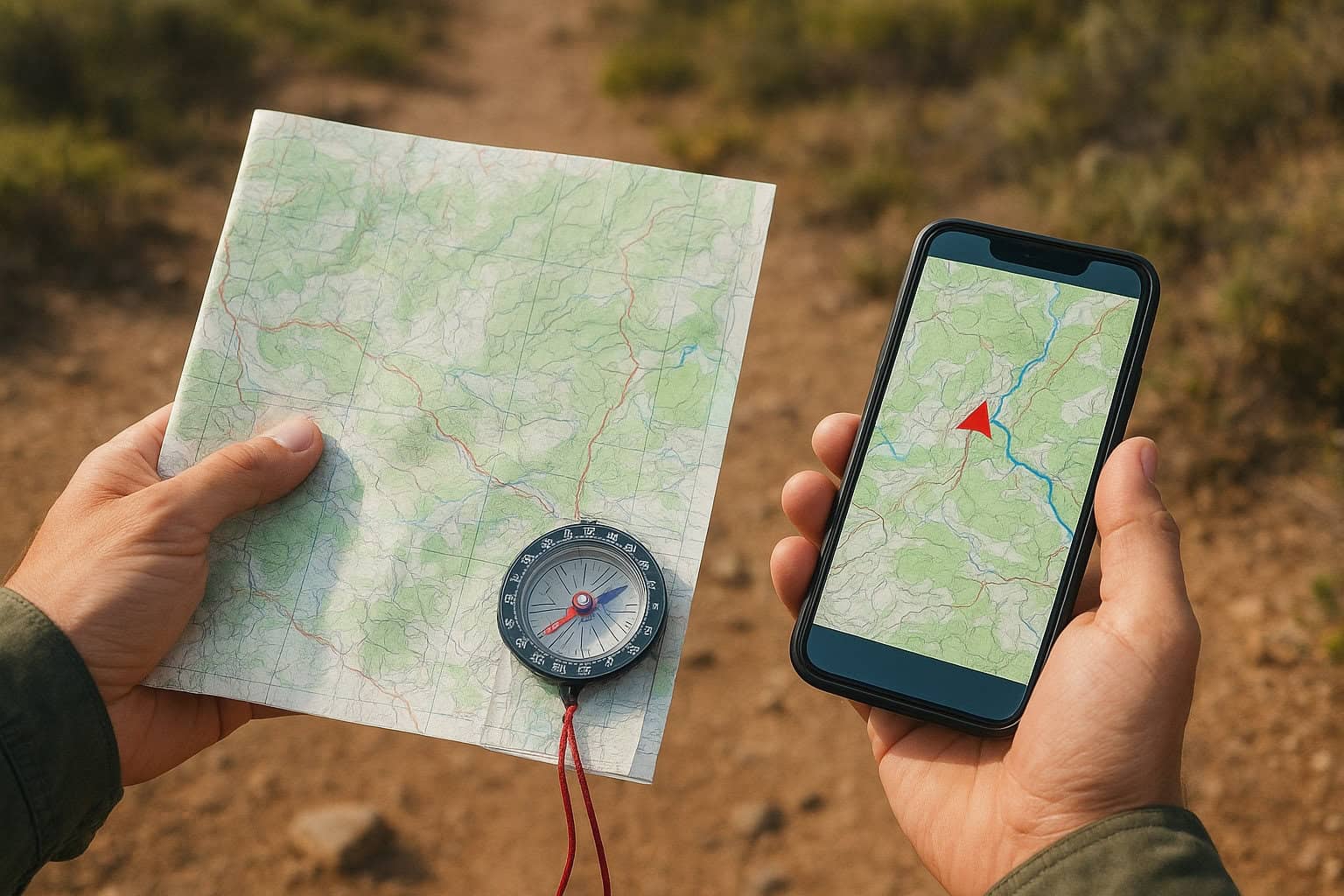
I challenge myself to identify directions without checking my phone, using only the sun or landmarks. Over time, these exercises make natural navigation feel less like a survival skill and more like a habit. The more I practice, the less I rely on guesswork.
Mistakes are part of the process, and I have made plenty of them. Each wrong turn teaches me something new, and those lessons stay with me far longer than any success.
Trusting Instinct And Experience
Instinct plays a role in navigation, but it is not something I rely on blindly. It develops through experience, observation, and a willingness to learn from the environment. The more time I spend paying attention to natural cues, the more my instincts align with reality.
There are moments when multiple signs point in different directions, and that is where judgment becomes important. I weigh the information I have gathered and make the best decision possible with what is available. Doubt may still exist, but action matters more than hesitation.
Confidence grows with each successful navigation, and even failures contribute to that growth. Over time, the process becomes less intimidating and more intuitive.
Building A Reliable Sense Of Direction
Developing a sense of direction is not about memorizing rules but about building awareness. Every environment has its own patterns, and learning to recognize them takes time. I have found that curiosity is one of the most valuable traits in navigation.
Asking questions about the surroundings keeps my mind engaged. Why does the land slope this way? Where is the light coming from? What patterns repeat themselves? These questions lead to insights that guide my movement.
A reliable sense of direction does not mean I will never feel lost. It means I have the tools to recover when I do. That distinction changes everything, turning uncertainty into a challenge rather than a threat.