

By Survival Boys Editorial Team
For generations, chickens were a normal part of everyday life. Families raised them for eggs, meat, fertilizer, and pest control long before modern grocery stores made food production feel distant and invisible. In recent years, backyard chickens have made a major comeback as more people look for sustainable living, emergency preparedness, and greater independence from fragile food supply systems.
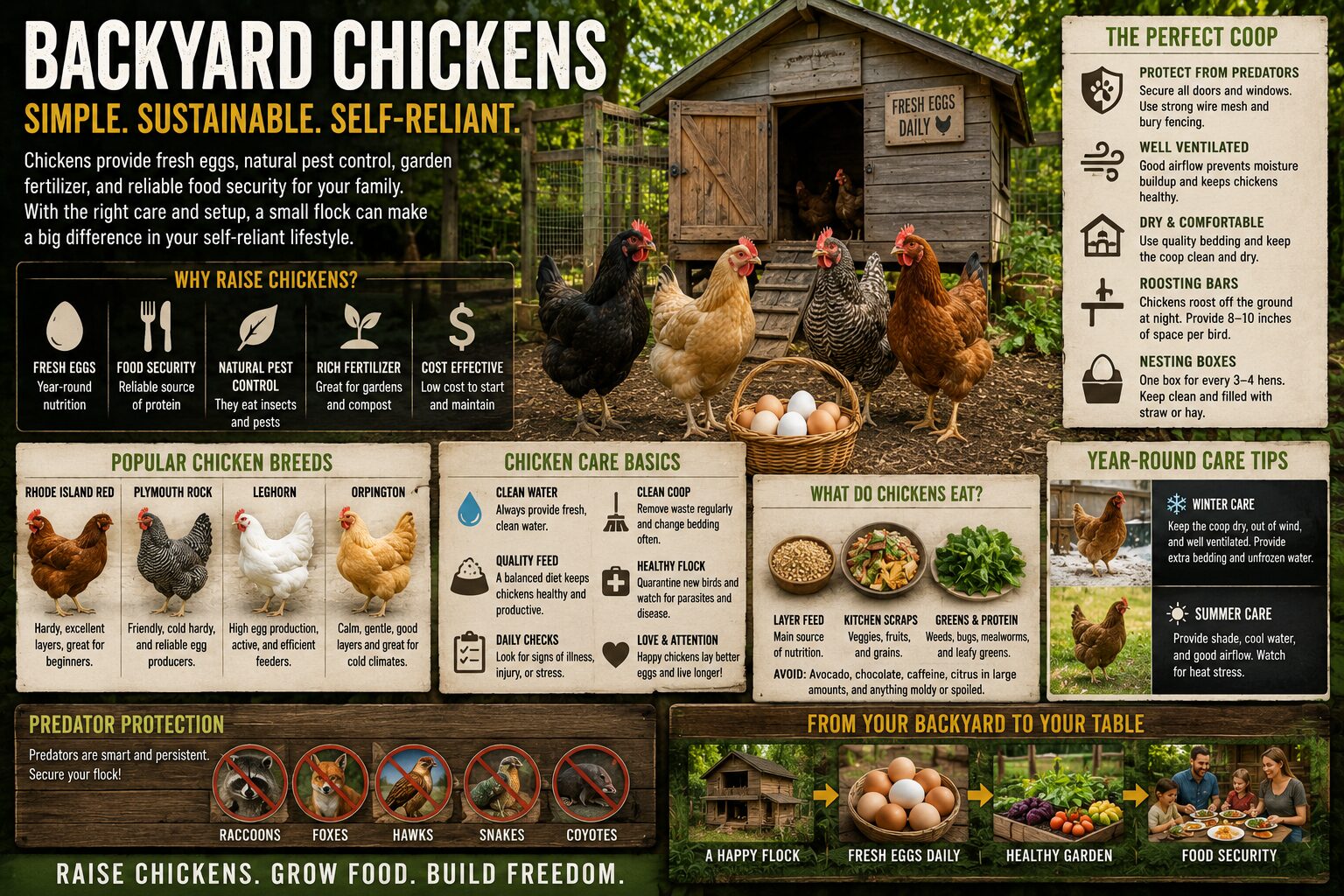
Raising chickens is one of the simplest and most practical ways to begin producing food at home. Chickens require less space than larger livestock, adapt well to many environments, and provide a steady source of protein through fresh eggs. For survival-minded families, homesteaders, and preparedness enthusiasts, backyard chickens represent far more than a hobby. They represent resilience.
One of the biggest reasons people choose chickens is reliability. A healthy laying hen can produce hundreds of eggs each year, creating a consistent food source even during shortages, inflation, or supply chain disruptions. Eggs contain valuable protein, fats, vitamins, and nutrients that become extremely important during long-term emergencies.

Unlike gardens that may struggle through droughts or seasonal changes, chickens continue producing food year-round when cared for properly. Even a small flock can provide enough eggs to support a family while creating opportunities for bartering within local communities.
Another advantage of backyard chickens is how adaptable they are. Chickens can thrive in rural homesteads, suburban yards, and even some urban areas where local regulations allow them. Modern chicken coops range from simple wooden shelters to advanced predator-proof systems with automatic doors, solar lighting, and rainwater collection setups.
Before starting a flock, understanding local laws becomes important. Some areas limit the number of birds allowed, while others prohibit roosters because of noise concerns. Responsible chicken owners always research local ordinances before building coops or purchasing birds.
Choosing the right breed also matters because different chickens serve different purposes. Some breeds are excellent egg layers, while others grow larger for meat production. Certain chickens tolerate cold weather better, while others thrive in hot southern climates.
Rhode Island Reds are popular because they are hardy, reliable egg producers that adapt well to different conditions. Plymouth Rocks are known for calm personalities and steady laying habits. Leghorns are highly efficient egg producers, while Orpingtons are valued for both egg production and friendly behavior.
Many beginners start with a small flock of four to six hens. This provides enough eggs for most households without becoming overwhelming for new chicken keepers. As experience grows, larger flocks often become easier to manage confidently.
The coop itself is one of the most important parts of successful chicken keeping. Chickens need protection from weather, predators, and temperature extremes. A well-designed coop provides shelter while allowing proper ventilation and security. Poor airflow can lead to moisture buildup, respiratory illness, and unhealthy living conditions.
Predator protection is another major concern. Raccoons, foxes, snakes, hawks, coyotes, dogs, and even rats may target chickens or eggs. Experienced chicken keepers quickly learn that predators are persistent and surprisingly intelligent. Weak fencing, unsecured doors, or exposed openings often become entry points during the night.
Strong wire mesh, buried fencing, and reinforced coop doors dramatically improve flock safety. Many people also use motion lights, automatic coop doors, or livestock guardian animals to reduce predator risks.
Inside the coop, chickens require nesting boxes for laying eggs and roosting bars for sleeping. Chickens naturally prefer elevated perches at night because it makes them feel safer. Clean bedding such as straw, pine shavings, or hemp helps control odor and maintain sanitation.
One of the advantages of chickens is that they recycle food scraps efficiently. Many kitchen leftovers become chicken feed instead of waste. Vegetables, fruits, grains, and certain table scraps can supplement commercial feed while reducing overall costs. However, some foods should always be avoided because they can harm birds. Responsible feeding practices are essential for maintaining healthy flocks.
Fresh water is equally important. Chickens require constant access to clean water, especially during hot weather. In freezing climates, keeping water from icing over becomes one of the biggest winter management challenges.
Free-ranging chickens provide additional benefits beyond egg production. Chickens naturally scratch through soil searching for insects, seeds, and vegetation. This behavior helps reduce pests like ticks, beetles, and grasshoppers while fertilizing the ground naturally. Some gardeners intentionally rotate chickens through garden areas because their scratching and manure improve soil quality significantly.
However, free-ranging also increases risks. Chickens wandering freely become more vulnerable to predators, vehicles, and neighborhood conflicts. Many owners compromise by using fenced chicken runs that provide outdoor access while maintaining security.
One of the most overlooked benefits of backyard chickens is the fertilizer they produce. Chicken manure is rich in nitrogen and other nutrients valuable for gardening and composting. Properly composted chicken manure becomes an excellent soil amendment capable of improving vegetable gardens and food production systems.
For preparedness-minded families, chickens fit naturally into broader self-reliance goals. Gardens produce vegetables, while chickens provide eggs, fertilizer, pest control, and eventually, meat if necessary. Together, these systems create a more sustainable food network that reduces dependence on outside supply chains.
In long-term emergencies, protein becomes one of the hardest food resources to maintain. Stored grains and canned goods may provide calories, but fresh protein sources become increasingly valuable over time. Chickens offer renewable food production without requiring massive amounts of land or feed compared to larger livestock.
Still, raising chickens is not effortless. Chickens become sick, injured, or stressed if neglected. Extreme weather, predators, parasites, and disease outbreaks all create challenges that require attention and experience. Like any livestock, chickens depend on consistent care and observation.
Common health issues include mites, respiratory infections, egg-binding problems, and nutritional deficiencies. Responsible flock management involves regular coop cleaning, proper nutrition, and monitoring bird behavior for signs of illness. Chickens often hide weakness instinctively, so subtle behavior changes may signal larger problems developing.
Winter care creates another layer of responsibility. Cold temperatures require dry bedding, wind protection, and careful moisture control inside the coop. In hot climates, shade and ventilation become critical because chickens can overheat surprisingly fast.
Despite the work involved, many people find raising chickens deeply rewarding. There is something satisfying about collecting fresh eggs each morning from animals you care for yourself. Backyard flocks also reconnect people with food production in a way modern life often separates completely.
Children especially benefit from learning responsibility through animal care. Feeding, watering, and observing chickens teaches patience, consistency, and understanding of where food comes from. These lessons become increasingly valuable in a world where many people grow disconnected from agriculture and self-sufficiency.
Some preparedness communities even consider chickens one of the best beginner livestock options because they offer a balance of practicality and manageable complexity. They require far less land than cattle or goats while still producing meaningful amounts of food over time.
Perhaps the greatest strength of backyard chickens is their reliability during uncertain times. Power outages, supply shortages, inflation, and economic instability affect grocery stores quickly. A healthy flock continues producing eggs regardless of what happens to transportation networks or supermarket shelves.
Preparedness is often misunderstood as fear, but true preparedness is really about resilience. It is about building systems that continue functioning when normal conveniences fail. Backyard chickens represent one of those systems. Simple, practical, and sustainable, they provide food security in a way few other backyard projects can match.
For many people, chickens become more than livestock. They become a daily reminder that self-reliance is still possible in the modern world.
And sometimes the path toward greater independence begins with something as simple as a few hens in the backyard.