By Carl Pettigrew | SurvivalBoys.com
One of the first things I learned about spending time outdoors is that knowing where you are going is just as important as knowing what you are carrying.
You can have a great backpack, plenty of water, and the best equipment available, but if you don’t know how to orient yourself and determine your direction, a simple outdoor trip can become a serious problem.
For me, orientation is about more than simply finding north. It’s about understanding my surroundings, knowing where I am, knowing where I want to go, and being able to make good decisions when conditions change.

Start With Your Surroundings
Whenever I enter an unfamiliar area, I try to slow down and pay attention.
I look at the terrain around me. I notice hills, valleys, roads, streams, distinctive trees, rock formations, buildings, and other landmarks. These features become reference points that help me understand the landscape.
I also pay attention to the direction I’m traveling.
One mistake I see people make is walking without thinking about where they are going. They follow a trail, turn around a few times, and eventually realize they have lost their sense of direction.
I try to prevent that problem before it starts.
Before moving very far, I establish a general direction of travel and identify landmarks that I can recognize on the way back.
Learn to Use a Compass
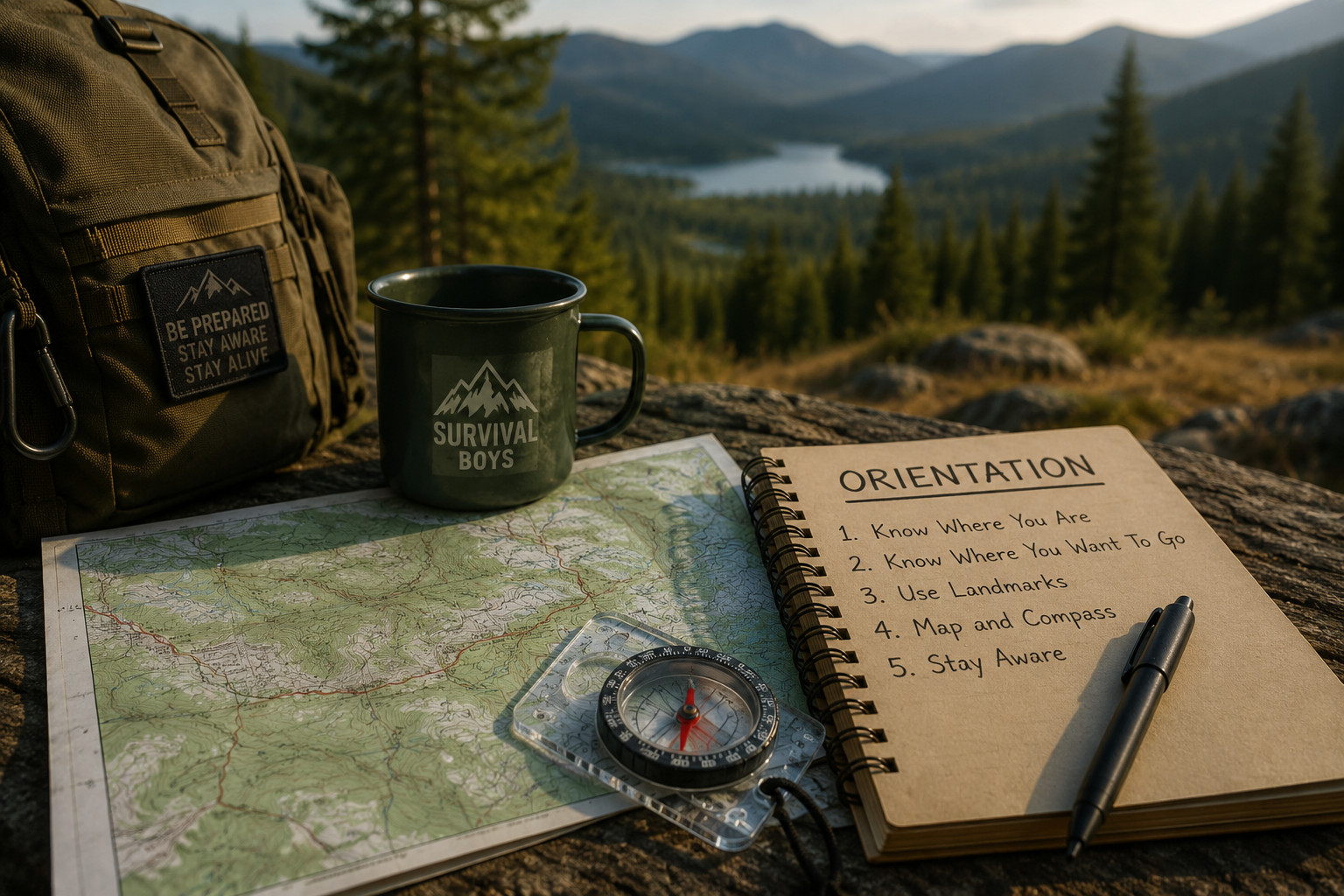
A compass is one of the simplest and most dependable navigation tools I can carry.
Unlike a phone or GPS device, a traditional magnetic compass doesn’t require batteries or a cellular signal. That makes it especially valuable during an emergency.
But carrying a compass isn’t enough. You need to know how to use it.
The basic idea is simple: the compass needle indicates magnetic north, allowing me to determine the other directions—south, east, and west.
When using a map, I can combine the compass with terrain features and map information to establish a route.
I recommend practicing with a compass before you actually need it. Trying to figure it out for the first time when you’re lost is not the situation you want.
Maps Still Matter
Digital navigation has made traveling easier, but I don’t believe paper maps have become obsolete.
A good topographic map can show me things that aren’t always obvious from ground level, including elevation changes, waterways, trails, roads, and terrain features.
When I combine a map with a compass, I have a navigation system that doesn’t depend on batteries or an internet connection.
I also like knowing approximately where I am on the map before I start moving. That gives me a reference point and makes it easier to recognize when something doesn’t look right.
Pay Attention to the Terrain
One of the most useful orientation skills is learning to read the landscape.
If I’m traveling through hilly terrain, I pay attention to ridgelines and valleys. If I’m near water, I notice the direction of streams and rivers. Roads, power lines, fences, and other human-made features can also provide useful references.
The more familiar I become with recognizing terrain, the less dependent I am on technology.
This is something anyone can practice.
The next time you’re hiking, don’t just look at the trail directly in front of you. Look around. Ask yourself:
What direction am I traveling?
What major landmark is nearby?
What would I expect to see if I continued in this direction?
Those simple questions can improve your awareness significantly.
Don’t Depend on Technology Alone
GPS devices and smartphones are incredible tools, and I use technology when it’s available.
But I don’t want my ability to navigate to disappear when the battery reaches zero.
Weather, damaged equipment, dead batteries, poor reception, or an unexpected emergency can quickly change the situation.
That’s why I believe the best approach is to use technology as an advantage while maintaining traditional navigation skills as a backup.
Know how to use your GPS.
But also know how to use a compass.
Know how to read a map.
And most importantly, learn how to pay attention to where you are.
Stop When You’re Unsure
There’s another important lesson I’ve learned about orientation: don’t make a bad situation worse by rushing.
If I realize that I don’t know where I am, the first thing I want to do is stop.
Continuing to walk without a plan can make the problem much worse. Every additional step can increase the distance between me and my last known location.
Instead, I take a moment to think.
Where was I last certain of my location?
What direction was I traveling?
What landmarks did I pass?
Do I have a map or compass?
Can I retrace my route safely?
Taking a few minutes to think clearly can be far more valuable than walking another mile in the wrong direction.
Orientation Is a Skill
I don’t think you have to be an expert outdoorsman to become better at navigation.
Start small.
Take a compass on your next hike. Bring a paper map. Practice identifying north. Pick a landmark and estimate its direction. Pay attention to your route and try to retrace it.
Over time, these things become natural.
That’s what I like about survival skills. You don’t have to learn everything at once.
You build one skill, then another, and eventually those skills begin working together.
Orientation is one of those foundational skills.
When I know where I am and where I’m going, I have more confidence. And when something unexpected happens, that confidence can help me stay calm and make better decisions.
The wilderness doesn’t always give you obvious signs telling you where to go. Learning to recognize those signs—and knowing how to use a map and compass—is what helps you find your way.