By Survival Boys Editorial Team
One of the most underestimated survival skills is simply knowing how to move through difficult terrain safely and efficiently. Movies often portray survival as dramatic moments involving wild animals, extreme weather, or dangerous confrontations, but in reality, many outdoor emergencies begin with something much simpler: a bad step, poor navigation, exhaustion, or becoming stranded in terrain that is harder to cross than expected.
Mountains, forests, swamps, deserts, snowfields, rocky hillsides, and flooded terrain all create unique challenges that can quickly drain energy and increase danger. Even experienced hikers and outdoorsmen can find themselves struggling when terrain slows movement, damages gear, or causes injuries far from help.
Learning how to read terrain, conserve energy, and move carefully through difficult environments is one of the most valuable outdoor skills a person can develop.

The first rule of traversing rough terrain is understanding that speed is rarely the priority. Inexperienced hikers often move too quickly, especially when they are anxious, cold, or trying to reach a destination before dark. Fast movement leads to mistakes, and mistakes in difficult terrain can become serious injuries. A twisted ankle miles from civilization can turn a manageable hike into a survival situation within minutes.
Careful foot placement matters more than speed. Every step should be deliberate, especially on loose rock, wet ground, or steep slopes. Uneven terrain hides holes, unstable surfaces, and slippery obstacles that can cause falls. Experienced outdoorsmen constantly scan the ground ahead while also maintaining awareness of the surrounding environment.
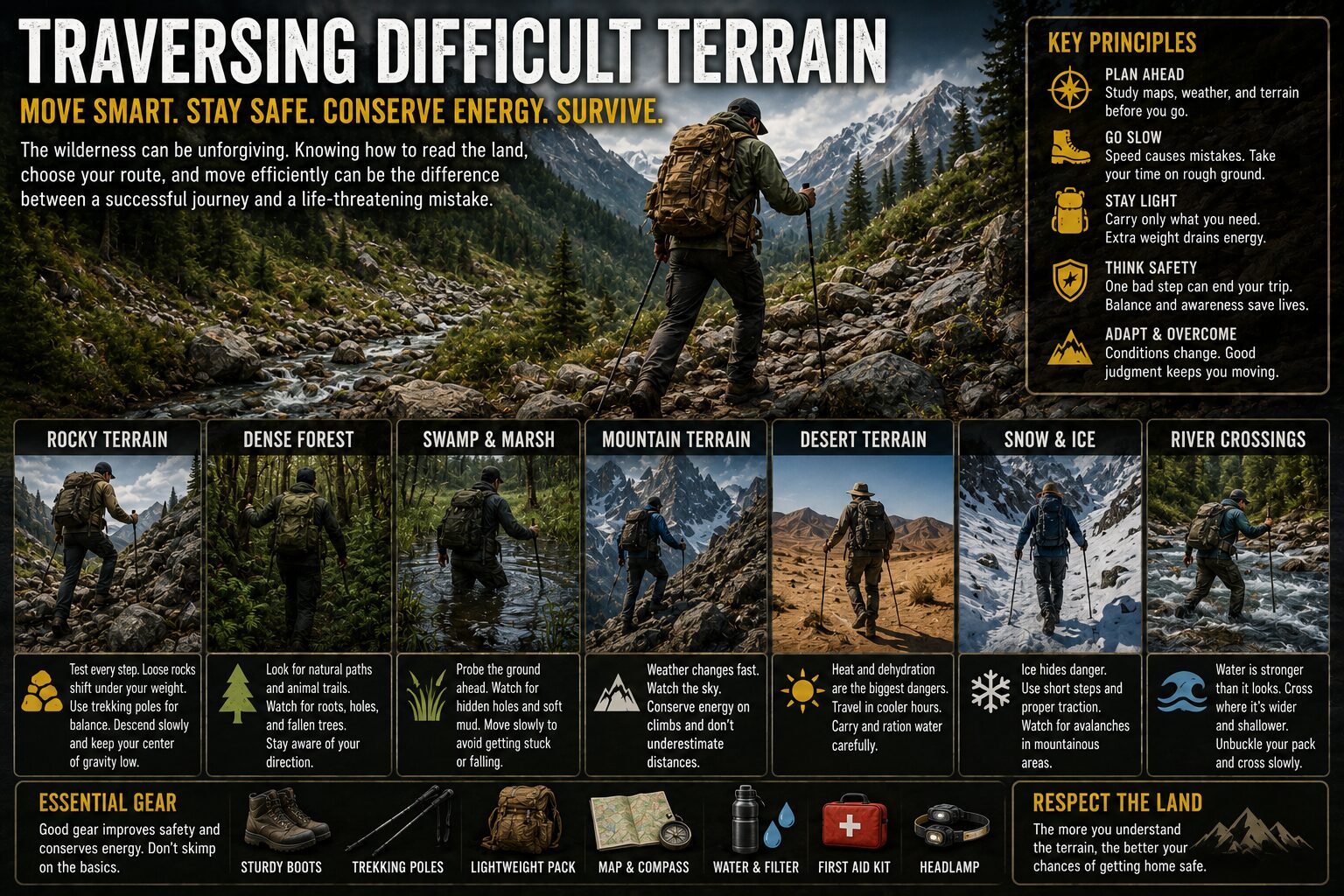
Rocky terrain creates some of the most physically demanding travel conditions. Loose stones shift under weight, steep inclines strain leg muscles, and sharp edges can damage boots or cut exposed skin. Moving across rocky areas requires balance and patience. Many hikers make the mistake of stepping directly on large rocks without testing stability first. A rock that appears solid may suddenly roll or slide.
Descending rocky slopes often becomes more dangerous than climbing them. Gravity increases momentum quickly, and loose footing can lead to uncontrolled falls. Moving slowly, lowering your center of gravity, and using trekking poles or walking sticks for balance can significantly improve stability. In steep areas, some experienced hikers angle their descent diagonally across the slope rather than moving straight downward.
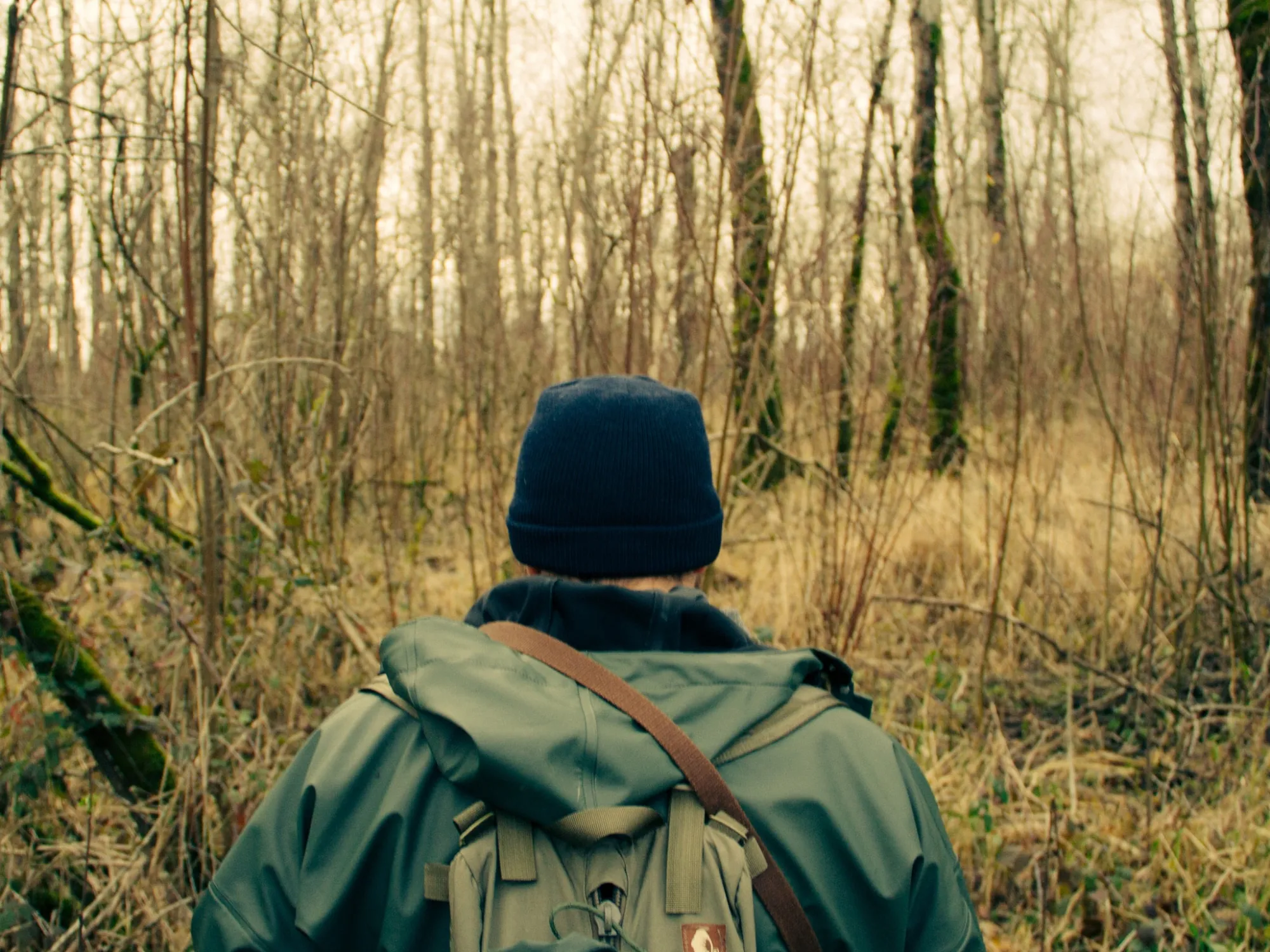
Dense forests create entirely different challenges. Thick vegetation slows movement and limits visibility, making navigation more difficult. Fallen trees, hidden roots, thorny brush, and uneven ground constantly threaten balance and mobility. In heavily wooded areas, it becomes easy to lose directional awareness because landmarks often look similar in every direction.
Bushwhacking through dense terrain requires energy management. Pushing directly through thick brush burns calories quickly and increases fatigue. Experienced outdoorsmen often look for natural pathways created by animals, dry creek beds, ridgelines, or open sections beneath tree cover. Choosing the easiest route instead of the shortest route often saves time and energy in the long run.
Swamp and marsh terrain can become deceptively dangerous. Mud may appear shallow before suddenly swallowing boots or trapping legs knee-deep in thick muck. Waterlogged ground drains energy rapidly because every step requires extra effort. Hidden holes, sharp debris, snakes, insects, and contaminated water add additional hazards.
Crossing swampy terrain usually requires slow, careful movement and constant testing of the ground ahead. Long sticks can help probe uncertain surfaces before stepping forward. Waterproof boots help initially, but once soaked, they may become heavy and uncomfortable. In prolonged wet conditions, foot care becomes extremely important because moisture can quickly lead to blisters, infections, or trench foot.
Mountain terrain presents both physical and environmental dangers. Elevation changes increase exhaustion, weather shifts rapidly, and temperatures often drop unexpectedly at higher altitudes. Thin air can make breathing more difficult, especially for people unaccustomed to climbing steep slopes.
One of the greatest dangers in mountain travel is underestimating how long travel will take. Distances that appear short on a map may require hours of climbing over uneven terrain. Fatigue becomes a major risk factor because tired hikers make poor decisions and lose coordination more easily.
Weather exposure also becomes more serious in open mountain environments. Lightning storms, freezing temperatures, and sudden fog can create deadly conditions quickly. Experienced mountain travelers pay close attention to cloud formations, wind patterns, and changing temperatures because weather warnings often appear before storms arrive.
Desert terrain creates a completely different type of survival challenge. Heat, dehydration, and sun exposure become the primary threats. Unlike forests or mountains, deserts often provide little shade or water. Long stretches of open terrain can make distances difficult to judge, causing travelers to underestimate how far they still need to go.
Moving efficiently in desert environments requires water discipline and energy conservation. Travel during cooler morning or evening hours reduces heat stress. Loose sand also drains energy rapidly, especially on dunes or dry washes. Experienced desert travelers pace themselves carefully and avoid unnecessary movement during the hottest parts of the day.
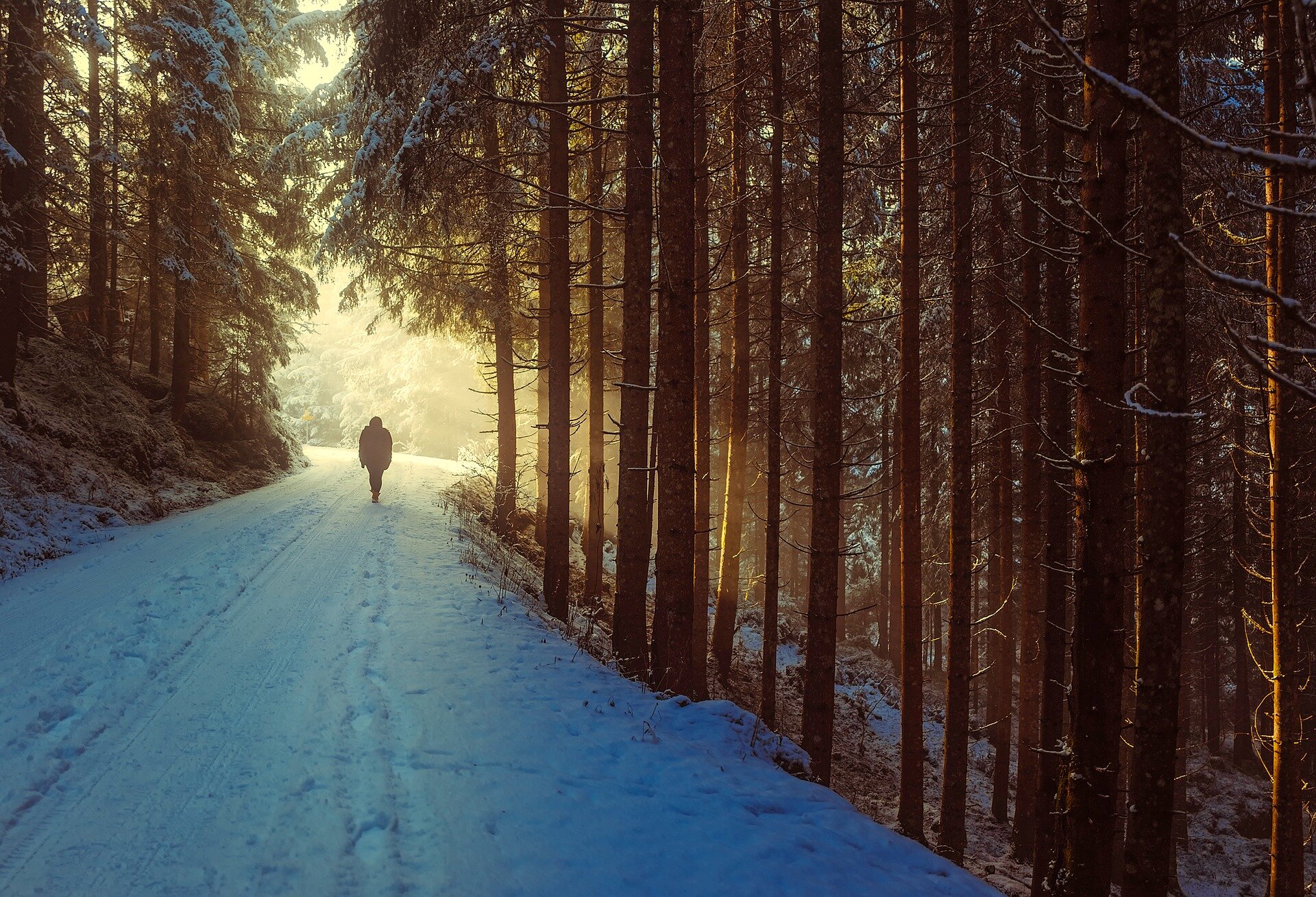
Snow and ice may be among the most dangerous terrains of all because conditions can change so quickly. Snow hides obstacles beneath the surface, while ice turns even gentle slopes into slipping hazards. Cold temperatures also increase the danger of exhaustion and hypothermia.
Walking through deep snow demands enormous physical effort. Each step sinks into the surface, draining energy much faster than normal hiking. Snowshoes distribute weight more evenly and improve mobility, but even with proper equipment, winter travel remains physically demanding.
Ice requires extreme caution because falls can happen instantly and without warning. Short, controlled steps improve balance on slippery surfaces. In steeper icy terrain, traction devices such as crampons or cleats become essential. Winter travelers also pay close attention to avalanche conditions in mountainous areas, as unstable snowpacks can collapse with devastating force.
River crossings are another common source of wilderness injuries and fatalities. Moving water is far more powerful than it appears. Even shallow rivers can sweep people off their feet when currents are strong. Cold water also increases shock and reduces muscle control rapidly.
Safe river crossings require patience and careful planning. Experienced outdoorsmen often look for wider, shallower sections where water moves more slowly. Crossing diagonally downstream instead of fighting directly against the current improves stability. Unbuckling backpack straps before crossing allows quick escape if someone falls into the water.
Navigation becomes increasingly important in difficult terrain because physical obstacles often force route changes. A straight path on a map rarely remains straight in reality. Travelers constantly adjust movement around cliffs, rivers, thick vegetation, or dangerous ground.
Mental discipline plays a major role in successful terrain traversal. Panic causes people to rush, ignore warning signs, and waste energy. Difficult environments reward patience and observation. Sometimes the safest decision is to stop temporarily to reassess conditions instead of forcing forward movement.
Fatigue management is equally important. Many wilderness injuries happen late in the day when people are tired and trying to push through “just a little farther.” Regular breaks, hydration, and calorie intake help maintain focus and coordination. Survival situations often develop gradually through exhaustion rather than dramatic accidents.
Proper gear also improves mobility and safety significantly. Boots with good ankle support reduce injury risk on uneven ground. Layered clothing helps regulate body temperature across changing conditions. Trekking poles improve balance and reduce strain on knees during steep climbs and descents. Lightweight gear conserves energy over long distances.
Perhaps the most important lesson difficult terrain teaches is humility. Nature does not care about confidence, schedules, or plans. Terrain can slow movement, change routes, and force adaptation without warning. Skilled outdoorsmen understand that survival often depends less on strength and more on patience, awareness, and smart decision-making.
Traversing difficult terrain is not about conquering nature. It is about learning how to move through it safely, efficiently, and respectfully. The wilderness rewards those who pay attention, conserve energy, and understand their limitations.
Every hill, river, forest, and mountain teaches something different. And with enough experience, the terrain itself becomes one of the greatest teachers an outdoorsman can have.