By Survival Boys Editorial Team
One of the first questions people ask when building an emergency food supply is simple:
“How much food do I actually need?”
Some preparedness guides recommend storing only enough food for three days. Others encourage building massive long-term stockpiles that can last months or even years.

The truth is that both approaches serve different purposes.
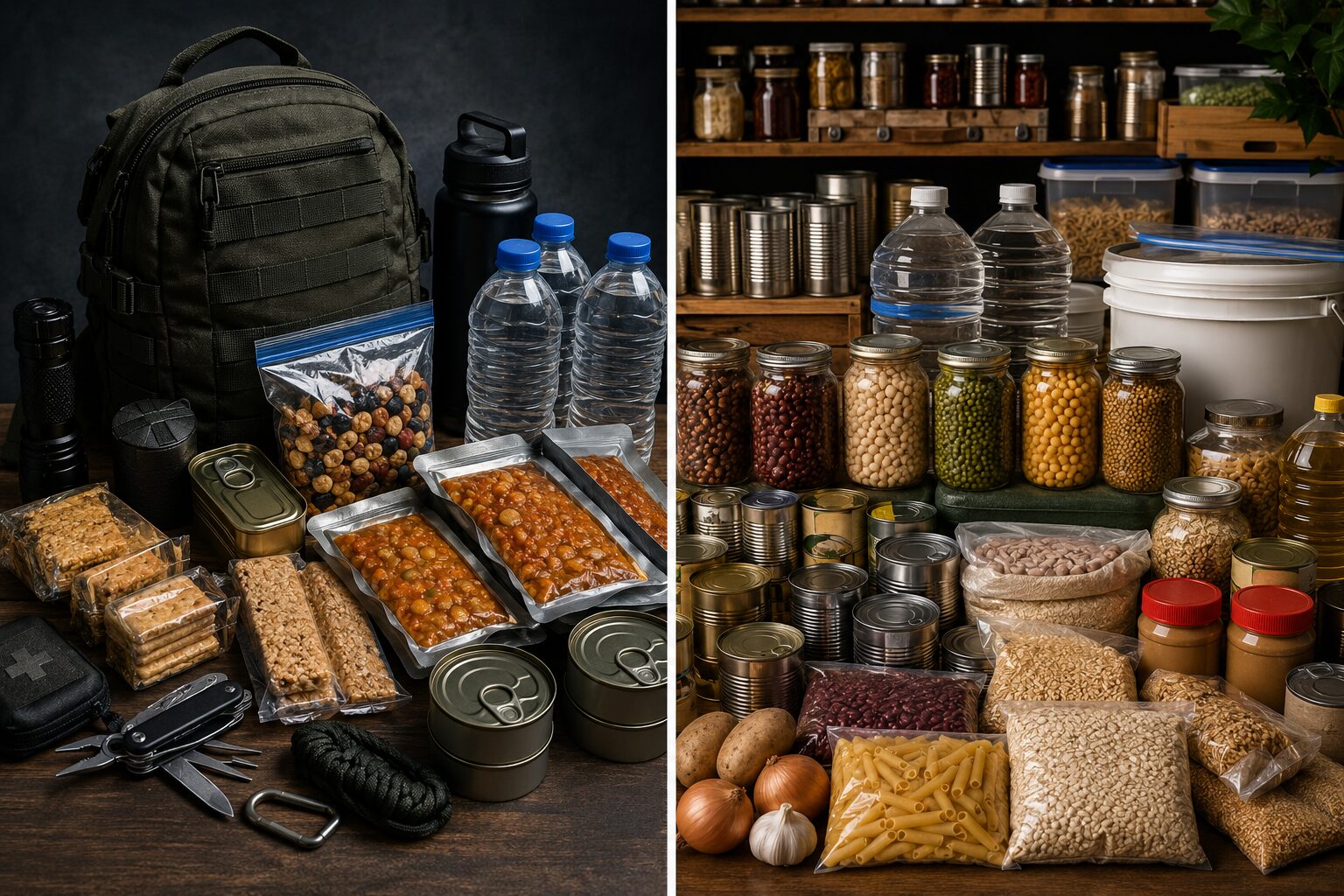
A 72-hour survival stash is designed for short-term emergencies like storms, temporary power outages, and quick evacuations. A 30-day food supply is intended for longer disruptions where stores, deliveries, and infrastructure may not recover quickly.
Understanding the difference helps you build a realistic preparedness plan that matches your budget, storage space, and family needs.
The best preparedness strategy usually starts small and expands over time.
Why Food Storage Matters
Modern grocery stores depend on constant deliveries.
Most stores only keep a limited amount of inventory on shelves and in storage areas. During emergencies, panic buying can empty stores within hours.
We have seen this happen repeatedly during:
- Hurricanes
- Winter storms
- Pandemics
- Supply chain disruptions
- Major blackouts
Prepared families avoid last-minute chaos because they already have essential supplies at home.
Food storage is not about fear.
It is about stability.
What Is a 72-Hour Survival Food Stash?
A 72-hour emergency food supply is designed to sustain you for roughly three days.
This is the most commonly recommended starting point for preparedness because many emergencies are short-term.
Examples include:
- Temporary power outages
- Severe storms
- Minor flooding
- Vehicle emergencies
- Short evacuations
A 72-hour kit focuses on portability, convenience, and simplicity.
Goals of a 72-Hour Food Supply
A short-term survival stash should:
- Require minimal preparation
- Be easy to transport
- Have a decent shelf life
- Provide calories and hydration support
- Reduce stress during emergencies
The focus is survival and convenience rather than comfort.
Good Foods for a 72-Hour Kit
Popular options include:
- Protein bars
- Energy bars
- Peanut butter
- Trail mix
- Beef jerky
- Tuna packets
- Instant oatmeal
- Crackers
- Canned soups
- Freeze-dried meals
- Electrolyte packets
Water is equally important.
Experts commonly recommend:
- One gallon of water per person per day
For a three-day kit, that means at least:
- Three gallons per person
Advantages of a 72-Hour Stash
Affordable
Short-term preparedness is inexpensive compared to long-term storage.
Most families can build a basic 72-hour setup gradually without major financial strain.
Portable
Many people store 72-hour supplies inside:
- Bug-out bags
- Vehicle kits
- Storage bins
This makes evacuation easier if necessary.
Easier to Rotate
Foods are consumed and replaced more easily because quantities are smaller.
Great for Beginners
A 72-hour kit is the perfect starting point for people new to preparedness.
It covers the most common emergencies without becoming overwhelming.
Weaknesses of a 72-Hour Food Supply
While useful, short-term kits have limits.
Three days pass quickly during major disasters.
Longer emergencies may involve:
- Extended power outages
- Supply shortages
- Infrastructure failures
- Delayed emergency response
A small stash may not provide enough calories or variety for families during prolonged disruptions.
What Is a 30-Day Survival Food Supply?
A 30-day supply is designed for extended emergencies where normal systems may remain disrupted for weeks.
This level of preparedness moves beyond basic survival and focuses more on sustainability.
Examples include:
- Major hurricanes
- Long-term power failures
- Economic disruptions
- Severe winter events
- Supply chain problems
- Widespread emergencies
Thirty days of food dramatically improves a family’s resilience during uncertain situations.
Goals of a 30-Day Food Supply
A long-term food setup should:
- Provide stable calories
- Maintain nutrition
- Reduce dependency on stores
- Support morale
- Allow flexibility during shortages
Long-term preparedness focuses on endurance instead of short-term emergency survival.
Foods Commonly Stored for 30 Days
Long-term storage usually includes:
- Rice
- Beans
- Pasta
- Oats
- Flour
- Canned vegetables
- Canned meats
- Peanut butter
- Freeze-dried foods
- Powdered milk
- Cooking oils
- Shelf-stable snacks
Many experienced preppers also store:
- Spices
- Coffee
- Comfort foods
- Baking ingredients
Morale matters during stressful situations.
Advantages of a 30-Day Supply
Greater Security
Longer food storage reduces panic during uncertain events.
You are less dependent on:
- Grocery stores
- Deliveries
- Supply chains
Better Nutrition
Longer-term food planning allows for more balanced meals.
This becomes important during extended emergencies.
More Comfortable
A 30-day supply allows families to maintain routines and reduce stress.
Psychological comfort is often overlooked in preparedness planning.
Protection Against Shortages
Even temporary disruptions can create long-lasting supply problems.
Prepared households handle shortages far better.
Challenges of a 30-Day Food Supply
Higher Cost
Long-term storage requires greater investment.
However, many families build supplies gradually over time.
More Storage Space
Larger food supplies require:
- Organization
- Rotation
- Storage planning
Cool, dry areas work best.
Rotation and Expiration
Foods must be monitored and rotated regularly.
Preparedness works best when stored foods are foods your family already eats.
Freeze-Dried Food vs. Grocery Storage
Many survival companies market freeze-dried food buckets as the ultimate preparedness solution.
While useful, they are not the only option.
Freeze-Dried Food Advantages
- Long shelf life
- Lightweight
- Compact
- Easy storage
Freeze-Dried Food Weaknesses
- Expensive
- Requires water
- Sometimes lower comfort value
Many experienced preppers combine:
- Grocery store foods
- Bulk staples
- Freeze-dried backups
This creates a more balanced system.
The Importance of Water
Food storage means very little without water.
Many emergency foods require:
- Cooking
- Rehydration
- Cleaning
Water should always be prioritized.
Important water supplies include:
- Bottled water
- Water filters
- Purification tablets
- Food-grade containers
Which One Should You Choose?
The answer depends on your goals, risks, and budget.
A 72-Hour Kit Is Best For:
- Beginners
- Vehicle kits
- Evacuation bags
- Short-term emergencies
- Limited budgets
A 30-Day Supply Is Best For:
- Family preparedness
- Severe weather regions
- Long-term outages
- Greater self-reliance
- Reduced dependence on stores
The Smartest Preparedness Strategy
Preparedness works best in layers.
Most experienced preppers recommend:
- Build a 72-hour kit first
- Expand to two weeks
- Gradually reach 30 days or more
This approach keeps preparedness manageable and affordable.
Trying to build massive stockpiles immediately often becomes expensive and discouraging.
Common Food Storage Mistakes
Buying Foods You Never Eat
Store foods your family already enjoys.
Rotation becomes much easier.
Ignoring Water Needs
Food without water creates major problems quickly.
Forgetting Cooking Methods
Some emergency foods require:
- Fuel
- Stoves
- Electricity
Always plan for cooking alternatives.
Poor Organization
Disorganized food storage leads to waste and expired supplies.
Label and rotate everything.
Final Thoughts
A 72-hour survival stash and a 30-day food supply serve different purposes, but both are valuable.
The 72-hour kit focuses on mobility and immediate emergencies.
The 30-day supply focuses on stability and long-term resilience.
Preparedness is not about building fear-based stockpiles.
It is about reducing uncertainty during difficult situations.
Start small.
Stay consistent.
Build gradually.
Because when emergencies happen, having even a basic food supply puts your family far ahead of the panic.