Fire has always been one of the most powerful tools for survival, and knowing how to create it without matches can mean the difference between comfort and crisis. I’ve spent time practicing different fire-starting techniques in both controlled environments and unpredictable outdoor conditions, and one thing became clear: relying on a single method is a mistake. Weather changes, materials fail, and sometimes the tools you expect to have simply aren’t there. Mastering multiple ways to start a fire builds confidence and resilience, and it transforms a stressful situation into something manageable.
The Fire Triangle And Why It Matters
Before diving into techniques, I always remind myself that fire depends on three elements: heat, fuel, and oxygen. Without one of these, even the best method will fail. Heat is what initiates the ignition, fuel sustains it, and oxygen keeps it alive. Neglecting any of these factors leads to frustration and wasted effort, especially when conditions are already difficult.
I pay close attention to the materials I gather before attempting any fire-starting method. Dry tinder is essential, and I look for things like dry grass, bark shavings, or even cotton-like plant fibers. Kindling comes next, made up of small sticks that catch quickly once the tinder ignites. Larger fuel pieces are added gradually, ensuring the fire grows instead of suffocates.
Wind and moisture can complicate everything, so I always prepare a sheltered spot. Even a small barrier made from rocks or logs can protect the flame long enough for it to stabilize. This preparation stage often determines success more than the method itself.

Method 1: The Ferro Rod Spark Technique
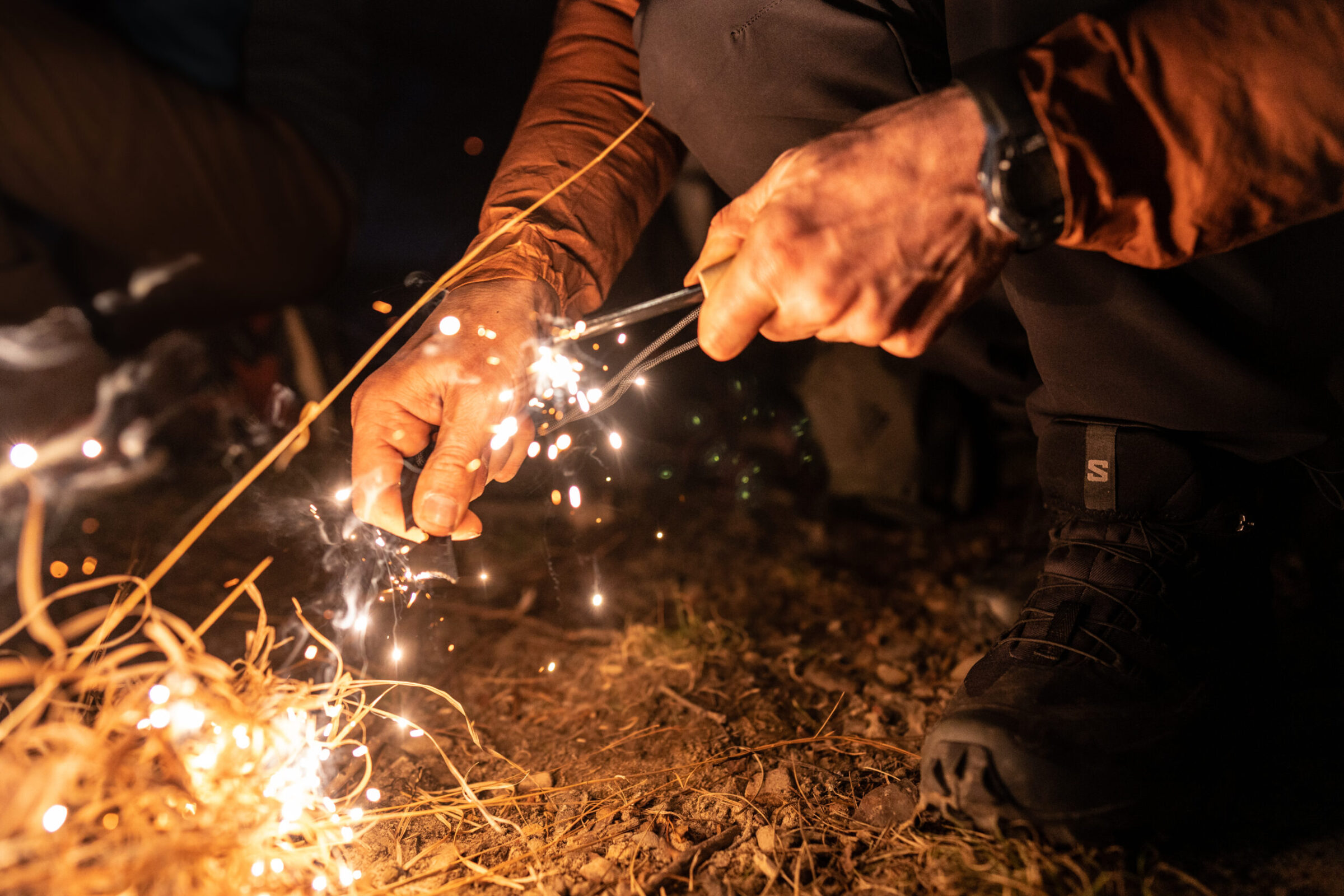
Using a ferrocerium rod is one of the most reliable ways I’ve found to start a fire without matches. It produces extremely hot sparks that can ignite tinder quickly, even in damp conditions. This method is popular among survivalists because it works repeatedly and doesn’t rely on fuel like lighters do.
I hold the ferro rod close to my tinder bundle and scrape it with a metal striker at a sharp angle. The sparks that fly off can reach temperatures of over 3,000 degrees Celsius, which is more than enough to ignite fine materials. Positioning matters here, and I aim the sparks directly into the center of the tinder instead of scattering them around.
Patience is important with this method. It sometimes takes several attempts before the tinder catches, especially if it’s slightly damp. Once I see a small glow, I gently blow on it to encourage a flame, gradually adding kindling to build it up.
Method 2: The Bow Drill Friction Method
The bow drill is one of the oldest fire-starting techniques, and it requires practice and precision. I use a bow made from a curved stick and string, along with a spindle and a fireboard. The goal is to create enough friction between the spindle and the board to produce a hot ember.
I position the spindle vertically on the fireboard and wrap the bowstring around it. By moving the bow back and forth, the spindle spins rapidly, generating heat. This process can be physically demanding, and maintaining consistent pressure is key to producing an ember.
Once I see smoke and a small pile of dark powder forming, I carefully transfer the ember into a tinder bundle. Gently blowing on it transforms the ember into a flame, and that moment always feels incredibly rewarding. It’s a method that connects directly to ancient survival skills, and mastering it builds confidence like nothing else.
Method 3: The Hand Drill Simplicity Technique
The hand drill is similar to the bow drill but relies entirely on manual effort. It requires fewer tools, which makes it useful when resources are limited. However, it also demands more endurance and proper technique to succeed.
I use a straight spindle and a fireboard, placing the spindle between my palms and rolling it downward while applying pressure. This creates friction and heat at the base of the spindle. The motion has to be steady and controlled, and I often have to reset my hands multiple times during the process.
This method tests patience more than anything else. My hands can get tired quickly, and it’s easy to lose rhythm. Despite the difficulty, producing an ember with nothing but natural materials feels incredibly satisfying and reinforces the importance of persistence.
Method 4: The Magnifying Glass Solar Method
On sunny days, using a magnifying glass or any convex lens becomes one of the easiest methods available. It harnesses the sun’s energy to focus heat onto a single point, igniting tinder without physical effort.
I position the lens so that sunlight concentrates into a small, bright spot on the tinder. Adjusting the distance is crucial, and I look for the point where the light becomes the most intense. Within seconds, the tinder begins to smoke, and eventually, it catches fire.
This method depends entirely on sunlight, which limits its usefulness in cloudy or nighttime conditions. Still, it’s incredibly effective when conditions are right. I’ve even used improvised lenses, like clear plastic bottles filled with water, to achieve similar results.
Method 5: The Battery And Steel Wool Method
Using a battery and steel wool is a modern yet highly effective technique. It works by creating an electrical current that heats the fine strands of steel wool until they ignite. This method is quick and reliable when the materials are available.
I touch both terminals of the battery to the steel wool, allowing the current to flow through it. The fibers begin to glow and spark almost instantly. Placing the glowing wool into a tinder bundle helps transfer the flame and build a fire.
Safety is important here, as the reaction can be surprisingly intense. I make sure to handle the materials carefully and keep everything controlled. This method stands out for its speed, making it a great option in urgent situations.
Preparing The Perfect Tinder Bundle
A strong fire always starts with good tinder, and I never skip this step no matter how confident I feel about the method. The tinder bundle acts as the bridge between spark and flame, and its quality directly affects success.
I gather dry, fibrous materials and shape them into a loose nest. Airflow is crucial, so I avoid packing it too tightly. Materials like dry leaves, grass, and shredded bark work well, especially when combined for better ignition.
If natural materials are scarce, I improvise with whatever I have. Small pieces of cloth, paper, or even lint from clothing can serve as effective tinder. Adapting to the environment is part of the process, and it often makes the difference between success and failure.
Building The Fire Step By Step
Starting a fire doesn’t end with ignition. I build it gradually, beginning with small kindling that catches easily. Adding larger sticks too soon can smother the flame, so I take my time and let the fire grow naturally.
I arrange the materials in a way that allows airflow, often using a teepee or log cabin structure. This setup helps the fire breathe and burn more efficiently. Watching the flame strengthen is a reminder that patience pays off in survival situations.
Maintaining the fire is just as important as starting it. I keep feeding it with appropriately sized fuel and monitor it to prevent it from going out. A well-built fire becomes a reliable source of heat, light, and even comfort.
Common Mistakes That Lead To Failure
One of the biggest mistakes I see is rushing the process. Skipping preparation or using poor-quality tinder often leads to repeated failures. Taking a few extra minutes to gather the right materials saves time and effort in the long run.
Another issue is ignoring environmental factors. Wind, moisture, and temperature all play a role in how easily a fire starts. I adjust my approach based on these conditions, whether it means shielding the fire or finding drier materials.
Overconfidence can also be a problem. Even experienced individuals can struggle if they rely too heavily on one method. Staying flexible and adapting to the situation ensures better results.
Why Practicing These Methods Matters
Practicing fire-starting techniques before an emergency builds muscle memory and confidence. I’ve learned that trying these methods for the first time under pressure is not ideal. Familiarity makes the process smoother and less stressful.
Each method has its strengths and limitations, and knowing when to use them is part of the skill. I rotate through different techniques during practice sessions to stay prepared for various scenarios.
The sense of self-reliance that comes from mastering these skills is invaluable. It’s not just about survival, but about being capable and prepared for unexpected situations.
Final Thoughts On Fire Without Matches
Starting a fire without matches isn’t just a survival skill, it’s a mindset that values preparation and adaptability. I’ve found that success often depends more on patience and resourcefulness than on the method itself. Each technique offers a unique challenge, and mastering them creates a level of confidence that’s hard to replicate in any other way.
Fire represents warmth, safety, and the ability to endure. Knowing how to create it from scratch connects me to a deeper sense of independence. It’s a skill worth practicing, refining, and carrying forward, because in the right moment, it can make all the difference.