By Survival Boys Editorial Team
Hurricanes are among the most destructive natural disasters in the world. Powerful winds, massive flooding, storm surges, tornadoes, and widespread power outages can turn an ordinary day into a life-threatening emergency within hours.
For families living along the Gulf Coast, Atlantic Coast, and hurricane-prone regions, preparedness is not optional. Every hurricane season reminds people how quickly supply chains fail, roads become impassable, and emergency services become overwhelmed.
The good news is that preparation dramatically improves safety and survival. Families who plan ahead, build emergency supplies, and understand how hurricanes work are far more capable of protecting themselves during severe storms.

This guide covers practical hurricane preparedness strategies every family should know before the next storm arrives.
Understanding Hurricane Risks
Many people focus only on wind speeds when thinking about hurricanes, but hurricanes create multiple dangers at the same time.
The biggest threats often include:
- Storm surge flooding
- Inland flooding from heavy rain
- Extended power outages
- Tornadoes
- Flying debris
- Infrastructure damage
- Limited access to emergency services
- Fuel shortages
- Food and water shortages
Even weaker hurricanes can create devastating impacts depending on location and flooding conditions.
Preparedness begins with understanding the specific risks in your area.
Know Your Hurricane Zone
One of the first steps in hurricane preparedness is learning whether your home is located in an evacuation zone or a flood-prone area.
Many coastal communities use hurricane evacuation maps that identify areas most vulnerable to storm surge flooding.
Do not wait until a hurricane warning is issued to figure this out.
Understand:
- Your evacuation zone
- Local evacuation routes
- Nearby shelters
- Flood risks near your home
- Areas prone to road closures
Families who plan early avoid last-minute panic and dangerous traffic conditions.
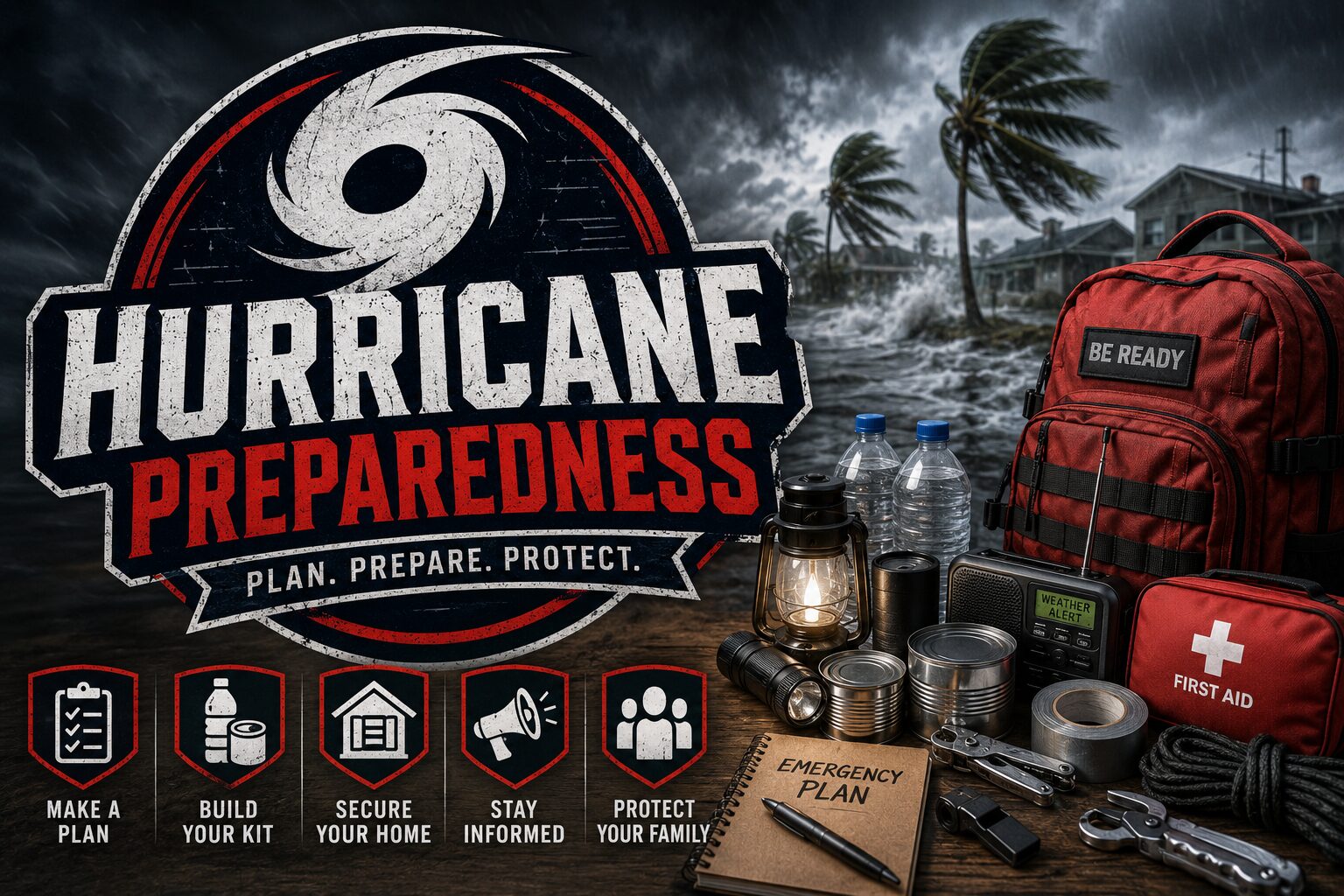
Build a Hurricane Emergency Kit
Every household should maintain an emergency kit capable of supporting the family for at least 72 hours, though many experts now recommend preparing for one to two weeks.
Major hurricanes often create long-term disruptions.
Water Storage
Water is the highest priority.
Store at least one gallon of water per person per day for drinking and sanitation.
Hurricanes can contaminate municipal water systems and shut down water treatment facilities.
Additional water storage methods include:
- Water bricks
- Bathtub water liners
- Portable water filters
- Water purification tablets
Do not forget pets when calculating water needs.
Emergency Food Supplies
Focus on shelf-stable foods that require little or no cooking.
Good hurricane preparedness foods include:
- Canned foods
- Peanut butter
- Protein bars
- Rice
- Pasta
- Dried fruit
- Trail mix
- Freeze-dried meals
- Ready-to-eat meals
Manual can openers are essential during power outages.
Rotate supplies regularly to maintain freshness.
Lighting and Power
Extended power outages are extremely common after hurricanes.
Every emergency kit should include:
- Flashlights
- Extra batteries
- Lanterns
- Portable power banks
- Solar chargers
- Battery-powered radio
Avoid relying entirely on smartphones because communication networks may fail.
First Aid and Medications
Medical supplies become even more important during disasters.
Store:
- First aid kits
- Prescription medications
- Pain relievers
- Bandages
- Antiseptic supplies
- Gloves
- Emergency contact information
Try to maintain extra prescription medication whenever legally possible.
Protecting Your Home Before the Storm
Home preparation can significantly reduce hurricane damage.
Secure Outdoor Items
Patio furniture, grills, trash cans, tools, and decorations can become dangerous projectiles during high winds.
Bring loose items indoors before the storm arrives.
Reinforce Windows and Doors
Storm shutters provide excellent protection against flying debris.
If shutters are unavailable, properly installed plywood can help reduce window damage.
Garage doors are particularly vulnerable during hurricanes and may require reinforcement kits.
Trim Trees and Branches
Dead or weak branches can become hazardous during severe winds.
Routine tree maintenance reduces damage risks.
Check Roof Conditions
Roof failures are common during hurricanes.
Inspect shingles, flashing, and gutters regularly before hurricane season begins.
Flood Protection
Flooding causes enormous hurricane damage.
Sandbags may help redirect shallow floodwaters, but they are not a perfect solution.
Important flood-prevention steps include:
- Elevating valuables
- Moving electronics higher
- Clearing drainage systems
- Using waterproof storage containers
- Reviewing flood insurance coverage
Standard homeowner insurance policies often do not cover flood damage.
Fuel and Transportation Preparedness
Gas shortages frequently occur before and after hurricanes.
Keep vehicle fuel tanks topped off during hurricane season whenever possible.
If evacuation becomes necessary, fuel may become difficult to find.
Vehicle emergency supplies should include:
- Flashlights
- Water
- Snacks
- Maps
- Phone chargers
- First aid kits
- Blankets
Traffic conditions during evacuations can become severe.
Backup Power Systems
Backup power can dramatically improve comfort and safety during long outages.
Portable Generators
Portable generators are useful but must always be operated outdoors far away from windows due to carbon monoxide dangers.
Never run generators inside garages or homes.
Solar Generators and Battery Systems
Solar generators and battery backups are increasingly popular because they operate quietly and safely indoors.
Even small systems can keep phones charged, power lights, and run essential devices.
Refrigeration Concerns
Food spoilage becomes a major issue during extended outages.
Keep refrigerator and freezer doors closed as much as possible.
A full freezer stays cold longer than a partially filled freezer.
Coolers and ice can help preserve essential food and medications temporarily.
Hurricane Evacuation Planning
Some storms require evacuation.
Ignoring evacuation orders can place families in extreme danger.
Plan Multiple Routes
Road closures and traffic congestion are common during evacuations.
Identify several possible evacuation routes ahead of time.
Know Where You Will Go
Possible evacuation destinations include:
- Hotels
- Shelters
- Friends or relatives
- Inland campgrounds
- Emergency community shelters
Do not wait until the last minute to make arrangements.
Prepare Important Documents
Store copies of important documents in waterproof containers.
These may include:
- IDs
- Insurance information
- Medical records
- Birth certificates
- Emergency contacts
- Financial documents
Digital backups are also valuable.
Pet Preparedness
Many people forget to prepare for pets during disasters.
Emergency pet supplies should include:
- Food
- Water
- Leashes
- Carriers
- Medications
- Vaccination records
Not all shelters accept pets, so verify shelter policies ahead of time.
Staying Safe During the Hurricane
Once the storm arrives, conditions can deteriorate rapidly.
Stay Indoors
Remain inside and away from windows during the storm.
Flying debris causes many hurricane injuries.
Beware of the Eye
The eye of the hurricane may create temporary calm conditions.
This does not mean the storm is over.
Dangerous winds return quickly from the opposite direction.
Monitor Emergency Alerts
Battery-powered radios help families stay informed if power and internet access fail.
Follow official emergency instructions carefully.
Avoid Floodwaters
Floodwater is extremely dangerous.
It may contain:
- Debris
- Sewage
- Chemicals
- Downed power lines
- Hidden hazards
Never drive through flooded roads.
Even shallow water can sweep vehicles away.
After the Hurricane
The danger does not end when the winds stop.
Post-storm hazards often include:
- Downed power lines
- Flooded roads
- Structural damage
- Contaminated water
- Gas leaks
- Debris
Inspect Carefully
Check homes cautiously for structural damage before entering.
If you smell gas, leave immediately and contact authorities.
Use Generators Safely
Carbon monoxide poisoning increases significantly after storms due to generator misuse.
Always follow manufacturer’s safety instructions.
Document Damage
Take photographs of damage for insurance claims before beginning cleanup if possible.
Community Preparedness Matters
Communities recover faster when neighbors work together.
Check on elderly neighbors, share information, and assist others when safe to do so.
Prepared communities are more resilient during disasters.
Mental Preparedness During Hurricanes
Disasters are stressful and emotionally exhausting.
Fear, uncertainty, and disruption affect both adults and children.
Prepared families often cope better emotionally because they already have plans and supplies in place.
Maintaining routines, staying informed, and focusing on practical tasks can help reduce anxiety during emergencies.
Common Hurricane Preparedness Mistakes
Many hurricane-related problems are preventable.
Common mistakes include:
- Waiting too long to buy supplies
- Ignoring evacuation warnings
- Failing to store enough water
- Forgetting backup communication options
- Running generators indoors
- Underestimating flooding risks
- Neglecting pet preparedness
- Allowing fuel tanks to stay nearly empty
Preparedness works best when started long before hurricane season begins.
Why Preparedness Matters
Hurricanes are unpredictable, but preparation creates stability during chaos.
Prepared families are better able to protect themselves, reduce panic, and recover more quickly after disasters.
Preparedness is not about fear or paranoia.
It is about responsibility, resilience, and practical planning.
Final Thoughts
Hurricane preparedness is one of the most important survival skills for families living in storm-prone regions.
The best time to prepare is before a storm enters the forecast.
Small steps taken consistently over time can dramatically improve your family’s safety during emergencies.
Build supplies gradually. Create evacuation plans. Strengthen your home. Learn emergency skills.
Preparedness is not built overnight.
But every action you take today increases your ability to face tomorrow’s storms with greater confidence and capability.
When hurricanes arrive, preparation becomes your greatest advantage.