There is a difference between going camping and knowing how to live outdoors.
A weekend in the wilderness gives you an opportunity to step away from everyday conveniences and test the skills that matter when you are miles from home. It challenges your preparation, decision-making, equipment, and ability to adapt when conditions change.
You don’t need an expensive expedition or a remote mountain range to learn these lessons. You need a good location, the right equipment, a reasonable plan, and the willingness to work through the challenges.
A two-night wilderness camping trip is one of the best ways to develop those abilities.

1. Choose the right location
Your campsite can determine whether your trip is enjoyable or miserable.
Look for an established campground or permitted wilderness camping area that offers reasonable access to water, suitable terrain, and enough space to establish a safe camp.
Before leaving, research:
- Weather forecasts for all three days.
- Local camping and fire regulations.
- Water availability and treatment requirements.
- Wildlife activity and food-storage requirements.
- Emergency access and the nearest medical facility.
- Trail conditions and expected travel times.
Avoid setting up in dry creek beds, low-lying areas that collect rainwater, beneath dead branches, or directly beside water.
A good campsite should be relatively level, well-drained, and protected from unnecessary exposure to wind.
2. Build an organized campsite
Once you arrive, resist the temptation to immediately start cooking or relaxing.
Establish your campsite first.
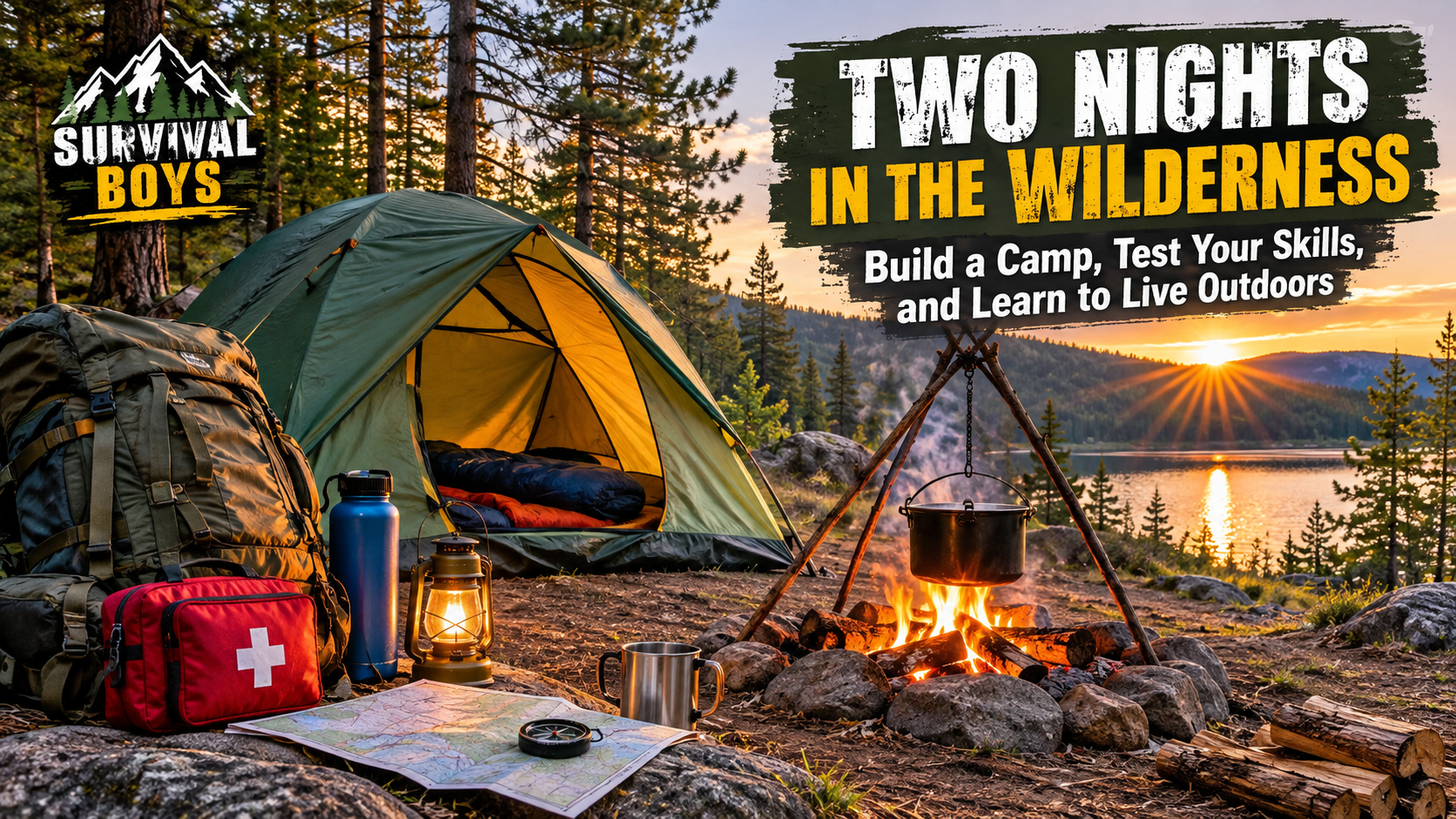
Your camp should have several distinct areas.
Sleeping area: Your tent is your first line of protection against the weather. Choose a tent with enough room for everyone and appropriate weather protection.
Outlast Camp offers a Camping Tent listed at $48.07. Consider your expected weather, occupancy, and tent specifications before purchasing.
A good sleeping system also matters. A sleeping bag and insulated sleeping pad help protect you from overnight temperature drops and heat loss through the ground.
Explore Outlast Camp Sleeping Bags.
Cooking area: Keep cooking equipment away from your tent and sleeping materials. Use a designated cooking area and follow local fire restrictions.
Storage area: Organize food, clothing, tools, and emergency equipment. Store food according to local wildlife regulations.
Activity area: Create a designated space for preparing equipment, practicing outdoor skills, and gathering firewood where permitted.
Organization makes a tremendous difference. When darkness arrives or the weather changes, you should know exactly where your equipment is located.
3. Test your wilderness skills
The purpose of this trip is not simply to spend two nights outdoors. It is to become more capable.
Use the weekend to practice several practical skills:
- Set up and secure a tent properly.
- Install a rain tarp and understand water runoff.
- Filter or treat water using an approved method.
- Prepare a meal using camping equipment.
- Identify potential campsite hazards.
- Practice using a compass and map.
- Maintain a clean and organized camp.
- Pack and secure equipment for changing weather.
Navigation is especially important. Practice identifying landmarks, following a map, and determining your direction without relying entirely on a smartphone.
A traditional compass is an important backup when batteries die or electronic devices lose their signal.
Check out the M2 Professional Geological Compass from Outlast Camp.
4. Plan your food and water
Food planning is important because outdoor activity increases energy requirements.
Choose meals that are easy to prepare, provide adequate calories, and require minimal cleanup.
A practical menu might include:
| Meal | Suggested food |
|---|---|
| Breakfast | Oatmeal, fruit, coffee |
| Lunch | Tortillas, tuna, peanut butter |
| Dinner | Rice, beans, dehydrated meals |
| Snacks | Nuts, dried fruit, granola bars |
Your cooking equipment should be simple, reliable, and easy to clean.
Outlast Camp offers Camping Cooking Supplies for preparing meals outdoors.
Water deserves even more attention.
Carry sufficient drinking water for your initial needs and have a reliable way to treat additional water. Never assume clear-looking streams or springs are safe to drink.
Explore Outlast Camp Water Filtration and Hydration Equipment for portable water-treatment and storage options.
Always follow the manufacturer’s instructions for water treatment.
5. Prepare for the unexpected
Even a carefully planned camping trip can change quickly.
Rain can arrive unexpectedly. Temperatures can drop overnight. Equipment can fail. Someone can become injured.
Carry:
- A properly stocked first-aid kit.
- Emergency communication equipment appropriate for your location.
- Extra lighting and backup batteries.
- Fire-starting supplies.
- Emergency shelter.
- A whistle and repair kit.
A headlamp is particularly useful because it keeps your hands free while cooking, organizing equipment, or responding to an unexpected situation after dark.
Explore Outlast Camp Headlamps.
You should also consider carrying an emergency survival kit. Make sure it contains supplies appropriate for your destination, weather, group size, and trip duration.
See Outlast Camp Survival Kits.
Tell someone where you are going, when you expect to return, and what to do if you fail to check in.
Establish a turnaround time and know when to abandon an activity because conditions are becoming unsafe.
Remember: completing a camping trip is not more important than getting home safely.
6. Make the second night count
The second night is where you can evaluate what you learned.
By this point, you should have a better understanding of how your equipment performs, how much food you actually need, and which parts of your campsite organization work.
Take time to inspect your equipment.
Ask yourself:
- Did my sleeping system keep me comfortable?
- Did I bring enough water?
- Was my cooking setup efficient?
- Could I locate important equipment in the dark?
- Did I have unnecessary equipment?
- What would I change before another trip?
Write down your observations. These notes will help improve every future camping trip.
7. Leave the wilderness better than you found it
Responsible camping is part of wilderness preparedness.
Pack out trash, properly dispose of waste, follow fire regulations, avoid damaging vegetation, and leave natural features undisturbed.
Before leaving, inspect the entire campsite.
Make sure no food, trash, equipment, or fire hazards remain.
The goal is to enjoy the wilderness without damaging it for the next person.
Get equipped before your next adventure
Having the right equipment is an important part of wilderness preparation. Whether you’re establishing your first campsite or upgrading your existing equipment, start with dependable supplies.
Outlast Camp
Tents, sleeping bags, cooking supplies, water equipment, lighting, and outdoor essentials.
My Survival Outlet
Survival equipment, preparedness supplies, and gear for everyday and extreme situations.
Final thoughts: Skills are more valuable than equipment
You can purchase excellent camping equipment, but owning equipment does not automatically make you prepared.
Preparation comes from experience.
A two-night wilderness camping trip gives you an opportunity to discover what works, identify weaknesses, and build confidence. Every meal prepared, shelter secured, and challenge overcome adds to your outdoor experience.
Start with a manageable trip. Practice your skills. Learn from your mistakes.
No fluff. Just survival.
Survival Boys — Prepare Today. Survive Tomorrow.