By Survival Boys Editorial Team
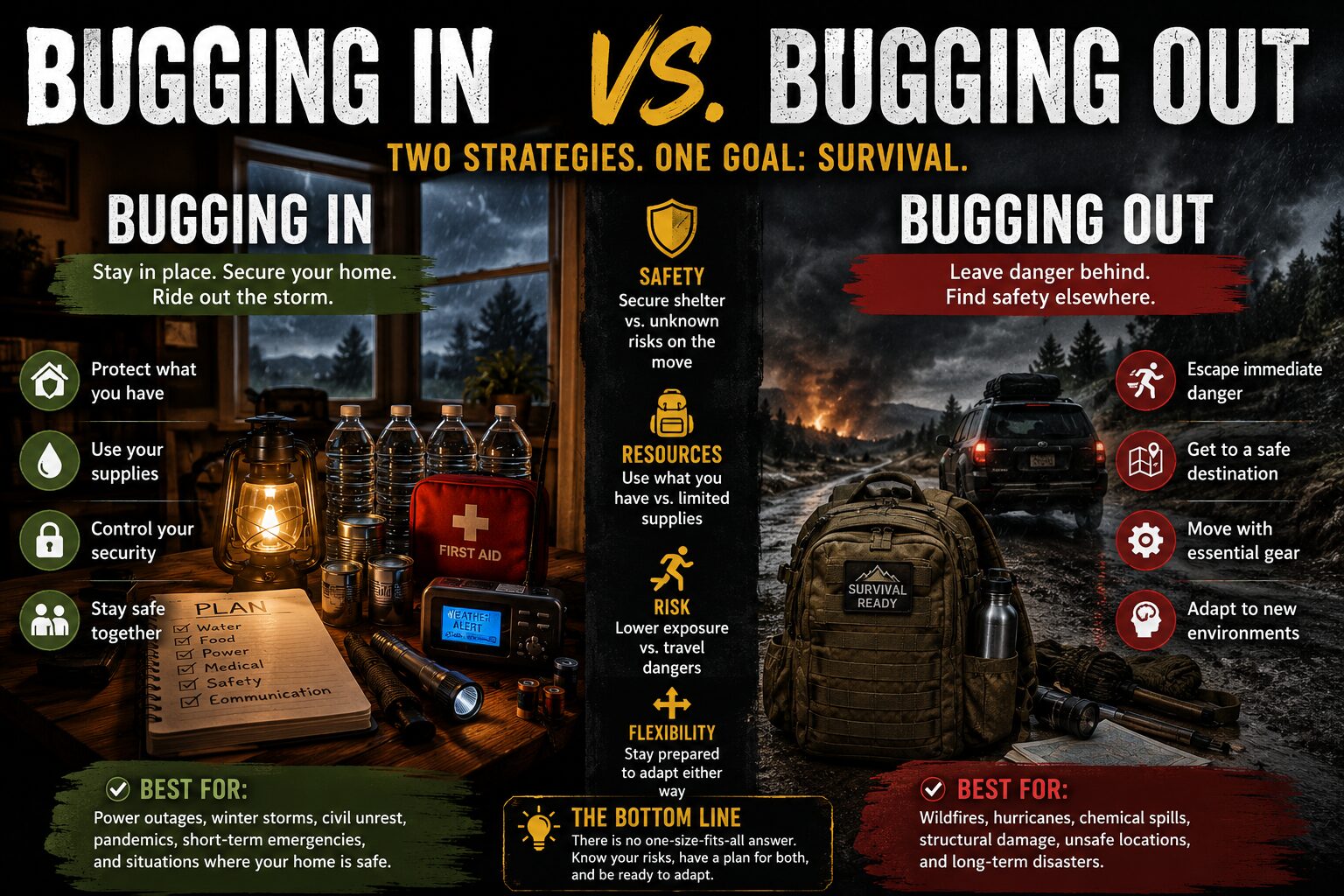
One of the biggest debates in the survival and preparedness world is whether you should bug in or bug out during an emergency.
Movies, television, and social media often glorify bugging out — loading up survival gear, heading into the wilderness, and surviving off the land. While that may sound exciting, the reality is much more complicated.
In many emergencies, leaving your home may actually increase danger rather than reduce it.

At the same time, there are situations where staying home becomes impossible.
The key to smart preparedness is understanding both strategies, knowing their advantages and weaknesses, and recognizing when each one makes sense.
Preparedness is not about blindly following one survival philosophy. It is about adapting to changing situations and making intelligent decisions under pressure.
This guide breaks down the realities of bugging in versus bugging out, the risks of each approach, and how to prepare for both.
What Does “Bugging In” Mean?
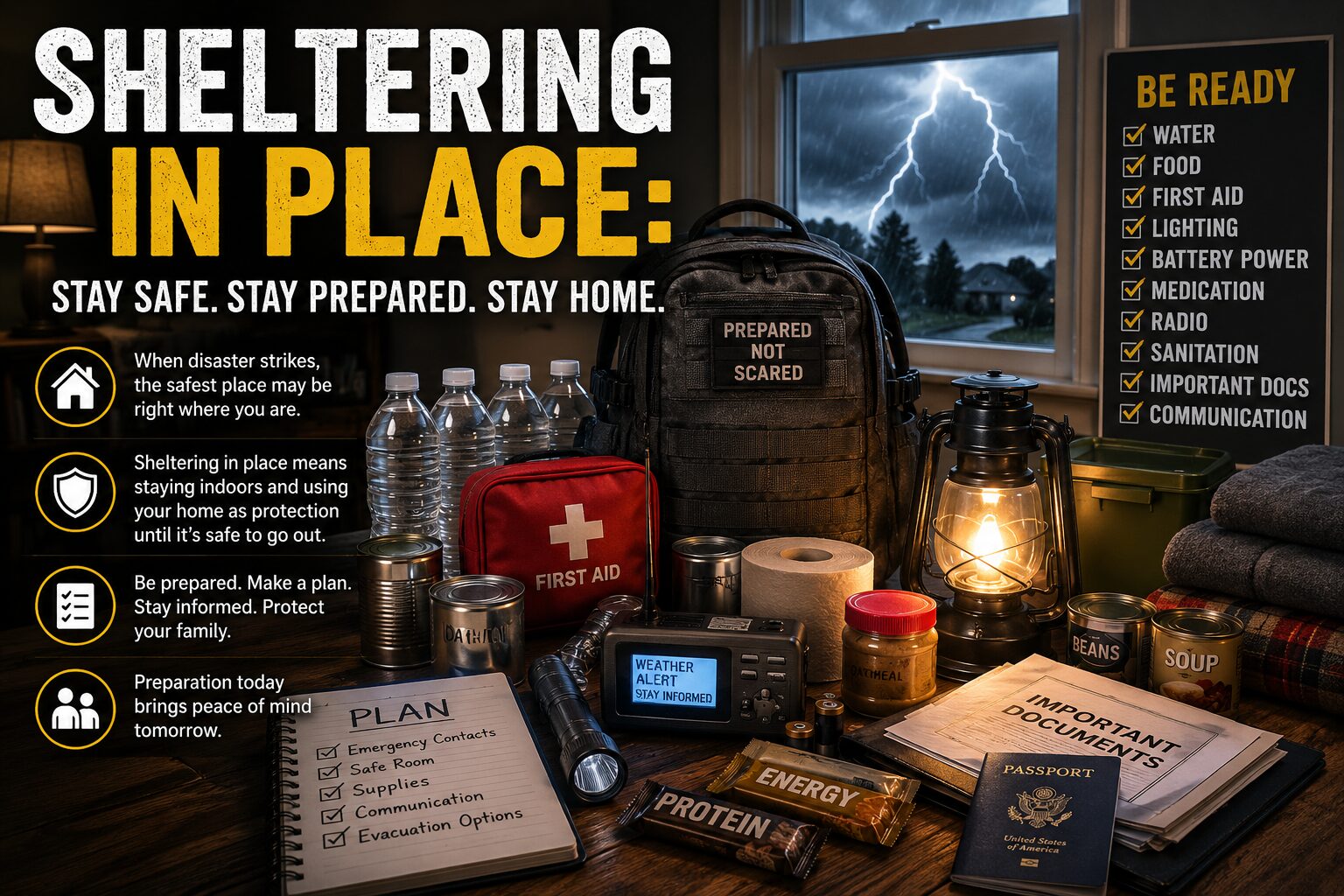
Bugging in means remaining at home or in a secure location during an emergency.
Instead of evacuating, you shelter in place and use your existing resources to survive until conditions improve.
For most realistic emergencies, bugging in is often the safer and more practical option.
Your home already provides:
- Shelter
- Protection from the weather
- Food storage
- Water access
- Medical supplies
- Bedding
- Clothing
- Security
- Familiar surroundings
Most families are far better equipped to survive at home than they realize.
What Does “Bugging Out” Mean?
Bugging out means leaving your current location during an emergency and relocating to a safer destination.
This could involve:
- Evacuating before a hurricane
- Escaping wildfires
- Leaving unstable urban areas
- Traveling to a secondary property
- Moving toward safer terrain
Bugging out is usually associated with:
- Bug-out bags
- Survival gear
- Emergency transportation
- Mobile preparedness
The goal is mobility and survival when remaining home becomes unsafe.
Why Most Emergencies Favor Bugging In
Many preparedness experts believe bugging in should usually be the first choice whenever possible.
Why?
Survival becomes dramatically harder once you leave the stability of your home.
At home, you likely have:
- Stored food
- Water access
- Better sanitation
- Climate protection
- Medical supplies
- Backup power
- Communication devices
On the move, every survival need becomes more difficult.
Travel introduces:
- Fatigue
- Exposure
- Navigation problems
- Security risks
- Fuel shortages
- Traffic congestion
Most people underestimate how physically exhausting evacuation can become.
Situations Where Bugging In Makes Sense
Power Outages
Most blackouts are temporary.
Prepared households with:
- Flashlights
- Batteries
- Food
- Water
- Backup power
can often remain comfortable for days.
Leaving unnecessarily may expose you to additional danger.
Winter Storms
Roads become extremely hazardous during ice storms and blizzards.
Sheltering at home is often far safer than attempting travel.
Civil Unrest
During periods of unrest, avoiding crowds and staying inside secure locations may reduce risk significantly.
Pandemic or Public Health Emergencies
Sheltering at home reduces exposure and allows families to control sanitation more effectively.
Short-Term Infrastructure Failures
Water issues, communication outages, and temporary disruptions are often easier to handle from home.
Situations Where Bugging Out May Be Necessary
While bugging in is often preferable, some emergencies require evacuation.
Wildfires
Fast-moving fires can overwhelm neighborhoods quickly.
Evacuating early may save lives.
Hurricanes
Major hurricanes can destroy infrastructure and create dangerous flooding.
Mandatory evacuation orders should always be taken seriously.
Chemical Spills
Hazardous air contamination may force residents to leave affected areas.
Structural Damage
If your home becomes unsafe due to:
- Fire
- Flooding
- Earthquakes
- Storm damage
remaining inside may no longer be possible.
Security Threats
Extreme situations involving violence or instability may require relocation to safer areas.
The Biggest Myth About Bugging Out
One of the largest misconceptions in survival culture is the fantasy of escaping into the wilderness indefinitely.
In reality, wilderness survival is incredibly difficult.
Most people:
- Lack training
- Lack of physical conditioning
- Lack of food procurement skills
- Lack of navigation ability
- Underestimate weather exposure
Even experienced outdoorsmen struggle during extended wilderness survival situations.
Survival television often creates unrealistic expectations.
The truth is:
Bugging out without a destination is extremely dangerous.
Why Destination Matters
A bug-out plan should never involve “just leaving.”
You need:
- A destination
- Multiple travel routes
- Fuel planning
- Communication plans
- Supply staging
Good bug-out destinations may include:
- Family property
- Trusted relatives
- Cabins
- Rural retreats
- Safe zones outside hazard areas
Without a destination, bugging out becomes wandering.
Wandering burns calories, consumes resources, and increases risk.
The Importance of Timing
Timing is everything during evacuations.
Leaving too late creates major problems:
- Traffic jams
- Fuel shortages
- Panic
- Road closures
Some of the worst disaster situations occur because people delay evacuation.
At the same time, evacuating unnecessarily can waste valuable resources.
Preparedness requires balancing risk carefully.
Building a Strong Bug-In Setup
If your plan focuses primarily on sheltering at home, preparation becomes essential.
Important Bug-In Supplies
Water
Store enough water for every family member.
Experts often recommend:
- One gallon per person per day
Many experienced preppers store far more.
Food
Focus on:
- Long shelf life
- High calories
- Easy preparation
Good options include:
- Rice
- Beans
- Canned foods
- Freeze-dried meals
- Protein bars
Lighting and Power
Power outages are common during emergencies.
Important supplies include:
- Flashlights
- Headlamps
- Batteries
- Solar chargers
- Power stations
Medical Supplies
Every home should maintain:
- First aid kits
- Prescription medications
- Bandages
- Pain relievers
- Disinfectants
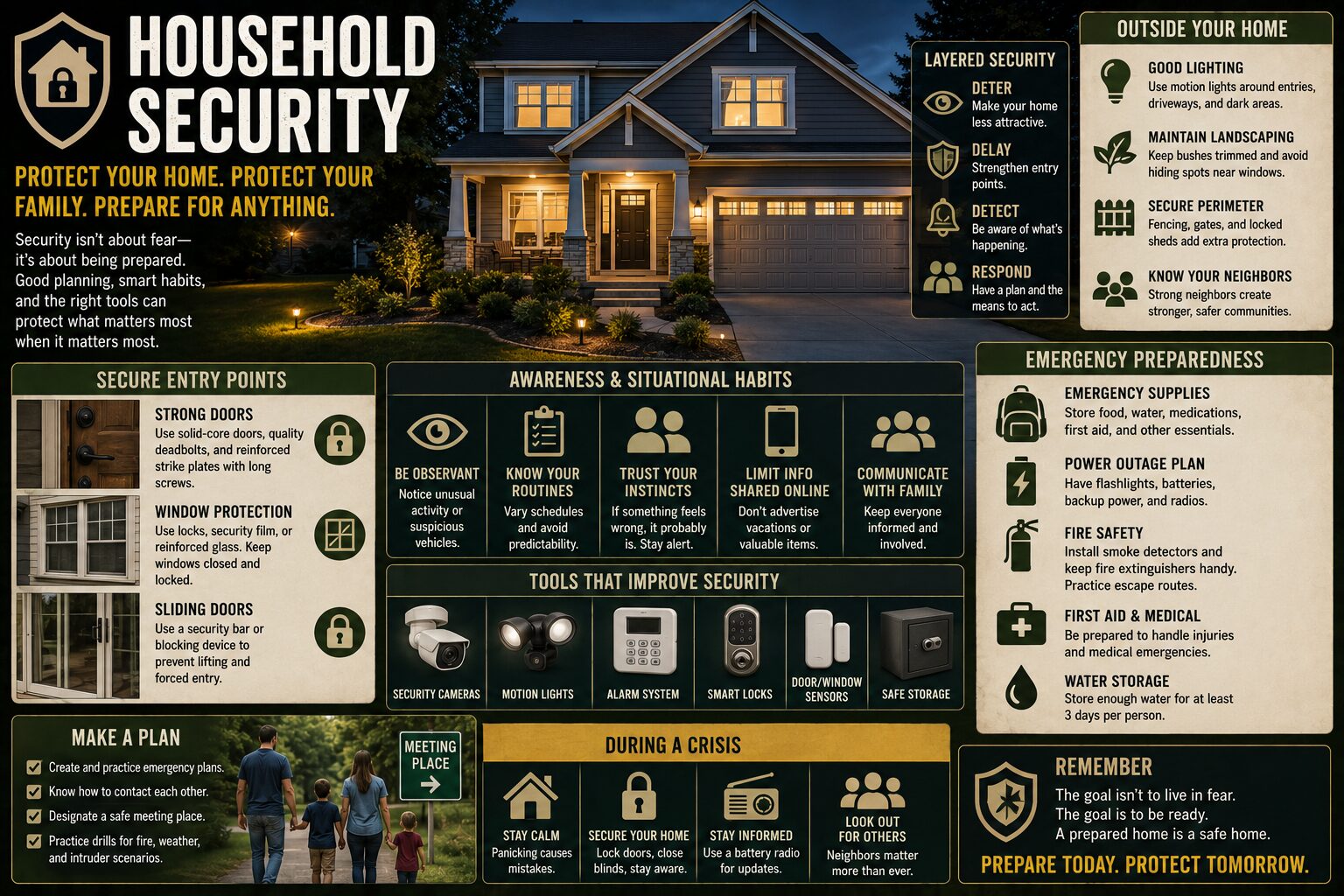
Security
Security planning may include:
- Reinforced doors
- Outdoor lighting
- Communication systems
- Situational awareness
Building a Reliable Bug-Out Plan
Even if bugging in is your primary strategy, every family should maintain evacuation capability.
Core Bug-Out Essentials
Bug-Out Bags
A bug-out bag should support survival for roughly 72 hours.
Important items include:
- Water filter
- Food
- Medical kit
- Fire starters
- Flashlight
- Clothing
- Shelter materials
- Communication devices
Vehicle Readiness
Your vehicle may become your survival platform during evacuation.
Maintain:
- Full fuel levels
- Emergency tools
- Spare tires
- Chargers
- Blankets
- Water supplies
Multiple Routes
Never rely on a single evacuation route.
Road closures can happen quickly.
Know:
- Back roads
- Rural alternatives
- Safe fuel stops
The Psychological Side of Survival
Preparedness is not just physical.
Stress, fear, and panic destroy decision-making.
People often make dangerous choices because they:
- Wait too long
- Panic evacuate
- Ignore warnings
- Refuse to leave
- Overestimate their capabilities
Good planning creates confidence.
When you already have supplies and contingency plans, emergencies become far less chaotic.
Hybrid Preparedness: The Best Approach
The smartest survival strategy is usually flexibility.
Prepared people build systems for both:
- Bugging in
- Bugging out
That means:
- Home preparedness
- Mobile preparedness
- Emergency planning
- Communication systems
- Backup locations
Survival situations change quickly.
Adaptability matters more than rigid thinking.
Common Preparedness Mistakes
Over-Romanticizing Bugging Out
Many people imagine bugging out as an adventure.
In reality, evacuation often involves:
- Exhaustion
- Crowded roads
- Uncertainty
- Limited supplies
- Dangerous conditions
Ignoring Home Preparedness
Some survivalists focus entirely on gear while neglecting home storage and planning.
Most emergencies are survived at home.
Failing to Practice
Preparedness plans should be tested.
Practice:
- Loading vehicles
- Using radios
- Navigating routes
- Operating generators
- Using water filters
Skills matter more than expensive gear.
Final Thoughts
Bugging in and bugging out are not competing survival philosophies.
They are tools.
The right choice depends entirely on:
- The emergency
- Your location
- Available resources
- Timing
- Family needs
- Safety conditions
For most realistic emergencies, bugging in is often safer, easier, and more sustainable.
But every prepared family should also have the ability to leave quickly if conditions demand it.
Preparedness is about options.
Because when emergencies happen, the people who survive best are usually the ones who planned for both possibilities before disaster ever arrived.